Compare models
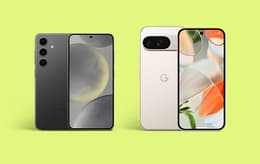
Galaxy Z Flip7 • Unlocked vs Google Pixel Fold • Unlocked
- 1-year warranty
- Free standard shipping
- Free 30-day returns
Differences at a glance
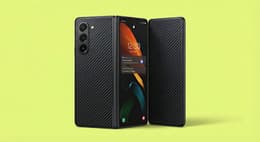
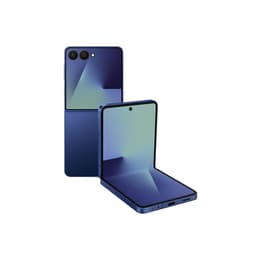
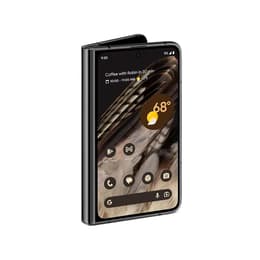
The Samsung Galaxy Z Flip7 (2025) and the Google Pixel Fold (2023) represent two entirely different interpretations of foldable smartphone design. While the Galaxy Z Flip7 adopts a compact clamshell form factor that folds into a pocket-friendly square, the Google Pixel Fold utilizes a book-style design that opens into a mini tablet. Both devices run on the Android operating system, yet they target vastly different user habits through their distinct hardware layouts and physical footprints.
Available Models
Color
Storage (GB)
Scores
Durability
Comparing these devices reveals notable differences in release timelines, hardware longevity, and anticipated software support lifespans.
- Release Timeline and Software Support: The Galaxy Z Flip7 launched in 2025 with current-generation Android software, positioning it for an extended multi-year update window. The Google Pixel Fold debuted in 2023, meaning it sits further along its official software support cycle.
- Repairability and Build Maintenance: Both foldable form factors incorporate complex hinge mechanisms and flexible screen layers that require careful handling, though standard drop protection features help guard against everyday wear.
- Expected Practical Lifespan: Users seeking maximum software longevity will find the newer Galaxy Z Flip7 offers a longer window of future operating system updates, while the Pixel Fold remains functional for standard daily tasks.
Release Year
2025
2023
Last OS Compatibility
Yes
Yes
OS
Android
Android
Foldable
Yes
Yes
Performance
System responsiveness and daily multitasking capabilities vary due to the generation gap in their internal processors and hardware configurations.
- Storage and Multitasking RAM: Both models provide generous baseline storage options starting at 256GB accompanied by 12GB of RAM, ensuring smooth handling of background tasks and app switching.
- Everyday Speed and App Loading: The Galaxy Z Flip7 handles demanding applications, graphics-heavy gaming, and rapid app launching with fluid thermal efficiency, whereas the Pixel Fold manages daily communication and media streaming reliably using its established processor architecture.
- Battery Behavior: The Galaxy Z Flip7 features a refined battery capacity designed to sustain a full day of standard use, while the Pixel Fold's larger physical cell powers two distinct display panels under similar daily workloads.
Screen quality
Display configurations define the core user experience, contrasting a traditional tall screen that folds in half with a wide dual-screen setup.
- Display Technology: The Galaxy Z Flip7 uses a flexible OLED panel on the inside paired with a large exterior cover screen for quick interactions, while the Pixel Fold opens from a standard outer display into an expansive square interior screen.
- Outdoor Visibility and Brightness: Both devices offer high peak brightness levels and vibrant color reproduction, ensuring content remains legible under direct sunlight or in brightly lit environments.
- Refresh Rate and Fluidity: Adaptive refresh rates up to 120Hz are standard on both models, delivering smooth scrolling through web pages, documents, and social media feeds.
Resolution
1080 x 2520
1840 x 2208
Screen type
Foldable Dynamic LTPO AMOLED 2X
Foldable OLED
Audiovisual
Photography and media consumption setups differ significantly based on the physical arrangement of the camera lenses and built-in speaker systems.
- Camera System Capabilities: The Galaxy Z Flip7 pairs a high-resolution main sensor with an ultra-wide lens, utilizing its folding design for hands-free framing. The Google Pixel Fold incorporates a triple-lens rear array featuring dedicated optical zoom capabilities.
- Low-Light and Video Performance: Both smartphones deliver clear low-light imagery and stable video recording, leaning on computational processing to balance shadows and highlights in challenging lighting conditions.
- Audio Output and Media: Stereo speakers on both devices provide balanced sound output for hands-free calls, podcasts, and casual video playback without requiring external accessories.
Miscellaneous
Practical physical attributes shape how easily each device integrates into pockets, bags, and daily travel routines.
- Connectivity and Ports: Both models support 5G cellular networks, modern Wi-Fi standards, and Bluetooth connectivity, relying on reversible USB-C ports for charging and data transfer.
- Authentication Sensors: Secure unlocking is handled via responsive fingerprint sensors integrated into the power keys alongside facial recognition options.
- Dimensions and Handling: The Galaxy Z Flip7 weighs 188 grams and folds into a compact square shape that slips easily into small pockets, while the Pixel Fold weighs 283 grams and offers a wider, heavier profile designed for dual-handed tablet use. Opting for a quality-assured refurbished option provides a sustainable choice for acquiring these advanced form factors.
Weight
3 oz
7 oz
Screen size (inches)
6.9
7.6
Network
5G
5G
SIM card
Physical SIM + eSIM
Physical SIM + eSIM
Carrier compatibility
Unlocked
Unlocked
Connector
USB-C
USB-C
What the community thinks
Users evaluating these foldables will find that choice largely depends on preferred physical proportions and daily workflow needs. Individuals who favor a pocket-friendly clamshell design that minimizes footprint when not in use often lean toward the Galaxy Z Flip7. Conversely, users who want an expansive, tablet-sized inner screen for reading, multitasking, and media viewing gravitate naturally toward the book-style layout of the Google Pixel Fold. Reviewers and community members frequently highlight the Pixel Fold for its expansive multitasking workspace, while praising the Z Flip7 for its lightweight portability and modern internal hardware.
Reviewing available options through a quality-assured refurbished option can help eco-conscious consumers make a sustainable choice without compromising on hardware capability. Evaluating personal preferences regarding screen shape and portability will ultimately guide the right decision for your daily routine.