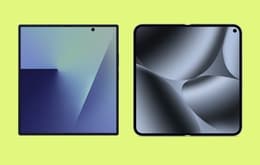
Galaxy Z Fold6 • Unlocked vs Google Pixel 7 Pro • Unlocked

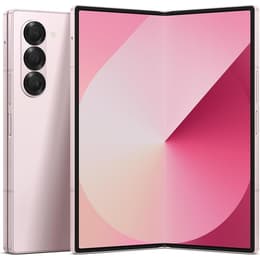
Galaxy Z Fold6 • Unlocked
Starting at

Refurbished price:$549.99

Versus $1,499.00 new

See options
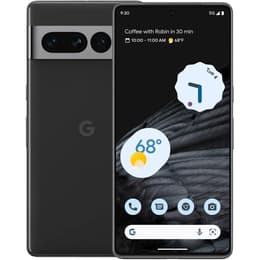
Google Pixel 7 Pro • Unlocked
Starting at

Refurbished price:$221.00

Versus $899.99 new

See options

Ratings

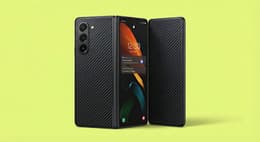
The Samsung Galaxy Z Fold6, a foldable smartphone released in July 2024, offers a unique form factor that transforms from a compact device into a larger tablet-like display. In contrast, the Google Pixel 7 Pro, a traditional slab smartphone launched in October 2022, provides a conventional yet refined user experience. Both devices operate on the Android platform, but their distinct designs and release timelines lead to notable differences in their capabilities and target users.

Scores

Durability

When considering the longevity of these devices, their release timelines and software support policies are key factors.

  • Release Timeline: The Galaxy Z Fold6, released in July 2024, benefits from being a newer device, offering a longer period of current technology and future software updates compared to the Pixel 7 Pro, which launched in October 2022.
  • Software Support: Samsung typically provides several years of major Android updates and security patches for its flagship devices, while Google generally offers three years of major OS updates and five years of security updates for its Pixel phones. This means the Z Fold6 is expected to receive software support for a longer duration into the future.
  • Physical Durability: The Galaxy Z Fold6 features an IP48 rating, indicating certified dust protection, a first for Samsung's foldable line, alongside Corning Gorilla Glass Victus 2 on its cover screen and back panel. However, its inner foldable screen, made with ultra-thin flexible glass, is more susceptible to scratches, and some reports indicate the hinge can allow dust ingress over time, potentially leading to grinding noises. The Pixel 7 Pro, with its Gorilla Glass Victus front and back and an IP68 rating for dust and water resistance, offers robust protection for a traditional smartphone. However, durability tests have shown its frame can exhibit significant flex, which might compromise its water resistance over time, and the camera bar is prone to scratches.

Release Year

2024

2022

Last OS Compatibility

Yes

Yes

OS

Android

Android

Foldable

Yes

No

Performance

The performance of a smartphone is crucial for daily tasks, from app usage to demanding multimedia experiences.

  • Processing Power: The Galaxy Z Fold6 is equipped with a more recent generation processor, which translates to enhanced speed and efficiency for handling complex applications, intensive multitasking, and advanced gaming. The Pixel 7 Pro, powered by its custom-designed processor, delivers smooth performance for everyday use, efficient AI-driven features, and capable handling of moderate gaming.
  • Multitasking and Responsiveness: Both devices come with ample RAM, with the Galaxy Z Fold6 featuring 12 GB of LPDDR5X RAM and the Pixel 7 Pro also offering 12 GB of RAM. This allows for efficient app switching and maintaining multiple applications open in the background without significant slowdowns. The Z Fold6's larger internal display further enhances the multitasking experience by providing more screen real estate.
  • Storage Options: The Galaxy Z Fold6 offers storage configurations up to 1 TB, providing extensive space for applications, media, and documents. The Pixel 7 Pro is available with up to 512 GB of internal storage, which is generous for most users.

Memory (GB)

12 GB

8 GB

Screen quality

The visual experience is a primary consideration, and both devices offer high-quality displays with distinct characteristics.

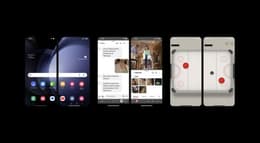
  • Display Technology and Size: The Galaxy Z Fold6 features a unique dual-screen setup: a 7.6-inch foldable Dynamic AMOLED 2X main display and a 6.3-inch Dynamic AMOLED 2X cover display. This allows for a versatile experience, switching between a traditional smartphone and a larger tablet-like interface. The Pixel 7 Pro has a single 6.7-inch QHD+ LTPO OLED curved-edge display.
  • Resolution and Clarity: The Z Fold6's main display offers a resolution of 2160 x 1856 pixels, while its cover screen has a resolution of 2376 x 968 pixels. The Pixel 7 Pro boasts a sharp 3120 x 1440 pixel resolution, resulting in a high pixel density for clear visuals.
  • Brightness and Smoothness: Both devices feature adaptive refresh rates up to 120Hz, providing smooth scrolling and responsive interactions. The Galaxy Z Fold6's displays can reach a peak brightness of up to 2,600 nits, ensuring good visibility even in bright outdoor conditions. The Pixel 7 Pro also offers high brightness levels, with a peak brightness around 1500 nits, contributing to a comfortable viewing experience in various lighting.

Resolution

1856 x 2160

1440 x 3120

Screen type

Foldable Dynamic LTPO AMOLED 2X

LTPO AMOLED

Audiovisual

Both smartphones offer advanced camera systems, though with different strengths and processing philosophies.

  • Rear Camera Systems: The Galaxy Z Fold6 features a triple rear camera setup consisting of a 50 MP wide-angle lens with optical image stabilization (OIS), a 12 MP ultra-wide lens, and a 10 MP telephoto lens with 3x optical zoom and OIS. The Pixel 7 Pro also has a triple rear camera system, including a 50 MP wide lens with OIS, a 12 MP ultrawide lens with a wider field of view and autofocus, and a 48 MP telephoto lens offering 5x optical zoom and up to 30x Super Res Zoom.
  • Photography Performance: The Z Fold6 utilizes Samsung's ProVisual Engine for AI-based image processing, delivering vibrant colors and good low-light performance, though some users note occasional unreliability in HDR. The Pixel 7 Pro is renowned for its computational photography, offering features like Real Tone for accurate skin tones, Macro Focus for close-up shots, and Photo Unblur to enhance older images. Its camera excels in detail and dynamic range, particularly with its Super Res Zoom capabilities.
  • Video Capabilities and Front Cameras: Both devices are capable of recording high-quality video, with the Z Fold6 supporting up to 8K at 30fps and the Pixel 7 Pro offering 4K at 30 or 60fps, along with features like Cinematic Blur for video. For selfies, the Z Fold6 has a 10 MP camera on its cover screen and a 4 MP under-display camera on the main screen, while the Pixel 7 Pro features a 10.8 MP ultrawide front camera.

Main camera

50 megapixels

50 megapixels

Front camera

4 megapixels

10.8 megapixels

Miscellaneous

Beyond core specifications, several practical elements contribute to the overall user experience of these smartphones.

  • Connectivity and Ports: Both the Galaxy Z Fold6 and the Pixel 7 Pro support 5G connectivity and advanced Wi-Fi standards (Wi-Fi 6E), ensuring fast and reliable network access. They both utilize a USB-C port for charging and data transfer.
  • Biometric Security: The Z Fold6 incorporates a side-mounted fingerprint sensor, while the Pixel 7 Pro features an in-display optical fingerprint scanner and also offers Face Unlock for convenient access.
  • Design and Handling: The Galaxy Z Fold6's foldable design allows it to be a compact smartphone when closed and expand into a larger screen for productivity or media consumption. It weighs 239 grams. The Pixel 7 Pro, a traditional smartphone, weighs 212 grams and has dimensions that provide a familiar in-hand feel. The Z Fold6 also supports S Pen input with specific S Pen models, though it does not have a built-in storage slot.

Weight

8 oz

7 oz

Screen size (inches)

7.6

6.7

Network

5G

5G

SIM card

Physical SIM + eSIM

Physical SIM + eSIM

Carrier compatibility

Unlocked

Unlocked

The Samsung Galaxy Z Fold6 and Google Pixel 7 Pro cater to different user preferences, each excelling in distinct areas. The Z Fold6 is often praised by users for its innovative foldable display, which significantly enhances multitasking and media consumption, effectively combining a smartphone and a small tablet into one device. Users appreciate the expansive screen real estate for productivity and immersive viewing. However, common criticisms include its bulkier form factor when folded and concerns about the long-term durability of the inner screen and hinge, with some reports of dust ingress.

The Google Pixel 7 Pro receives widespread acclaim for its exceptional camera system, particularly its computational photography features that deliver consistent, high-quality images across various conditions. Users also value its clean Android experience and the integration of Google's AI capabilities. Some frequent concerns include battery life, which can be inconsistent for heavy users, especially with extensive camera use, and its physical durability, with some users reporting issues with the charging port and the phone's susceptibility to bending.

Users prioritizing a versatile device for productivity, immersive media, and a larger screen experience may find the Galaxy Z Fold6 well-suited to their needs. Its cutting-edge foldable technology offers a unique approach to mobile computing. Conversely, users who prioritize a top-tier camera, a streamlined Android experience, and robust AI features in a traditional smartphone form factor will likely lean towards the Google Pixel 7 Pro. Both devices represent significant investments, and considering a quality-assured refurbished option can be an eco-friendly alternative for those seeking these advanced features.
See all articles

Our recent comparisons