
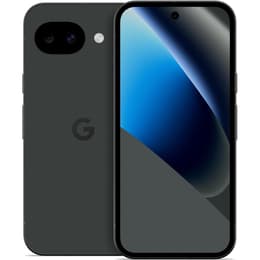

Compare models
Google Pixel 10 • Unlocked vs Google Pixel 10a • Unlocked
- 1-year warranty
- Free standard shipping
- Free 30-day returns
Differences at a glance
The Google Pixel 10 (2025) and Google Pixel 10a (2026) represent two complementary approaches to modern smartphone engineering within Google's device lineup. While both models share a similar 6.3-inch screen format and run on the Android operating system, they cater to distinct user preferences through differing internal architectures and camera configurations.
Understanding how these two unlocked smartphones diverge in everyday handling, performance potential, and hardware longevity helps prospective buyers identify which model best suits their personal usage patterns.
Available Models
Color
Storage (GB)
Scores
Durability
When evaluating structural longevity and software support, both devices offer robust frameworks designed to last for several years of reliable daily operation.
- Software longevity: Both smartphones launch with Android 16 and qualify for extensive multi-year operating system upgrades, ensuring long-term access to security patches and new software features.
- Build resilience: Each device features durable water and dust resistance alongside modern protective glass, though the standard model incorporates a slightly more robust frame construction for heavy handling.
- Repair framework: Both models benefit from accessible component replacement networks and structured software diagnostic tools, making them sustainable, quality-assured refurbished options for eco-conscious consumers.
Release Year
2025
2026
Performance
Performance capabilities vary based on the underlying hardware generation, influencing how smoothly each device handles intensive multitasking and everyday applications.
- System responsiveness: The Google Pixel 10 relies on a higher-tier processor generation that handles demanding applications, complex multitasking, and sustained graphics processing with greater thermal efficiency.
- Memory allocation: Equipped with a larger pool of system memory, the standard model manages background tasks and switching between heavy apps with minimal reloading, whereas the Pixel 10a handles typical daily workflows efficiently with slightly more conservative multitasking overhead.
- Battery behavior: The Pixel 10a features a slightly larger physical battery capacity that pairs with an optimized, power-efficient processor to deliver consistent all-day endurance for standard web browsing and messaging.
Screen quality
Display hardware across both smartphones delivers clear, vibrant visuals suited for media consumption, reading, and outdoor visibility.
- Panel technology: Both devices utilize bright OLED display technology that produces deep black levels, high contrast ratios, and vivid color reproduction for everyday viewing.
- Motion smoothness: Each model supports a high maximum refresh rate that dynamically scales up to 120Hz, ensuring fluid scrolling through web pages, social media feeds, and system menus.
- Outdoor clarity: The standard Pixel 10 achieves a higher peak brightness level for easier readability under direct sunlight, while the Pixel 10a provides comfortable viewing thresholds for typical indoor and overcast outdoor environments.
Audiovisual
Optics and media capabilities present a clear point of divergence, particularly for users who frequently rely on varied focal lengths for photography.
- Lens configuration: The Google Pixel 10 includes a dedicated triple-lens array featuring a high-resolution telephoto lens for optical zoom reach, whereas the Pixel 10a employs a streamlined dual-lens setup focused on wide and ultra-wide perspectives.
- Computational photography: Both devices leverage advanced image processing software to produce sharp, balanced everyday photos, low-light night imagery, and stable video recording.
- Audio and media output: Stereo speaker configurations on both models deliver clear voice reproduction for calls and adequate volume levels for casual media playback without external accessories.
Miscellaneous
Practical day-to-day utilities, physical dimensions, and connectivity standards dictate how comfortably each phone integrates into daily routines.
- Physical handling: The Pixel 10a utilizes a composite matte back and slightly altered dimensions that yield a lighter overall hand-feel, while the Pixel 10 features denser build materials that provide a heavier grip.
- Connectivity features: Both unlocked models support fast 5G data networks, modern Wi-Fi standards, secure Bluetooth protocols, and contactless payment sensors.
- Biometric security: Each smartphone incorporates responsive, screen-integrated fingerprint sensors alongside facial recognition options for quick device unlocking.
Screen size (inches)
6.3
6.3
Network
LTE
5G
SIM card
eSIM
Physical SIM + eSIM
Carrier compatibility
Unlocked
Unlocked
Connector
USB-C
USB-C
What the community thinks
Choosing between the Google Pixel 10 and the Google Pixel 10a depends entirely on individual feature priorities and daily device demands. Users prioritizing advanced optical zoom capabilities, heavier processing headroom for demanding tasks, and higher peak display brightness may find the standard Google Pixel 10 aligns well with their preferences. Conversely, users who value straightforward everyday reliability, a lightweight feel, and efficient battery endurance for standard messaging and media will find the Google Pixel 10a well-suited to their needs.
For those looking toward sustainable technology upgrades, choosing a quality-assured refurbished option provides a reliable way to access these capabilities while supporting eco-friendly purchasing habits. Evaluating these practical differences ensures a well-informed decision tailored to your specific workflow.