Compare models
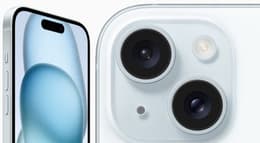
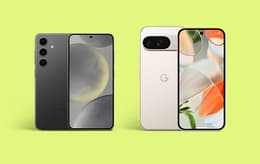
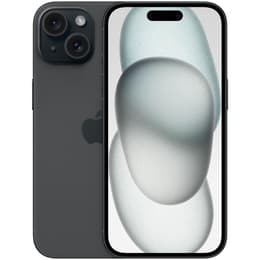
Google Pixel 10 • Unlocked vs iPhone 15 • Unlocked
- 1-year warranty
- Free standard shipping
- Free 30-day returns
Differences at a glance
The Google Pixel 10 (released in 2025) and the Apple iPhone 15 (released in 2023) are modern smartphones that represent distinct software ecosystems and hardware philosophies. While both devices offer polished daily experiences, they differ significantly in their operating systems, design layouts, and functional capabilities. The Google Pixel 10 runs on Android 16 with extensive artificial intelligence integration, whereas the iPhone 15 operates on iOS with a focus on seamless hardware and software integration. Choosing between them depends on user preferences for software customization versus ecosystem simplicity.
Available Models
Color
Storage (GB)
Scores
Durability
When evaluating durability and long-term utility, both devices offer robust build quality and extended support windows, though their update timelines and repair structures differ.
- Software Longevity: The Google Pixel 10 benefits from an extended software support commitment, providing major operating system upgrades for several years. The iPhone 15 also receives consistent multi-year iOS updates from Apple, ensuring long-term feature access and security.
- Build and Repairs: Both smartphones utilize durable front glass protection and sturdy side framing designed to withstand everyday wear and tear. Independent repair networks and replacement parts are widely accessible for both manufacturers, supporting extended practical lifespans.
Release Year
2025
2023
OS
Android
iOS
Foldable
No
No
Performance
Performance capabilities vary based on internal hardware distribution, influencing how each device handles multitasking, demanding applications, and daily power consumption.
- System Responsiveness: The Google Pixel 10 handles heavy apps and advanced artificial intelligence tasks smoothly, supported by ample memory capacity. The iPhone 15 utilizes an optimized mobile processor that manages everyday multitasking, gaming, and background processes with high efficiency.
- Battery Behavior: The Google Pixel 10 features a large battery capacity designed to comfortably clear a full day of moderate to heavy mixed usage. The iPhone 15 relies on an efficient processor design to maximize its smaller physical battery, supporting reliable daily operation under standard conditions.
Screen quality
Display configurations on both devices deliver sharp visuals, vibrant color representation, and clear readability across various lighting environments.
- Display Technology: The Google Pixel 10 features an OLED panel with a high refresh rate for smooth scrolling and fluid motion during daily navigation. The iPhone 15 utilizes a Super Retina XDR display that balances color accuracy with deep contrast ratios for media consumption.
- Outdoor Visibility: Both screens offer high peak brightness outputs, allowing users to easily read notifications, view maps, and capture photos under direct sunlight without visual obstruction.
Resolution
1080x2424
1179 x 2556
Screen type
OLED
Super Retina XDR OLED
Audiovisual
Imaging capabilities cater to different photography styles, offering versatile sensor arrays and distinct video processing approaches.
- Photography and Zoom: The Google Pixel 10 incorporates a triple-lens rear camera system featuring dedicated optical zoom capabilities for distant subjects. The iPhone 15 relies on an advanced dual-camera arrangement that excels at capturing everyday snapshots and low-light scenes with natural color tones.
- Audio and Video: Both models record high-resolution video with stable stabilization features and clear multi-microphone audio capture, making them well-suited for recording daily memories or video calls.
Main camera
Advanced Triple Rear
48 megapixels
Front camera
10.5-megapixel Dual PD selfie camera with autofocus
12 megapixels
Miscellaneous
Practical day-to-day usability elements, including connectivity standards, physical dimensions, and physical ports, shape the handling experience of each phone.
- Connectivity and Ports: Both devices feature universal USB-C charging ports, modern 5G network compatibility, and up-to-date wireless standards for fast data transmission.
- Physical Handling: The Google Pixel 10 provides a slightly larger screen real estate within a heavier chassis, while the iPhone 15 offers a more compact, lightweight form factor that sits comfortably in smaller hands.
Weight
7 oz
171 oz
Screen size (inches)
6.3
6.1
Network
LTE
5G
SIM card
eSIM
eSIM
Carrier compatibility
Unlocked
Unlocked
Connector
USB-C
USB-C (USB 2)
What the community thinks
Users prioritizing deep software customization, integrated artificial intelligence tools, and dedicated optical zoom options may find the Google Pixel 10 well-suited to their daily routines. Conversely, users who favor a streamlined mobile operating system, a compact handling footprint, and cohesive ecosystem accessories will likely lean toward the iPhone 15. Both devices fulfill modern smartphone requirements effectively through different design choices.
For consumers seeking a sustainable choice, exploring a quality-assured refurbished option provides a reliable way to access these features while reducing electronic waste.