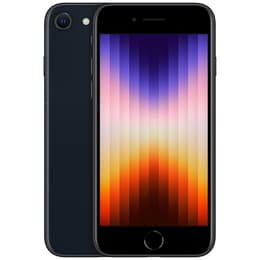

iPhone 14 Pro • Unlocked vs iPhone SE (2022) • Locked T-Mobile

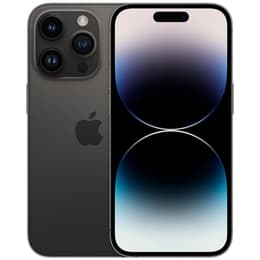
iPhone 14 Pro • Unlocked
Starting at

Refurbished price:$354.99

Versus $999.00 new

See options
iPhone SE (2022) • Locked T-Mobile
Starting at

Refurbished price:$133.00

Versus $429.00 new

See options

Ratings

The iPhone 14 Pro, released in September 2022, and the iPhone SE (3rd generation), launched in March 2022, represent distinct approaches within Apple's smartphone lineup. While both devices operate on the same iOS ecosystem, they cater to different user preferences through significant differences in their display technology, camera systems, and overall design philosophy.

Scores

Durability

When considering the long-term usability of these devices, several factors come into play, including software support, physical resilience, and ease of maintenance.

  • Software Longevity: The iPhone 14 Pro, being released later, is expected to receive software updates for a slightly longer duration than the iPhone SE (3rd generation). Both devices benefit from Apple's consistent update policy, ensuring several years of current iOS features and security patches.
  • Physical Durability: The iPhone 14 Pro features a Ceramic Shield front cover and is rated IP68 for water and dust resistance, allowing submersion up to 6 meters for 30 minutes. The iPhone SE (3rd generation) also includes a Ceramic Shield front and carries an IP67 rating, protecting against submersion up to 1 meter for 30 minutes.
  • Repairability: The iPhone SE (3rd generation) is generally considered to have an average repairability score, with common components like the battery and screen being relatively accessible for replacement. The iPhone 14 Pro also allows for component replacement, though some repairs, such as screen replacements, may impact features like True Tone functionality.

Release Year

2022

2022

Last OS Compatibility

Yes

Yes

OS

iOS

iOS

Foldable

No

No

Performance

The performance of a smartphone is largely determined by its processing power, memory, and battery efficiency, all of which impact daily usage and responsiveness.

  • Processing Capabilities: The iPhone 14 Pro is equipped with a more advanced processor, offering faster CPU and GPU speeds. This translates to smoother operation for demanding applications, complex multitasking, and graphically intensive games. The iPhone SE (3rd generation) features a capable processor that handles everyday tasks, app launches, and general navigation with ease, providing a responsive experience for most users.
  • Multitasking and Storage: The iPhone 14 Pro typically includes more internal memory, which contributes to more fluid multitasking, allowing users to switch between numerous open applications without noticeable slowdowns. It also offers higher maximum storage capacities. The iPhone SE (3rd generation) provides sufficient memory for typical smartphone usage and comes with standard storage options.
  • Battery Behavior: The iPhone 14 Pro offers significantly longer battery life, with users often reporting it lasting a full day or more even with heavy use. The iPhone SE (3rd generation), while improved over its predecessor, generally requires more frequent charging for users with moderate to heavy usage patterns, often needing a top-up by the evening.

Memory (GB)

6 GB

4 GB

Screen quality

The display is a primary interface for any smartphone, and these two models offer distinct visual experiences.

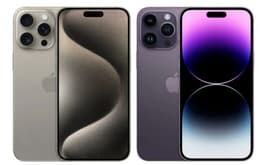
  • Display Technology and Size: The iPhone 14 Pro features a 6.1-inch Super Retina XDR OLED display, providing deep blacks, vibrant colors, and high contrast. In contrast, the iPhone SE (3rd generation) has a more compact 4.7-inch Retina HD LCD display, which offers good color accuracy and clarity.
  • Brightness and Clarity: The iPhone 14 Pro's display is notably brighter, reaching up to 1000 nits typical brightness and a peak of 2000 nits outdoors, making it highly legible even in direct sunlight. The iPhone SE (3rd generation) has a maximum brightness of 625 nits, which is adequate for most indoor and outdoor conditions but can be less visible in very bright environments.
  • Refresh Rate and Features: The iPhone 14 Pro includes ProMotion technology, offering an adaptive refresh rate that can go up to 120Hz for smoother scrolling and more fluid animations, and can drop to 1Hz for power efficiency with its Always-On display. It also introduces the Dynamic Island, an interactive area around the front camera. The iPhone SE (3rd generation) has a standard 60Hz refresh rate and retains the traditional Home button design with larger bezels.

Resolution

1179 x 2556

750 x 1334

Screen type

LTPO Super Retina XDR OLED

Retina IPS LCD

Audiovisual

For many users, the camera system is a crucial aspect of a smartphone, and there are substantial differences between these two models.

  • Rear Camera System: The iPhone 14 Pro boasts a versatile triple-camera system, including a 48-megapixel main sensor, a 12-megapixel ultra-wide lens, and a 12-megapixel telephoto lens with 3x optical zoom. It benefits from advanced computational photography features like Photonic Engine, Deep Fusion, and Smart HDR 4, significantly enhancing image quality, especially in challenging lighting. The iPhone SE (3rd generation) features a single 12-megapixel wide camera, which performs well in good lighting conditions and includes Smart HDR 4 and Photographic Styles.
  • Low-Light Performance and Video: The iPhone 14 Pro offers significantly improved low-light photography with its larger sensor and dedicated Night mode, capturing more detail and better color accuracy in dim environments. It also supports advanced video features like Cinematic mode up to 4K HDR at 30 frames per second and Action mode for stabilized video. The iPhone SE (3rd generation) does not have a dedicated Night mode, and its low-light performance is more limited. It can record video up to 4K at 60 frames per second.
  • Front Camera: The iPhone 14 Pro features a 12-megapixel TrueDepth front camera with autofocus, delivering sharper selfies and improved video calls. The iPhone SE (3rd generation) has a 7-megapixel front camera, suitable for everyday selfies and video calls.

Main camera

48 megapixels

12 megapixels

Front camera

12 megapixels

7 megapixels

Miscellaneous

Beyond the core features, several practical elements contribute to the overall user experience and device utility.

  • Connectivity and Ports: Both devices support 5G connectivity and Wi-Fi 6 for fast wireless speeds. The iPhone 14 Pro uses Bluetooth 5.3, while the iPhone SE (3rd generation) uses Bluetooth 5.0. Both models retain the Lightning port for charging and data transfer.
  • Biometric Security: The iPhone 14 Pro relies on Face ID for secure authentication and unlocking, utilizing its TrueDepth camera system. The iPhone SE (3rd generation) features Touch ID, integrated into its Home button, offering a familiar fingerprint-based security method.
  • Design and Handling: The iPhone 14 Pro has a more modern, edge-to-edge display design with a stainless steel frame, contributing to its solid feel and a weight of 206 grams. The iPhone SE (3rd generation) maintains a classic design with an aluminum frame, making it lighter at 144 grams and more compact, which can be preferred for one-handed use. The iPhone 14 Pro also includes advanced safety features like Emergency SOS via Satellite and Crash Detection.

Weight

7 oz

3 oz

Screen size (inches)

6.1

4.7

Network

5G

5G

SIM card

eSIM

Physical SIM + eSIM

Carrier compatibility

Unlocked

T-Mobile

Connector

Lightning

Lightning

The iPhone 14 Pro and iPhone SE (3rd generation) cater to distinct user needs, offering different strengths and experiences. User feedback for the iPhone 14 Pro often highlights its exceptional display, particularly the brightness and smoothness of the ProMotion technology, and the significant advancements in its camera system, especially for low-light photography. Some users note its increased weight compared to older models. For the iPhone SE (3rd generation), common praise centers on its compact form factor, the convenience of Touch ID, and its powerful processor for its size. Criticisms frequently mention its relatively shorter battery life for heavy use and the absence of features like Night mode in its camera.

Users prioritizing a cutting-edge visual experience, advanced photographic capabilities, and the latest features like the Dynamic Island and Always-On display will find the iPhone 14 Pro well-suited to their needs. Its robust performance and extended software support make it a strong choice for those seeking a premium smartphone experience. Conversely, users who value a smaller, lighter device, prefer the traditional Home button with Touch ID, and require a capable smartphone for essential tasks and everyday photography will likely prefer the iPhone SE (3rd generation). It offers a powerful core experience in a familiar and highly portable design.

For those looking to make a sustainable choice, both models are available as quality-assured refurbished options, providing an eco-friendly alternative to purchasing new devices.

See all articles

Our recent comparisons