
Google Pixel 7 Pro • Unlocked vs iPhone 14 • Locked Verizon

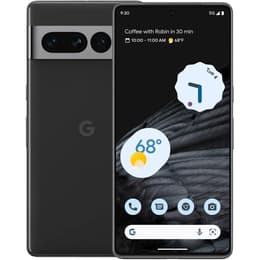
Google Pixel 7 Pro • Unlocked
Starting at

Refurbished price:$221.00

Versus $899.99 new

See options
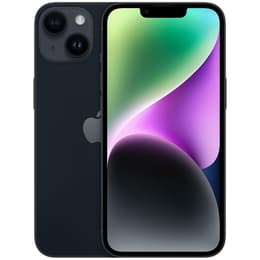
iPhone 14 • Locked Verizon
Starting at

Refurbished price:$269.00

Versus $599.00 new

See options

Ratings

The Google Pixel 7 Pro (2022) and the iPhone 14 (2022) are two prominent smartphones released in the same year, offering distinct experiences rooted in their respective operating systems. While both devices provide robust performance for daily tasks, they diverge significantly in display technology, camera capabilities, and overall design philosophy. The Pixel 7 Pro runs on Android, emphasizing customization and Google's AI-driven features, whereas the iPhone 14 operates on iOS, known for its streamlined user experience and ecosystem integration.

Scores

Durability

The longevity of a smartphone is influenced by its initial release, software support, and physical resilience. Both the Pixel 7 Pro and iPhone 14 offer substantial support, though their approaches differ.

  • Release Timeline: The Google Pixel 7 Pro was released in October 2022, while the iPhone 14 launched slightly earlier in September 2022. This means both devices are relatively close in age, impacting their remaining software support windows similarly.
  • Software Longevity: Google typically provides five years of security updates for its Pixel devices, with major Android version updates for a shorter period. The Pixel 7 Pro shipped with Android 13 and is upgradable to Android 16. Apple generally supports its iPhones with iOS updates for approximately five to six years from their release, offering a consistent update experience.
  • Repairability and Durability: The iPhone 14 features a Ceramic Shield front cover, contributing to its screen durability. Both devices carry an IP68 rating for dust and water resistance, indicating protection against immersion. Some users have noted that the Pixel 7 Pro's curved display edges can be prone to collecting dust and that its screen may scratch easily.

Release Year

2022

2022

Last OS Compatibility

Yes

Yes

OS

Android

iOS

Foldable

No

No

Performance

Evaluating smartphone performance goes beyond raw specifications, focusing on how smoothly devices handle everyday applications and demanding tasks. Both the Pixel 7 Pro and iPhone 14 deliver capable performance, but with different underlying architectures.

  • System Responsiveness: The Pixel 7 Pro is powered by a custom-designed processor that enables smooth navigation, quick app launches, and efficient handling of complex AI and machine learning tasks. The iPhone 14 utilizes a powerful processor known for its consistent and fluid performance across iOS applications and demanding games.
  • Multitasking and Storage: The Pixel 7 Pro typically comes with a generous amount of RAM, which assists in keeping multiple applications open and running without significant slowdowns. It offers various storage configurations, including 128GB, 256GB, and 512GB. The iPhone 14 also provides smooth multitasking for most users, with storage options mirroring those of the Pixel 7 Pro.
  • Battery Behavior: The Pixel 7 Pro houses a larger battery capacity, designed to provide ample power for its expansive display and advanced features. In real-world usage, it can offer a full day of mixed use, though heavy tasks like extensive camera use or gaming can lead to more rapid depletion. The iPhone 14, despite having a smaller battery capacity, is optimized to deliver a full day of power for many users, with some reporting consistent performance even after extended use.

Memory (GB)

8 GB

6 GB

Screen quality

The display is a primary interface for smartphone interaction, and both devices offer high-quality viewing experiences, albeit with distinct characteristics.

  • Display Technology and Resolution: The Google Pixel 7 Pro features a 6.7-inch LTPO OLED display with a high resolution of 3120 x 1440 pixels, resulting in a sharp image density. The iPhone 14 sports a 6.1-inch Super Retina XDR OLED display with a resolution of 2532 x 1170 pixels, offering clear visuals.
  • Refresh Rate and Smoothness: A key differentiator is the refresh rate. The Pixel 7 Pro boasts an adaptive refresh rate that can scale up to 120Hz, providing noticeably smoother scrolling and more fluid animations. In contrast, the iPhone 14 maintains a standard 60Hz refresh rate, which is perfectly functional but does not offer the same level of visual fluidity as higher refresh rate displays.
  • Brightness and Viewing Experience: Both phones offer vibrant colors and deep blacks characteristic of OLED panels. The Pixel 7 Pro can reach high peak brightness levels, making it suitable for outdoor visibility. The iPhone 14 also achieves strong brightness, particularly for HDR content, ensuring good visibility in various lighting conditions. The Pixel 7 Pro features slightly curved display edges, while the iPhone 14 retains a notch at the top of its screen.

Resolution

1440 x 3120

1170 x 2532

Screen type

LTPO AMOLED

Super Retina XDR OLED

Audiovisual

Camera performance is a significant factor for many users, and both the Pixel 7 Pro and iPhone 14 offer advanced imaging systems, each with its strengths.

  • Rear Camera Systems: The Google Pixel 7 Pro features a versatile triple-camera setup, including a 50-megapixel main sensor, a 48-megapixel telephoto lens with 5x optical zoom, and a 12-megapixel ultrawide lens. This configuration allows for a wide range of photographic possibilities, from detailed wide shots to distant subjects. The iPhone 14 is equipped with a dual-camera system, comprising a 12-megapixel main camera with a larger sensor for improved low-light performance and a 12-megapixel ultrawide camera.
  • Photography Performance: The Pixel 7 Pro is highly regarded for its computational photography, producing images with excellent dynamic range, vivid colors, and strong low-light capabilities, often utilizing its 2x optical zoom from the main sensor. Its telephoto lens provides impressive optical zoom for distant subjects. The iPhone 14's main camera also excels in capturing detailed photos with good color accuracy, especially in challenging lighting conditions, thanks to its enhanced image processing. However, it lacks a dedicated telephoto lens, relying on digital zoom for magnification.
  • Video and Front Camera: Both devices offer high-quality video recording. The Pixel 7 Pro supports up to 4K at 60 frames per second and has seen improvements in video stabilization. The iPhone 14 introduces features like Cinematic Mode for shallow depth-of-field video and Action Mode for smoother handheld footage. For selfies, the Pixel 7 Pro has a 10.8-megapixel front camera, while the iPhone 14 features a 12-megapixel front camera with autofocus.

Main camera

50 megapixels

12 megapixels

Front camera

10.8 megapixels

12 megapixels

Miscellaneous

Beyond core features, several practical elements contribute to the overall user experience and differentiate these two smartphones.

  • Connectivity and Ports: Both the Pixel 7 Pro and iPhone 14 support 5G connectivity, ensuring access to faster mobile networks where available. The Pixel 7 Pro uses a USB-C port for charging and data transfer, while the iPhone 14 utilizes Apple's proprietary Lightning port. Neither device includes a traditional 3.5mm headphone jack.
  • Biometric Security and Sensors: The Pixel 7 Pro incorporates an under-display fingerprint sensor for secure unlocking, alongside a less secure face unlock option. The iPhone 14 relies on Face ID, a robust facial recognition system, for biometric authentication. Both phones include a suite of sensors for various functionalities, such as ambient light sensors and accelerometers.
  • Design and Handling: The Pixel 7 Pro is a larger and heavier device, measuring 162.9 x 76.6 x 8.9 mm and weighing 212 grams, which might appeal to users who prefer a more expansive screen. The iPhone 14 is more compact and lighter at 146.7 x 71.5 x 7.8 mm and 172 grams, offering easier one-handed use for many. The Pixel 7 Pro features a glass back with a distinctive camera bar, while the iPhone 14 has a flat-edged design with a glass back.

Weight

7 oz

6 oz

Screen size (inches)

6.7

6.1

Network

5G

5G

SIM card

Physical SIM + eSIM

eSIM

Carrier compatibility

Unlocked

Verizon

The Google Pixel 7 Pro and iPhone 14, both released in 2022, cater to different user preferences through their distinct operating systems and hardware philosophies. Users often praise the Pixel 7 Pro for its exceptional camera system, particularly its zoom capabilities and computational photography, which consistently produce high-quality images. Its larger, high-resolution 120Hz display is also a frequent highlight, offering a more immersive and fluid visual experience. However, some users have noted concerns regarding its battery life under heavy usage, potential for overheating, and occasional connectivity issues.

The iPhone 14 is generally lauded for its reliable performance, consistent software experience, and robust build quality, including its Ceramic Shield front. Its camera system, while lacking a dedicated telephoto lens, is well-regarded for its improved low-light performance and new video features like Action Mode. Criticisms sometimes point to its 60Hz display, which some users feel is a step behind competitors, and the incremental nature of its upgrades compared to its predecessor.

Users prioritizing a versatile camera system with optical zoom, a larger and smoother high-refresh-rate display, and the open customization of the Android ecosystem may find the Google Pixel 7 Pro well-suited to their needs. Conversely, individuals who value a compact form factor, the intuitive and secure iOS experience, and a consistently reliable performance for everyday tasks might lean towards the iPhone 14. Both devices represent quality-assured options, and considering a refurbished model can be an eco-friendly alternative for acquiring either of these capable smartphones.

See all articles

Our recent comparisons