
Google Pixel 7 Pro • Unlocked vs iPhone SE (2022) • Locked AT&T

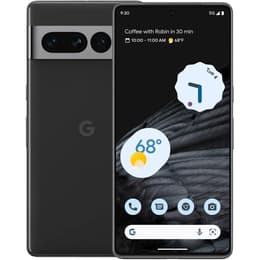
Google Pixel 7 Pro • Unlocked
Starting at

Refurbished price:$221.00

Versus $899.99 new

See options
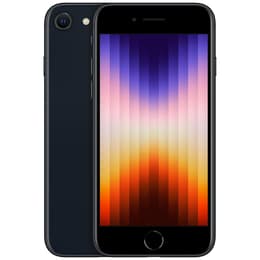
iPhone SE (2022) • Locked AT&T
Starting at

Refurbished price:$102.00

Versus $429.00 new

See options

Ratings

The Google Pixel 7 Pro, released in October 2022, and the iPhone SE (2022), launched in March 2022, represent distinct approaches to smartphone design and functionality. While the Pixel 7 Pro offers a large, feature-rich Android experience, the iPhone SE (2022) provides a compact iOS device with a classic design. These differences extend to their display technology, camera systems, and overall user interaction.

Scores

Durability

When considering the long-term usability of these devices, their release timelines and software support are key factors. Both phones are designed to receive regular updates, but their respective ecosystems handle longevity differently.

  • Release Timeline and OS Support: The Google Pixel 7 Pro, released in October 2022, shipped with Android 13 and is expected to receive several years of major Android updates, along with five years of security updates. The iPhone SE (2022), launched in March 2022, came with iOS 15 and typically receives iOS updates for approximately five to six years from its release, with the latest version compatible as of September 2025 being iOS 26.
  • Durability Features: The Pixel 7 Pro features Gorilla Glass Victus on its display and an IP68 rating for dust and water resistance, allowing submersion up to 1.5 meters for 30 minutes. User reports indicate that while the screen is robust, the metal camera bar can be prone to scratches, and the phone shows some flex in bend tests, potentially affecting water resistance over time. The iPhone SE (2022) has an IP67 rating, protecting against dust and water immersion up to 1 meter for 30 minutes, and uses glass described as the "toughest in a smartphone" on both the front and back, similar to the back glass of the iPhone 13 series. Drop tests suggest good durability for front and side impacts, though the back glass may be more susceptible to cracking.
  • Practical Lifespan: Both devices offer solid build quality for their respective categories. The Pixel 7 Pro's larger display and more advanced materials aim for a premium feel, while the iPhone SE (2022) prioritizes a compact form factor with robust glass. Users of both devices can expect several years of reliable operation, with software support being a primary determinant of their practical lifespan.

Release Year

2022

2022

Last OS Compatibility

Yes

Yes

OS

Android

iOS

Foldable

No

No

Performance

The performance of a smartphone is influenced by its internal components, affecting everything from app loading times to multitasking efficiency and battery endurance.

  • Processor Capabilities: The Google Pixel 7 Pro is powered by a current-generation processor designed by Google, which enables smooth operation for demanding applications, efficient multitasking, and advanced on-device artificial intelligence features. The iPhone SE (2022) incorporates a powerful chip also found in more premium iPhone models, providing a highly responsive user experience and efficient handling of iOS applications and games.
  • Memory and Storage: The Pixel 7 Pro typically comes with 12GB of RAM, facilitating extensive multitasking and smooth transitions between numerous open applications. It offers storage options up to 512GB. The iPhone SE (2022) features 4GB of RAM, which is optimized for iOS's memory management, providing a fluid experience for everyday tasks. Storage configurations for the iPhone SE (2022) go up to 256GB.
  • Battery Behavior: The Pixel 7 Pro houses a 5000 mAh battery, which generally provides a full day of mixed usage, though heavy use of features like the camera or 5G connectivity can lead to more rapid drainage. The iPhone SE (2022) has a 2018 mAh battery, offering average battery life for a modern smartphone, typically lasting a day with moderate use but requiring more frequent charging for heavy users. Both support fast charging, and the Pixel 7 Pro also offers reverse wireless charging.

Memory (GB)

8 GB

4 GB

Screen quality

The visual experience on a smartphone is largely defined by its display, encompassing technology, resolution, and responsiveness.

  • Display Technology and Resolution: The Google Pixel 7 Pro features a large 6.7-inch LTPO AMOLED display with a sharp 1440 x 3120 pixel resolution, resulting in a high pixel density of 512 ppi. This technology delivers deep blacks, vibrant colors, and excellent contrast. In contrast, the iPhone SE (2022) has a more compact 4.7-inch IPS LCD Retina HD display with a 750 x 1334 pixel resolution and a pixel density of 326 ppi.
  • Brightness and Refresh Rate: The Pixel 7 Pro's display supports HDR10+ and offers a 120Hz adaptive refresh rate, providing smooth scrolling and responsive visuals, along with high brightness levels for good outdoor visibility. The iPhone SE (2022) has a standard 60Hz refresh rate and a brightness level that is suitable for most indoor and outdoor conditions, though it may not match the peak brightness of the Pixel 7 Pro.
  • Viewing Experience: The Pixel 7 Pro's larger, higher-resolution OLED screen with a faster refresh rate offers an immersive viewing experience, particularly for media consumption and gaming. The iPhone SE (2022), with its smaller LCD and traditional bezels, provides a clear and consistent image, but the viewing area is more constrained, and the display technology is less advanced.

Resolution

1440 x 3120

750 x 1334

Screen type

LTPO AMOLED

Retina IPS LCD

Audiovisual

Camera capabilities are a significant differentiator, impacting the quality of photos and videos captured in various conditions.

  • Rear Camera Systems: The Google Pixel 7 Pro boasts a versatile triple-camera setup on the rear, including a 50MP wide-angle lens, a 12MP ultrawide lens, and a 48MP telephoto lens with 5x optical zoom. This configuration allows for detailed shots across different focal lengths and offers advanced computational photography features. The iPhone SE (2022) features a single 12MP wide-angle camera on its rear. While it benefits from the powerful processor for image processing, it lacks the versatility of multiple lenses.
  • Photography Performance: The Pixel 7 Pro excels in various lighting conditions, with its larger sensors and advanced processing delivering strong low-light performance and detailed images. Its telephoto lens provides significant zoom capabilities. The iPhone SE (2022) performs well in good lighting, producing images with accurate colors and detail. However, it lacks a dedicated Night Mode, which means low-light photos can appear darker and grainier compared to devices with this feature.
  • Video Recording and Front Camera: Both phones are capable of recording high-quality video. The Pixel 7 Pro supports 4K video recording at 30 or 60 frames per second. Its front-facing camera is 10.8MP. The iPhone SE (2022) also records 4K video at up to 60 frames per second and features a 7MP front camera. The iPhone SE's front camera, while capable, may smooth out skin tones more than some users prefer.

Main camera

50 megapixels

12 megapixels

Front camera

10.8 megapixels

7 megapixels

Miscellaneous

Beyond core performance and display, several practical features contribute to the overall user experience.

  • Connectivity and Ports: Both devices support 5G connectivity, enabling faster mobile data speeds. The Pixel 7 Pro includes Wi-Fi 6E and Bluetooth 5.2, along with a USB-C port for charging and data transfer. The iPhone SE (2022) supports Wi-Fi 6 and Bluetooth 5.0, and uses Apple's proprietary Lightning port.
  • Biometric Security and Audio: The Pixel 7 Pro features an under-display optical fingerprint sensor and stereo speakers. The iPhone SE (2022) retains the classic home button with Touch ID for fingerprint recognition and also offers stereo speakers.
  • Design and Handling: The Pixel 7 Pro is a larger device, measuring 162.9 x 76.6 x 8.9 mm and weighing 212g, with a modern, nearly bezel-less design and an aluminum frame. The iPhone SE (2022) is significantly more compact and lighter at 138.4 x 67.3 x 7.3 mm and 144g, featuring a traditional design with a physical home button and thicker bezels.

Weight

7 oz

3 oz

Screen size (inches)

6.7

4.7

Network

5G

5G

SIM card

Physical SIM + eSIM

Physical SIM + eSIM

Carrier compatibility

Unlocked

AT&T

The Google Pixel 7 Pro and iPhone SE (2022) cater to different user preferences, offering distinct experiences within their respective ecosystems. User sentiment for the Pixel 7 Pro often highlights its advanced camera capabilities, vibrant display, and the clean Android experience with smart software features. Some users appreciate its larger screen for media and productivity. Criticisms sometimes point to its battery life under heavy camera usage and concerns about the durability of the camera bar in some tests.

The iPhone SE (2022) is frequently praised for its compact size, powerful processor, and the familiarity of its classic design with Touch ID. Users value its long-term software support and consistent performance for everyday tasks. Common criticisms include its dated design with thick bezels, the absence of Night Mode for its camera, and its smaller battery capacity compared to larger smartphones.

Users prioritizing a large, high-resolution display, a versatile multi-lens camera system with advanced computational photography, and the latest Android features will find the Google Pixel 7 Pro well-suited to their needs. Its performance is geared towards demanding applications and immersive media consumption. Conversely, users who prefer a smaller, more pocketable device, the familiarity and security of Touch ID, and the consistent iOS ecosystem will likely lean towards the iPhone SE (2022). It is an excellent choice for those seeking reliable performance for daily tasks in a compact form factor.

Both devices are available as quality-assured refurbished options, providing an eco-friendly alternative for consumers looking to make a sustainable choice.

See all articles

Our recent comparisons