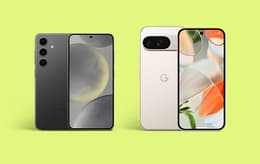
Google Pixel 8 • Unlocked vs iPhone 15 Plus • Unlocked

Google Pixel 8 • Unlocked
Starting at

Refurbished price:$254.00

Versus $699.99 new

See options
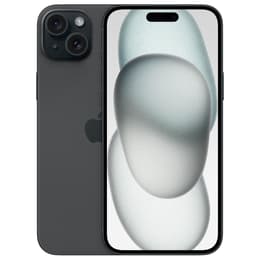
iPhone 15 Plus • Unlocked
Starting at

Refurbished price:$389.99

Versus $829.00 new

See options

Ratings

The Google Pixel 8 (released October 2023) and the iPhone 15 Plus (released September 2023) are contemporary smartphones offering distinct experiences within their respective ecosystems. While both devices provide robust performance and advanced camera capabilities, they differ significantly in their operating systems and approach to user interaction. The Pixel 8 runs on Android, emphasizing AI-driven features and a customizable interface, whereas the iPhone 15 Plus operates on iOS, known for its streamlined user experience and integration within the Apple ecosystem.

Scores

Durability

When considering the long-term usability of these devices, several factors contribute to their expected practical lifespan, including software support and physical resilience.

  • Software Longevity: The Google Pixel 8 offers an extended software commitment, with Google promising seven years of OS and security updates from its release date. The iPhone 15 Plus typically receives iOS updates for approximately five to six years from its launch, providing a slightly shorter, though still substantial, period of official support.
  • Repairability: The Pixel 8 generally receives moderate repairability scores, with some sources giving it a 7 out of 10, indicating that self-repairs are possible for those with some technical skill. The iPhone 15 Plus, on the other hand, has received lower repairability scores, around 4 out of 10, suggesting that repairs may be more challenging for the average user.
  • Physical Durability: Both devices feature robust build materials and IP68 ratings for dust and water resistance, meaning they can withstand submersion in up to 6 meters of water for up to 30 minutes. The iPhone 15 Plus incorporates Ceramic Shield on its front display for enhanced drop protection.

Release Year

2023

2023

Last OS Compatibility

Yes

Yes

OS

Android

iOS

Foldable

No

No

Performance

Both the Google Pixel 8 and the iPhone 15 Plus are designed to handle demanding applications and provide a responsive user experience, though they achieve this with different underlying architectures.

  • System Responsiveness: The iPhone 15 Plus delivers brisk performance, ensuring smooth navigation, quick app launches, and efficient multitasking. The Pixel 8 also offers a fluid experience, capable of handling demanding apps and multitasking smoothly.
  • Multitasking and App Handling: The Pixel 8 comes with 8GB of RAM, which supports efficient multitasking and keeps multiple applications running in the background without significant slowdowns. The iPhone 15 Plus features 6GB of RAM, optimized by iOS to manage applications effectively, providing a seamless experience even with numerous apps open.
  • Storage Options: The Pixel 8 is available with 128GB or 256GB of internal storage, without an option for expansion. The iPhone 15 Plus offers more flexibility with storage, available in 128GB, 256GB, and 512GB configurations.
  • Battery Behavior: The iPhone 15 Plus is noted for its excellent battery life, often lasting more than a full day with heavy use and up to three days with casual usage. The Pixel 8, equipped with a 4575 mAh battery, generally provides reliable power for a full day of typical use.

Memory (GB)

8 GB

6 GB

Screen quality

The visual experience on both smartphones is characterized by vibrant displays, though with differences in size, refresh rate, and specific technologies.

  • Display Technology and Size: The iPhone 15 Plus features a larger 6.7-inch Super Retina XDR OLED display, offering deep blacks and vibrant colors. The Google Pixel 8 has a slightly more compact 6.2-inch OLED display, also providing rich colors and good contrast.
  • Resolution and Clarity: Both phones offer high-resolution displays, with the iPhone 15 Plus at 2796x1290 pixels (460 ppi) and the Pixel 8 at 2400x1080 pixels (428 ppi), ensuring sharp text and detailed images for everyday viewing.
  • Brightness and Refresh Rate: The iPhone 15 Plus boasts impressive peak outdoor brightness of up to 2000 nits, making it highly visible in direct sunlight, and a standard 60Hz refresh rate. The Pixel 8 offers a variable refresh rate from 60Hz to 120Hz for smoother scrolling and animations, with a peak brightness of up to 2000 nits.

Resolution

1080 x 2400

1290 x 2796

Screen type

OLED

Super Retina XDR OLED

Audiovisual

Both the Google Pixel 8 and the iPhone 15 Plus offer advanced camera systems, each with strengths in different areas of photography and videography.

  • Rear Camera System: The iPhone 15 Plus features a dual-camera system with a 48MP main sensor and a 12MP ultrawide lens. The 48MP main camera can also achieve 2x optical-quality zoom by cropping the sensor. The Pixel 8 also has a dual-camera setup, including a 50MP main sensor and a 12MP ultrawide lens.
  • Photography Performance: The iPhone 15 Plus excels in capturing detailed photos with accurate colors and improved low-light performance, and offers next-generation portraits with focus and depth control. The Pixel 8 leverages its computational photography capabilities and AI features to produce high-quality images, particularly noted for its low-light performance.
  • Video Recording and Audio: Both devices are capable of recording high-quality video. The iPhone 15 Plus supports 4K Dolby Vision video recording, offering excellent stabilization and clean, crisp footage. The Pixel 8 also records 4K video at 60 frames per second. Both phones provide good microphone quality for calls and recordings, and stereo speakers for media consumption.

Main camera

50 megapixels

48 megapixels

Front camera

10.5 megapixels

12 megapixels

Miscellaneous

Beyond core performance and camera capabilities, several practical elements differentiate the user experience of these two smartphones.

  • Connectivity and Ports: Both devices support 5G cellular connectivity, Wi-Fi 6 (iPhone 15 Plus) or Wi-Fi 6E (Pixel 8), and Bluetooth 5.3. A notable change for the iPhone 15 Plus is the adoption of a USB-C port, aligning it with the Pixel 8, which also uses USB-C.
  • Biometric Security: The iPhone 15 Plus relies on Face ID for secure facial recognition. The Google Pixel 8 offers both an in-display fingerprint sensor and face unlock for biometric authentication.
  • Design and Handling: The iPhone 15 Plus features an aluminum design with a color-infused glass back and contoured edges, weighing 201 grams. The Pixel 8 has a slightly smaller form factor, weighing 187 grams, with a refined design that is more rounded than its predecessors. The iPhone 15 Plus also integrates the Dynamic Island, a feature that dynamically displays alerts and activities around the front camera cutout.

Weight

7 oz

201 oz

Screen size (inches)

6.2

6.7

Network

5G

5G

SIM card

Physical SIM + eSIM

eSIM

Carrier compatibility

Unlocked

Unlocked

Connector

USB-C

USB-C (USB 2)

User feedback for the Google Pixel 8 often highlights its advanced AI features, particularly in photography and call screening, as well as Google's commitment to seven years of software updates. Users appreciate the clean Android experience and the phone's ability to deliver consistent performance for everyday tasks. Some common criticisms include its battery life, which, while good, may not match the endurance of some competitors, and the absence of a telephoto lens on the standard model.

The iPhone 15 Plus receives praise for its exceptional battery life, large and bright display, and the significant camera improvements, including the 48MP main sensor and 2x optical-quality zoom. The adoption of USB-C and the inclusion of the Dynamic Island are also frequently cited as positive upgrades. Criticisms sometimes point to the 60Hz refresh rate, which is lower than many Android counterparts, and the lack of a dedicated telephoto lens compared to the Pro models.

Users prioritizing an extended software support timeline and a highly customizable, AI-centric Android experience may find the Google Pixel 8 well-suited to their needs. Its compact size also appeals to those preferring a smaller device. Conversely, users who value industry-leading battery life, a larger display, and a streamlined iOS ecosystem with strong camera performance will likely lean towards the iPhone 15 Plus. Both devices offer a quality-assured refurbished option, providing a sustainable choice for consumers.

See all articles

Our recent comparisons