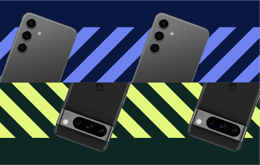

Google Pixel 8a • Unlocked vs Google Pixel Fold • Unlocked

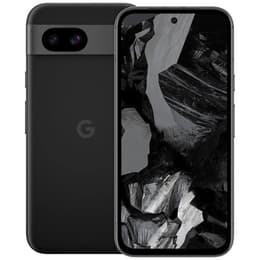
Google Pixel 8a • Unlocked
Starting at

Refurbished price:$238.66

Versus $899.99 new

See options
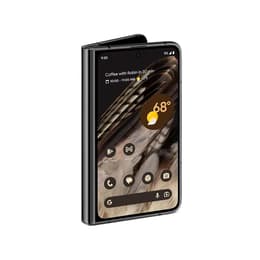
Google Pixel Fold • Unlocked
Starting at

Refurbished price:$589.00

Versus $1,799.00 new

See options

Ratings

The Google Pixel 8a, released in May 2024, and the Google Pixel Fold, launched in June 2023, represent distinct approaches within Google's smartphone lineup. While both devices operate on the Android platform and integrate Google's advanced AI capabilities, they cater to different user preferences through their form factors and core hardware. The Pixel 8a offers a traditional smartphone experience with a focus on accessibility and updated internal components, whereas the Pixel Fold provides a versatile, foldable design that transforms from a compact phone into a larger tablet-like display. This comparison will explore their practical differences to help users determine which device best suits their daily needs.

Scores

Durability

When considering the longevity of a smartphone, factors like release timeline, software support, and physical resilience are key. The Pixel 8a, being a newer device, benefits from an extended software support period compared to the Pixel Fold.

  • Release Timeline and OS Support: The Google Pixel 8a, released in May 2024, is promised seven years of OS and security updates, extending its software lifespan significantly. The Google Pixel Fold, released in June 2023, receives at least five years of security updates.
  • Physical Durability: The Pixel 8a features an IP67 rating for dust and water resistance, meaning it can withstand submersion in up to 1 meter of water for 30 minutes. Its display is protected by Corning Gorilla Glass 3, and it has an aluminum frame with a plastic back. The Pixel Fold boasts an IPX8 rating, indicating protection against continuous submersion in water, though it lacks official dust resistance. Its outer display and back are protected by Gorilla Glass Victus, while the inner foldable screen has a plastic protective layer.
  • Expected Practical Lifespan: Users prioritizing the longest possible software support and a robust, traditional build might find the Pixel 8a more appealing for extended use. The Pixel Fold, while offering a unique form factor, presents potential durability considerations related to its folding mechanism and inner screen material, though Google markets its hinge as durable.

Release Year

2024

2023

Last OS Compatibility

Yes

Yes

OS

Android

Android

Foldable

No

Yes

Performance

The performance of these devices is largely driven by their respective processors and memory configurations, impacting how smoothly they handle applications and multitasking.

  • Processor Capabilities: The Google Pixel 8a is equipped with the Tensor G3 processor, the same chip found in Google's flagship Pixel 8 series. This allows for efficient handling of demanding applications, advanced AI features, and smooth multitasking. The Google Pixel Fold utilizes the Tensor G2 processor, which provides robust performance for everyday tasks and gaming, though it is a generation older than the 8a's chip.
  • Multitasking and Responsiveness: The Pixel 8a comes with 8GB of RAM, which is sufficient for most users to switch between apps and manage multiple tasks without significant slowdowns. The Pixel Fold offers 12GB of RAM, providing additional headroom for intensive multitasking, running multiple applications simultaneously, and handling the demands of its larger, foldable display.
  • Storage Options and Battery Behavior: The Pixel 8a is available with 128GB or 256GB of internal storage. The Pixel Fold offers larger storage options at 256GB or 512GB. In terms of battery, the Pixel 8a has a 4492 mAh battery, generally providing all-day power for typical usage. The Pixel Fold, with its larger 4821 mAh battery, is designed to power its dual displays and offers over 24 hours of use, extending up to 72 hours with extreme battery saver mode.

Memory (GB)

8 GB

12 GB

Screen quality

The display experience is a primary differentiator between these two Pixel devices, with one offering a traditional flat screen and the other a versatile folding panel.

  • Display Technology and Size: The Google Pixel 8a features a 6.1-inch OLED Actua Display with a resolution of 2400 x 1080 pixels, offering vibrant colors and deep blacks. The Google Pixel Fold has two OLED displays: a 5.8-inch outer cover display with a 2092 x 1080 pixel resolution and a 7.6-inch inner foldable display with an 1840 x 2208 pixel resolution.
  • Brightness and Refresh Rate: Both devices offer a smooth viewing experience with a 120Hz refresh rate. The Pixel 8a's Actua Display can reach a peak brightness of 2000 nits, making it highly visible in bright outdoor conditions. The Pixel Fold's outer display reaches a peak brightness of 1550 nits, and its inner display reaches 1450 nits, also providing good visibility.
  • Viewing Experience: The Pixel 8a provides a consistent, high-quality viewing experience on a single, compact screen. The Pixel Fold offers the flexibility of a standard smartphone display when folded and expands into a larger, tablet-like canvas for immersive media consumption or productivity when unfolded. The inner screen of the Pixel Fold has a plastic protective layer.

Resolution

1080 x 2400

1840 x 2208

Screen type

OLED

Foldable OLED

Audiovisual

Both Pixel devices leverage Google's renowned computational photography, but their camera hardware configurations differ, offering distinct photographic capabilities.

  • Rear Camera Systems: The Google Pixel 8a features a dual-camera setup with a 64MP wide-angle main sensor and a 13MP ultrawide lens. The Google Pixel Fold boasts a more versatile triple-camera system, including a 48MP wide-angle main sensor, a 10.8MP ultrawide lens, and a 10.8MP telephoto lens with 5x optical zoom.
  • Front-Facing Cameras and Video: For selfies and video calls, the Pixel 8a has a 13MP front camera. The Pixel Fold offers two front cameras: a 9.5MP sensor on the outer display and an 8MP sensor on the inner foldable display. Both devices support 4K video recording, with the Pixel 8a capable of 4K at 30fps and 60fps on its rear camera, and 4K at 30fps on its front camera. The Pixel Fold also supports 4K video at 30fps or 60fps with its rear cameras.
  • Photography Features: Both phones benefit from Google's AI-powered camera features like Magic Eraser, Best Take, and Audio Magic Eraser, enhancing photo and video editing capabilities. The Pixel Fold's dedicated telephoto lens provides a significant advantage for capturing distant subjects with clarity.

Main camera

64 megapixels

48 megapixels

Front camera

13 megapixels

8 megapixels

Miscellaneous

Beyond the core specifications, several practical elements contribute to the overall user experience and differentiate these two Pixel smartphones.

  • Connectivity and Ports: Both the Pixel 8a and Pixel Fold support 5G connectivity, Wi-Fi 6E, and Bluetooth 5.3, ensuring fast and reliable wireless connections. Both devices feature a USB-C port for charging and data transfer, and neither includes a traditional 3.5mm headphone jack.
  • Biometric Security: The Pixel 8a incorporates an in-display fingerprint sensor for secure unlocking. The Pixel Fold utilizes a side-mounted fingerprint sensor, integrated into the power button, and also supports face unlock.
  • Design and Handling: The Pixel 8a is a more compact device, weighing 188 grams and featuring a traditional candy bar form factor with rounded corners and a matte plastic back. The Pixel Fold is significantly heavier at 283 grams due to its folding mechanism and dual displays. Its folded dimensions are thicker than a standard smartphone, but it offers a much larger screen when unfolded, providing a tablet-like experience.

Weight

7 oz

7 oz

Screen size (inches)

6.1

7.6

Network

5G

5G

SIM card

Physical SIM + eSIM

Physical SIM + eSIM

Carrier compatibility

Unlocked

Unlocked

Connector

USB-C

USB-C

The Google Pixel 8a and Google Pixel Fold cater to distinct user needs, each excelling in different areas. User feedback for the Pixel 8a often praises its balanced performance, reliable cameras, and extended software support, making it a strong contender for those seeking a dependable and long-lasting traditional smartphone experience. Some users appreciate its compact build and the integration of advanced AI features from Google's flagship line. Criticisms sometimes point to its Gorilla Glass 3 display protection, which is several generations older than what's found on more premium devices, and its plastic back, though many find the matte finish pleasant.

The Google Pixel Fold, on the other hand, is frequently lauded for its innovative foldable design, offering the versatility of a large screen in a portable format. Users often highlight its impressive camera system, especially the telephoto lens, and the immersive viewing experience of its inner display. However, common concerns include its considerable weight and thickness when folded, as well as the perceived durability of the inner foldable screen. Some early adopters also noted issues with the inner display.

Users prioritizing a compact, durable, and long-supported device for everyday tasks and photography will find the Pixel 8a well-suited to their needs. Its updated processor and extended software commitment offer a solid foundation for years of use. Conversely, users who value a large, adaptable screen for productivity, media consumption, and advanced photographic capabilities, particularly with optical zoom, may lean towards the Pixel Fold. Its unique form factor provides a distinct user experience, transforming from a phone to a small tablet. Both devices offer a quality-assured refurbished option, providing an eco-friendly alternative for those looking to make a sustainable choice.
See all articles

Our recent comparisons