Google Pixel 9 Pro XL • Unlocked vs iPhone 14 • Locked Verizon

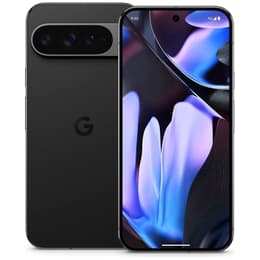
Google Pixel 9 Pro XL • Unlocked
Starting at

Refurbished price:$435.86

Versus $1,099.00 new

See options
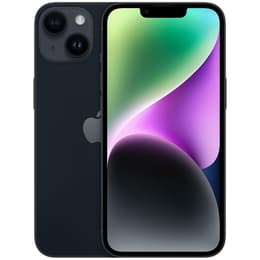
iPhone 14 • Locked Verizon
Starting at

Refurbished price:$269.00

Versus $599.00 new

See options

Ratings

The Google Pixel 9 Pro XL, released in August 2024, and the Apple iPhone 14, launched in September 2022, represent distinct approaches to the modern smartphone experience. While both devices offer robust functionality, the Pixel 9 Pro XL arrives with more recent hardware and software advancements, operating on Android, whereas the iPhone 14 runs on Apple's iOS platform. Key differentiators include their respective camera systems, display technologies, and overall performance capabilities, reflecting their different release timelines.

Scores

Durability

When considering the long-term usability of these devices, their release timelines and software support policies are significant factors.

  • Software Longevity: The Google Pixel 9 Pro XL benefits from Google's commitment to extended software support, offering seven years of operating system updates, ensuring it remains current until Android 22. In contrast, the iPhone 14, released earlier, typically receives 5-6 years of major iOS updates from its launch, meaning its software support window will close sooner than the Pixel's. [5]
  • Physical Durability: Both devices feature premium build materials designed for resilience. The iPhone 14 incorporates a Ceramic Shield front cover and an aluminum design, along with an IP68 rating for water and dust resistance. [1, 2, 17] The Pixel 9 Pro XL utilizes Gorilla Glass Victus 2 for both its front and back, complemented by a polished metal frame, and also carries an IP68 rating for water and dust resistance. [8, 27, 32]
  • Practical Lifespan: Users prioritizing the longest possible software update cycle will find the Pixel 9 Pro XL offers a more extended period of guaranteed feature and security updates. The iPhone 14, while still a capable device, will reach its end-of-life for major iOS updates earlier due to its older release date.

Release Year

2024

2022

Last OS Compatibility

Yes

Yes

OS

Android

iOS

Foldable

No

No

Performance

The performance of a smartphone is crucial for daily tasks, from app usage to demanding multimedia applications.

  • Processing Power: The Google Pixel 9 Pro XL is equipped with a current-generation processor, designed to handle intensive applications and advanced AI features with efficiency. This translates to smooth multitasking and responsive operation, even with demanding games or complex computational tasks. [5, 8] The iPhone 14, while still offering capable performance for everyday use, features a processor from an earlier generation. [2, 6]
  • Multitasking and Responsiveness: With a substantial amount of RAM, the Pixel 9 Pro XL is well-suited for users who frequently switch between multiple applications or engage in heavy browsing, maintaining fluidity without significant slowdowns. [5, 8] The iPhone 14 provides a solid user experience for general use and moderate multitasking, benefiting from iOS's optimization. [2]
  • Battery Behavior: The Pixel 9 Pro XL houses a larger battery capacity, and real-world usage reports indicate it can comfortably last a full day, often with significant charge remaining, even under heavy use. [35, 37, 38, 41] The iPhone 14's battery is designed to provide all-day power for most users, typically requiring overnight charging. [7, 14]

Memory (GB)

16 GB

6 GB

Screen quality

The visual experience is a primary consideration for many users, influenced by display technology, resolution, and brightness.

  • Display Technology and Clarity: Both devices feature OLED display technology, known for deep blacks and vibrant colors. The Pixel 9 Pro XL boasts a 6.8-inch Super Actua Display with a higher resolution, resulting in a sharper image. [32] The iPhone 14 features a 6.1-inch Super Retina XDR OLED display, offering clear visuals at 460 pixels per inch. [1, 2]
  • Brightness and Outdoor Visibility: The Pixel 9 Pro XL offers a higher peak brightness, reaching up to 3000 nits for HDR content, which enhances visibility in bright outdoor conditions. [32] The iPhone 14 provides a peak brightness of 1200 nits for HDR, ensuring good readability in various lighting environments. [1, 2]
  • Refresh Rate and Smoothness: A notable difference lies in the refresh rate. The Pixel 9 Pro XL features a variable refresh rate that can dynamically adjust between 1Hz and 120Hz, providing smoother scrolling and more fluid animations while optimizing power consumption. [32, 42, 43] The iPhone 14 has a standard 60Hz refresh rate, which delivers a consistent visual experience for most content. [2, 11]

Resolution

1344 x 2992

1170 x 2532

Screen type

LTPO OLED

Super Retina XDR OLED

Audiovisual

Both smartphones offer advanced camera systems, but with different strengths and capabilities for capturing photos and videos.

  • Rear Camera System: The Google Pixel 9 Pro XL features a versatile triple-camera setup, including a 50MP main sensor, a 48MP ultrawide lens with macro autofocus, and a 48MP telephoto lens offering 5x optical zoom. [16, 18, 27] This configuration provides flexibility for various photographic scenarios, from wide landscapes to distant subjects. The iPhone 14 comes with a dual 12MP camera system, comprising a main wide-angle lens with sensor-shift optical image stabilization and an ultrawide lens. [1, 22]
  • Photography Features: The Pixel 9 Pro XL leverages advanced computational photography with features like Night Sight, Astrophotography, and Pro Controls for manual adjustments. [10] The iPhone 14 utilizes Apple's Photonic Engine and Deep Fusion for improved low-light performance and detail, alongside features like Cinematic Mode and Action Mode for video. [1, 24]
  • Video Recording and Front Camera: The Pixel 9 Pro XL supports advanced video capabilities, including Video Boost for cloud-based 8K upscaling and Night Sight Video, and has a high-resolution 42MP front camera with autofocus. [10, 27, 31] The iPhone 14 records 4K video with Dolby Vision HDR and offers Action Mode for stabilized footage, featuring a 12MP TrueDepth front camera with autofocus. [1, 15, 22]

Main camera

50 megapixels

12 megapixels

Front camera

42 megapixels

12 megapixels

Miscellaneous

Beyond core performance and camera, several practical elements contribute to the overall user experience.

  • Connectivity and Ports: The Google Pixel 9 Pro XL supports the latest Wi-Fi 7 standard, alongside 5G and Bluetooth 5.3, and features a USB-C port for charging and data transfer. [8, 34] The iPhone 14 supports Wi-Fi 6, 5G, and Bluetooth 5.3, but utilizes Apple's proprietary Lightning port. [1, 22]
  • Biometric Security: The Pixel 9 Pro XL incorporates an in-display fingerprint sensor for secure unlocking and authentication. [8] The iPhone 14 relies on Face ID, Apple's facial recognition technology, for biometric security. [22]
  • Design and Handling: The Pixel 9 Pro XL, with its 6.8-inch display, is a larger device, offering an expansive viewing area. Its design includes a matte glass back and polished metal frame. [27, 32] The iPhone 14, with its 6.1-inch display, presents a more compact form factor, making it easier for one-handed use for some individuals. [1, 2]

Weight

8 oz

6 oz

Screen size (inches)

6.8

6.1

Network

5G

5G

SIM card

Physical SIM + eSIM

eSIM

Carrier compatibility

Unlocked

Verizon

The Google Pixel 9 Pro XL and the iPhone 14 cater to different user preferences, largely due to their respective release dates and ecosystem philosophies. Users frequently praise the Pixel 9 Pro XL for its advanced camera capabilities, particularly its computational photography features and versatile zoom options, as well as its extended software support. [10, 31] Its long-lasting battery life is also a common point of positive feedback. [35, 37, 38, 41] Some users, however, might find its larger size less convenient for single-handed operation.

The iPhone 14 is often lauded for its consistent performance, the intuitive nature of iOS, and its robust build quality. [1, 2] Its camera system, while not as feature-rich as the newer Pixel, still delivers reliable and high-quality images for everyday use. [24] A frequent point of discussion for the iPhone 14 is its 60Hz display, which some users note as less fluid compared to devices with higher refresh rates. [11, 44] Additionally, some users have reported concerns about battery health degradation over time. [45]

Users prioritizing the latest camera technology, a highly customizable Android experience, and the longest possible software support will find the Google Pixel 9 Pro XL well-suited to their needs. Conversely, individuals who value the established Apple ecosystem, a compact design, and a straightforward user experience may lean toward the iPhone 14. Both devices are available as quality-assured refurbished options, providing an eco-friendly alternative for consumers.
See all articles

Our recent comparisons