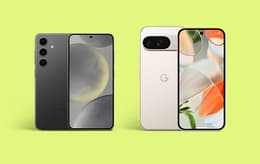
Google Pixel 9 • Unlocked vs iPhone 16 Pro Max • Unlocked

Google Pixel 9 • Unlocked
Starting at

Refurbished price:$379.00

Versus $799.00 new

See options
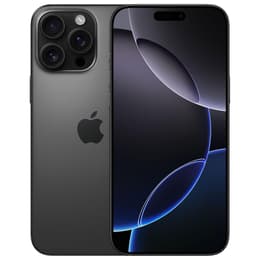
iPhone 16 Pro Max • Unlocked
Starting at

Refurbished price:$759.00

Versus $1,199.00 new

See options

Ratings

The Google Pixel 9 and the iPhone 16 Pro Max are both flagship smartphones released in late 2024, offering advanced mobile experiences. While the Pixel 9 operates on Android 15, the iPhone 16 Pro Max runs on iOS 18.x, providing distinct software ecosystems. Key differentiators between these devices include their camera systems, display technologies, and overall design philosophies.

Scores

Durability

When considering the long-term usability of these devices, both the Google Pixel 9 and the iPhone 16 Pro Max offer robust build quality and extended software support, contributing to a practical lifespan.

  • Release Timeline: The Google Pixel 9 was released in August 2024, while the iPhone 16 Pro Max followed in September 2024. This means both devices are current-generation models, benefiting from the latest hardware and software at their launch.
  • OS Support: Google has committed to seven years of software updates for the Pixel 9 series, ensuring prolonged access to new features and security patches. The iPhone 16 Pro Max, running iOS, typically receives major iOS updates for approximately five to six years from its release, with security updates often extending beyond that period.
  • Durability Features: The Pixel 9 features Gorilla Glass Victus 2 on both its front and back, along with an IP68 rating for dust and water resistance. The iPhone 16 Pro Max incorporates a titanium frame and a Ceramic Shield front, which Apple states is significantly tougher than previous generations, also carrying an IP68 rating. Both devices are designed to withstand daily use, though real-world drop tests indicate that glass components on both can still be susceptible to damage.

Release Year

2024

2024

Last OS Compatibility

Yes

Yes

Foldable

No

No

Performance

Both the Google Pixel 9 and the iPhone 16 Pro Max are equipped with powerful internal components designed for smooth operation, though they approach performance with different architectural designs.

  • Processing Power: The Pixel 9 is powered by Google's Tensor G4 processor, which is optimized for on-device artificial intelligence tasks and efficient thermal management, contributing to smooth app loading and multitasking. The iPhone 16 Pro Max features Apple's A18 Pro chip, known for its high computational speed and graphics performance, which allows for demanding applications and advanced gaming experiences.
  • Multitasking and Storage: The Pixel 9 comes with 12GB of RAM, facilitating efficient multitasking across numerous applications. Storage options for the Pixel 9 include 128GB and 256GB. The iPhone 16 Pro Max is equipped with 8GB of RAM and offers more expansive storage configurations, ranging from 256GB to 1TB, catering to users with larger digital libraries.
  • Battery Performance: The Pixel 9 houses a battery with approximately 4700 mAh capacity, providing around 10-12 hours of heavy use on 5G and up to 24-28 hours with lighter Wi-Fi usage. The iPhone 16 Pro Max, with a 4685 mAh battery, has demonstrated exceptional endurance in various tests, often lasting between 17 to 25 hours, making it a strong contender for extended usage without frequent recharging.

Memory (GB)

12 GB

8 GB

Screen quality

The visual experience on both devices is delivered through high-quality OLED displays, each offering distinct characteristics that cater to different user preferences.

  • Display Technology and Size: The Google Pixel 9 features a 6.3-inch OLED display, while the iPhone 16 Pro Max boasts a larger 6.9-inch Super Retina XDR OLED display. Both utilize Samsung's M14 OLED panel technology, which contributes to enhanced brightness and longevity.
  • Resolution and Clarity: The Pixel 9 offers a resolution of 2400x1080 pixels with a pixel density of 425 ppi, providing clear and sharp visuals. The iPhone 16 Pro Max has a higher resolution of 2868x1320 pixels at 460 ppi, resulting in a slightly crisper image on its larger screen.
  • Brightness and Smoothness: Both displays support a 120Hz adaptive refresh rate for smooth scrolling and responsive interactions. The Pixel 9's display reaches up to 1800 nits HDR brightness, while the iPhone 16 Pro Max can achieve 1000 nits typical brightness and up to 2000 nits peak brightness, offering excellent visibility in various lighting conditions.

Resolution

1080 x 2424

1320 x 2868

Screen type

OLED

LTPO Super Retina XDR OLED

Audiovisual

Both smartphones offer advanced camera systems, leveraging computational photography and high-quality sensors to capture detailed images and videos, though with different hardware configurations and software features.

  • Rear Camera Systems: The Google Pixel 9 features a dual-camera setup, including a 50MP main camera with optical image stabilization (OIS) and a 48MP ultra-wide camera with autofocus and macro capabilities. The iPhone 16 Pro Max sports a triple-camera system, comprising a 48MP main camera with OIS, a 48MP ultra-wide camera, and a 12MP 5x telephoto lens with OIS, providing greater optical zoom flexibility.
  • Photography Features: The Pixel 9 includes features like Super Res Zoom (digital), Night Sight for low-light photography, Astrophotography, Portrait Mode, and unique AI-driven tools such as 'Add Me' for group photos. The iPhone 16 Pro Max offers Cinematic mode for video, Action mode, Spatial video recording, and ProRes video capabilities, alongside a new Camera Control button for quick access to camera functions.
  • Video Recording: The Pixel 9 supports 4K video recording at up to 60 frames per second. The iPhone 16 Pro Max can record 4K Dolby Vision video at various frame rates, including 120 fps, and supports advanced video formats like ProRes and Log video.

Main camera

50 megapixels

48 megapixels

Front camera

10.5 megapixels

12 megapixels

Miscellaneous

Beyond their core functionalities, both devices incorporate a range of practical features that enhance user interaction and connectivity.

  • Connectivity and Ports: Both the Google Pixel 9 and iPhone 16 Pro Max support 5G cellular networks for fast mobile data. The iPhone 16 Pro Max also includes support for Wi-Fi 7, offering potentially faster and more reliable wireless connections. Both devices have adopted USB-C for charging and data transfer.
  • Biometric Security: The Pixel 9 typically uses an under-display fingerprint sensor for secure unlocking. The iPhone 16 Pro Max relies on Face ID for facial recognition, providing a secure and convenient authentication method.
  • Design and Handling: The Pixel 9 has dimensions of 152.8 x 72.0 x 8.5mm and weighs 198g, offering a relatively compact and manageable form factor. The iPhone 16 Pro Max is a larger device at 163.0 x 77.6 x 8.25 mm and weighs 227 grams, which might appeal to users who prefer a larger screen and a more substantial feel. The iPhone 16 Pro Max also features a new Camera Control button for enhanced photographic control.

Weight

7 oz

7990 oz

Screen size (inches)

6.3

6.9

Network

5G

5G

SIM card

Physical SIM + eSIM

eSIM

Carrier compatibility

Unlocked

Unlocked

Connector

USB-C

USB-C (USB 3)

The Google Pixel 9 and iPhone 16 Pro Max both stand as highly capable smartphones, each excelling in different areas based on user priorities. User feedback for the Pixel 9 often praises its advanced computational photography features, particularly its AI-driven tools and consistent image quality, even without a dedicated telephoto lens on the base model. Some users appreciate its improved battery life compared to previous Pixel generations and its commitment to long-term software support. Criticisms sometimes point to the absence of a telephoto lens on the standard Pixel 9 and the potential for battery drain under heavy 5G usage.

The iPhone 16 Pro Max is frequently lauded for its exceptional battery endurance, often cited as among the best available, and its powerful processor that handles demanding tasks with ease. Its comprehensive triple-camera system, including a 5x telephoto lens, receives positive remarks for versatility and high-quality video recording. Some users note that its larger size might be less comfortable for one-handed use, and while durable, its glass construction remains susceptible to damage from significant drops.

Users prioritizing a compact device with cutting-edge AI camera features and extensive software longevity may find the Google Pixel 9 well-suited to their needs. Those who value a larger display, superior battery life, a versatile optical zoom camera system, and a robust ecosystem for creative work might lean towards the iPhone 16 Pro Max. Both devices represent excellent choices, and considering a quality-assured refurbished option can be a sustainable way to acquire either of these advanced smartphones.


See all articles

Our recent comparisons