
Compare models
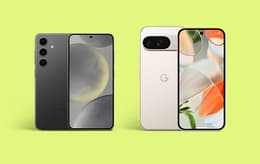
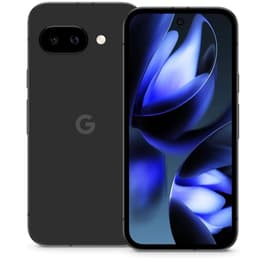
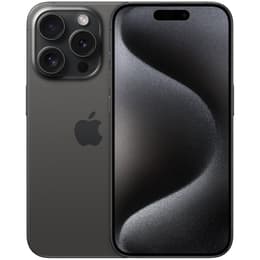
Google Pixel 9a • Unlocked vs iPhone 15 Pro • Unlocked
- 1-year warranty
- Free standard shipping
- Free 30-day returns
Differences at a glance
The Google Pixel 9a (2025) and the Apple iPhone 15 Pro (2023) represent two distinct approaches to modern smartphone engineering. Running on Android and iOS respectively, these devices cater to contrasting user preferences regarding operating systems, hardware features, and daily functionality. While both smartphones offer modern designs and reliable performance, they diverge significantly in their underlying software philosophy and physical capabilities.
Available Models
Color
Storage (GB)
Scores
Durability
When examining longevity and physical resilience, both models are structured to withstand years of routine usage while maintaining software relevance.
- Release timeline and support: The Google Pixel 9a launched in 2025 and benefits from a multi-year software support window extending up to seven years. The iPhone 15 Pro debuted in 2023 and relies on Apple's standard multi-year update cycle, ensuring long-term feature compatibility.
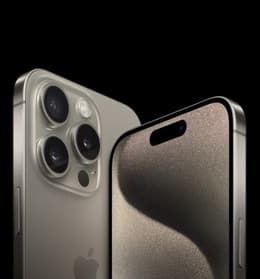
- Durability and build: Both devices feature robust water and dust resistance ratings alongside protective glass, though the iPhone 15 Pro utilizes a titanium frame construction compared to the composite frame of the Pixel.
Release Year
2025
2023
OS
Android
iOS
Foldable
No
No
Performance
Handling daily tasks, intensive applications, and background multitasking varies due to distinct internal hardware configurations and memory management.
- System responsiveness: Both devices load apps quickly, navigate menus smoothly, and manage everyday multitasking without noticeable stuttering or lag.
- Battery behavior: The Google Pixel 9a incorporates a high-capacity battery designed to easily span a full day of heavy usage, whereas the iPhone 15 Pro balances energy efficiency with a smaller physical cell, requiring nightly recharges under similar workloads.
Screen quality
Display characteristics across both models deliver vibrant visuals, though peak parameters and refresh dynamics differ.
- Display technology: Both smartphones utilize high-contrast OLED panels with deep blacks and sharp text rendering, ensuring clear visibility for media consumption and web browsing.
- Brightness and refresh rates: The Pixel 9a offers a high peak brightness level for outdoor readability alongside an adaptive refresh rate reaching up to 120Hz. The iPhone 15 Pro also features an adaptive refresh rate display with smooth scrolling and an always-on capability.
Resolution
1080x2424
1179 x 2556
Screen type
P-OLED
LTPO Super Retina XDR OLED
Audiovisual
Imaging hardware and software processing provide diverse tools for capturing everyday memories and recording video content.
- Photography performance: Both units handle low-light environments and daylight scenarios effectively through automated image stacking, with the Pixel emphasizing automated color correction and the iPhone focusing on neutral tones.
- Video and audio: Video recording on both platforms is stabilized and crisp, supported by clear multi-microphone setups for calls and ambient audio capture, paired with stereo speakers that deliver balanced media playback.
Miscellaneous
Practical daily usability elements encompass connectivity standards, physical dimensions, and biometric sensors.
- Connectivity and ports: Both models support modern 5G networks and Wi-Fi standards, with the Pixel utilizing a USB-C port and the iPhone adopting a USB-C connection for charging and data transfer.
- Handling and biometrics: The Pixel 9a features an in-display fingerprint sensor alongside facial recognition, while the iPhone 15 Pro relies exclusively on advanced facial scanning technology housed within its display cutout.
Weight
6 oz
187 oz
Screen size (inches)
6.3
6.1
Network
5G
5G
SIM card
Physical SIM + eSIM
eSIM
Carrier compatibility
Unlocked
Unlocked
What the community thinks
Users evaluating these models often praise the Google Pixel 9a for its generous battery life, extended software commitment, and user-friendly interface. Conversely, the iPhone 15 Pro receives positive feedback for its refined materials, compact proportions, and powerful video capabilities. Common discussions highlight user preferences for the respective ecosystems, noting that Android users appreciate the open customization while iOS users value seamless integration across connected hardware.
Users prioritizing extended battery longevity and streamlined daily software tools may prefer the Google Pixel 9a, while individuals seeking a compact physical footprint and advanced video recording features will find the iPhone 15 Pro well-suited to their needs. Exploring a quality-assured refurbished option through Back Market offers an eco-friendly way to acquire either device while supporting sustainable electronics consumption.