
Compare models

Google Pixel 9a • Unlocked vs Motorola Moto G Play (2024) • Unlocked

  • 1-year warranty
  • Free standard shipping
  • Free 30-day returns
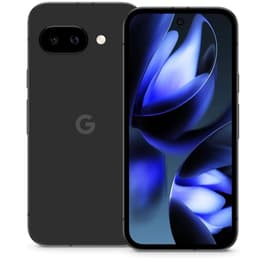
Google Pixel 9a • Unlocked
Starting at

Refurbished price:$313.00

Versus $499.99 new

See options
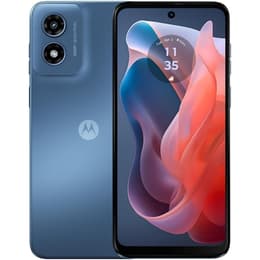
Motorola Moto G Play (2024) • Unlocked
Starting at

Refurbished price:$120.00

Versus $128.99 new

See options

Differences at a glance

The Google Pixel 9a (2025) and the Motorola Moto G Play (2024) represent two distinct approaches to everyday mobile technology. While the Google Pixel 9a focuses on advanced everyday processing capabilities and long-term software support, the Motorola Moto G Play (2024) centers on fundamental daily communication needs. Both devices run on the Android operating system, providing a familiar interface, though they target very different expectations regarding longevity and processing capability in daily use.

Available Models

Color

Storage (GB)

Scores

Durability

When examining software longevity and hardware endurance, these two smartphones follow very different support schedules and build philosophies.

  • Software longevity: The Google Pixel 9a benefits from an extended multi-year update window covering both system upgrades and security patches, whereas the Motorola Moto G Play (2024) features a more limited software update cycle typically focused on essential security maintenance.
  • Build and repairability: Both models utilize durable outer shells designed to withstand regular daily handling, with standardized repair pathways available through certified technician networks for common component replacements like screens and batteries.

Release Year

2025

2024

OS

Android

Android

Foldable

No

No

Performance

Daily operation and hardware capability differ notably between the two models, directly influencing multitasking and application handling.

  • System responsiveness: The Google Pixel 9a handles demanding apps, heavy multitasking, and modern games smoothly without noticeable lag, while the Motorola Moto G Play (2024) is engineered primarily for lighter tasks such as web browsing, messaging, and media streaming.
  • Storage and battery behavior: The Google Pixel 9a offers larger base storage configurations and efficient power management that adapts to heavy workflows, whereas the Motorola Moto G Play (2024) focuses on modest battery efficiency to comfortably navigate a full day of standard, light communication tasks.

Screen quality

Display performance shapes how users interact with media, read documents, and view photos outdoors under bright sunlight.

  • Display technology: The Google Pixel 9a features an OLED panel delivering deep blacks, high contrast ratios, and vibrant color reproduction, whereas the Motorola Moto G Play (2024) employs an LCD screen with standard refresh rates suited for basic text readability and casual video viewing.
  • Outdoor visibility: The Google Pixel 9a achieves higher peak brightness levels to maintain legibility in direct sunlight, while the Motorola Moto G Play (2024) performs adequately in indoor or shaded environments but requires shade for comfortable outdoor use.

Resolution

1080x2424

720 x 1600

Screen type

P-OLED

IPS LCD

Audiovisual

Optics and media playback hardware dictate how well each phone captures memories and reproduces audio content.

  • Camera capabilities: The Google Pixel 9a includes a sophisticated multi-lens setup powered by advanced computational photography for sharp low-light images and steady video recording, whereas the Motorola Moto G Play (2024) features a single primary rear camera geared toward simple, casual snapshots in favorable lighting conditions.
  • Audio and media output: The Google Pixel 9a utilizes balanced stereo speakers for an immersive media experience, while the Motorola Moto G Play (2024) relies on a mono speaker setup alongside a traditional headphone jack for wired audio connections.

Miscellaneous

Physical dimensions, connectivity standards, and daily convenience features complete the hardware overview of both smartphones.

  • Connectivity and ports: The Google Pixel 9a supports fast 5G data speeds and modern Wi-Fi standards via a USB Type-C port, while the Motorola Moto G Play (2024) limits connectivity to 4G LTE networks alongside its physical headphone connection.
  • Handling and sensors: Both devices incorporate secure biometric authentication methods, though their physical weights and dimensions vary slightly to accommodate different battery sizes and screen proportions during daily handling.

Weight

6 oz

6 oz

Screen size (inches)

6.3

6.5

Network

5G

LTE

SIM card

Physical SIM + eSIM

Physical SIM

Carrier compatibility

Unlocked

Unlocked

What the community thinks

User community discussions highlight distinct preferences for each device depending on daily requirements. Users often praise the Google Pixel 9a for its responsive multitasking execution, high-contrast display quality, and dependable photographic output in varied lighting conditions. Conversely, common discussions surrounding the Motorola Moto G Play (2024) center on its straightforward operation, inclusion of expandable storage options, and traditional headphone jack. Frequent criticisms for the Google Pixel 9a occasionally mention its higher tier status relative to ultra-basic alternatives, while the Motorola Moto G Play (2024) receives remarks regarding its limitation to lighter application workloads and 4G networks.

Users prioritizing advanced photography, long-term software updates, and high-performance gaming will find the Google Pixel 9a well-suited to their needs. Meanwhile, users focusing primarily on basic communication, media playback via wired headphones, and straightforward daily tasks may lean toward the Motorola Moto G Play (2024). For those seeking an eco-friendly, quality-assured alternative, choosing a refurbished version of either model provides a sustainable path to acquiring reliable mobile technology without compromising on performance standards.

Our recent comparisons