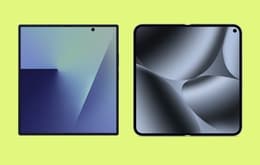
Google Pixel Fold • Unlocked vs iPhone 15 Plus • Unlocked

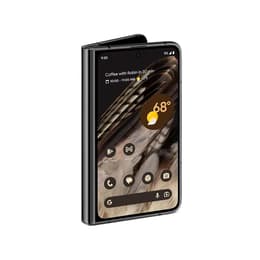
Google Pixel Fold • Unlocked
Starting at

Refurbished price:$591.00

Versus $1,799.00 new

See options
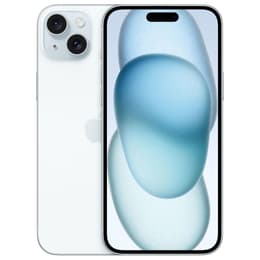
iPhone 15 Plus • Unlocked
Starting at

Refurbished price:$389.99

Versus $829.00 new

See options

Ratings

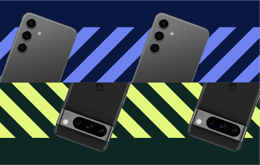
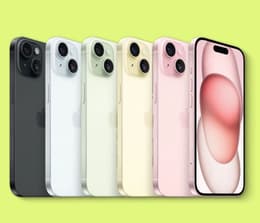
The Google Pixel Fold, released in June 2023, marks Google's entry into the foldable smartphone market, offering a unique form factor that transforms from a compact device into a larger tablet-like screen. In contrast, the iPhone 15 Plus, launched in September 2023, represents Apple's larger-screened traditional smartphone, focusing on a refined user experience within a familiar design. These devices cater to different preferences, with the Pixel Fold emphasizing versatility through its dual-screen design and the iPhone 15 Plus prioritizing a consistent, expansive display experience.

Scores

Durability

When considering the long-term usability of these devices, their release timelines and software support policies are key factors. The Google Pixel Fold, released in mid-2023, initially offered three years of OS updates and five years of security updates. However, Google has since extended its commitment, now providing five years of both OS and security updates, meaning the Pixel Fold is expected to receive Android updates until at least 2028. The iPhone 15 Plus, released a few months later in late 2023, typically benefits from Apple's consistent software support, which historically spans five to six years of iOS updates. This suggests a comparable, though slightly different, longevity in terms of receiving the latest operating system features.

  • Software Longevity: The Pixel Fold is now guaranteed five years of OS and security updates from its release, extending its functional lifespan. The iPhone 15 Plus can expect a similar duration of major iOS updates, aligning with Apple's typical support cycle.
  • Repairability: The Pixel Fold received a repairability score of 6.5 out of 10 from PBK Reviews, indicating that while self-repairs can be challenging, they are manageable, with spare parts and guides available through platforms like iFixit. The iPhone 15 Plus, while not having a public repairability score readily available, benefits from Apple's increasing focus on repairability, though complex repairs often require specialized tools and expertise.
  • Practical Lifespan: Both devices are built with durable materials, including Gorilla Glass Victus on the Pixel Fold's cover screen and the iPhone 15 Plus's Ceramic Shield front, contributing to their physical resilience against daily wear.

Release Year

2023

2023

Last OS Compatibility

Yes

Yes

OS

Android

iOS

Foldable

Yes

No

Performance

The performance of these two smartphones is driven by their respective internal components, impacting how smoothly they handle applications, multitasking, and demanding tasks.

  • Processing Power: The Google Pixel Fold is equipped with a Google Tensor G2 processor and 12GB of RAM, enabling it to manage everyday applications and multitasking efficiently. The iPhone 15 Plus features Apple's A16 Bionic chip and 6GB of RAM, providing robust performance for a wide range of tasks, from casual browsing to more intensive gaming and video editing.
  • Real-world Responsiveness: Users of the Pixel Fold generally report smooth performance, though some reviews note it can run warm during demanding tasks. The iPhone 15 Plus is consistently praised for its brisk and fluid performance across the operating system and applications, with no reported issues of lag or significant heating during typical use.
  • Battery Behavior: The Pixel Fold houses a 4821 mAh battery, designed to offer over 24 hours of typical use, extending up to 72 hours with extreme battery saver modes. The iPhone 15 Plus, with its 4383 mAh battery, is recognized for its exceptional battery longevity, often lasting more than a full day of heavy use and up to three days with lighter usage, making it a strong contender for users prioritizing extended battery life.

Memory (GB)

12 GB

6 GB

Screen quality

The display experience is a primary differentiator between these two devices, with the Pixel Fold offering a unique foldable design and the iPhone 15 Plus providing a large, traditional screen.

  • Display Technology and Size: The Google Pixel Fold features two OLED displays: a 5.8-inch cover screen and a 7.6-inch foldable inner screen. Both screens offer vibrant colors and deep blacks. The iPhone 15 Plus comes with a single 6.7-inch Super Retina XDR OLED display, known for its high contrast and color accuracy.
  • Resolution and Clarity: The Pixel Fold's cover display has a resolution of 2092 x 1080 pixels (408 ppi), while its inner display is 2208 x 1840 pixels (380 ppi). The iPhone 15 Plus offers a resolution of 2796 x 1290 pixels at 460 ppi, providing sharp and detailed visuals.
  • Brightness and Refresh Rate: Both of the Pixel Fold's screens support a 120Hz refresh rate, contributing to smooth scrolling and responsiveness, with peak brightness levels of 1550 nits for the cover screen and 1450 nits for the inner screen. The iPhone 15 Plus features a 60Hz refresh rate, which is standard for many smartphones, but lower than the Pixel Fold's. It boasts impressive brightness, reaching up to 1000 nits typical, 1600 nits peak for HDR content, and up to 2000 nits for outdoor viewing.

Resolution

1840 x 2208

1290 x 2796

Screen type

Foldable OLED

Super Retina XDR OLED

Audiovisual

Both devices offer capable camera systems, but they approach photography with different hardware configurations and software optimizations.

  • Rear Camera System: The Google Pixel Fold features a triple-lens rear camera setup, including a 48MP main sensor with optical image stabilization (OIS), a 10.8MP ultrawide lens, and a 10.8MP telephoto lens capable of 5x optical zoom. The iPhone 15 Plus has a dual-camera system, comprising a 48MP main sensor with sensor-shift OIS that also enables a 2x telephoto option through its quad-pixel sensor, and a 12MP ultrawide lens with a 120-degree field of view.
  • Photography Performance: The Pixel Fold leverages Google's computational photography, delivering consistently balanced and detailed photos, particularly excelling with its 5x optical zoom. The iPhone 15 Plus provides bright, detailed, and color-accurate pictures, with improvements in low-light performance and next-generation portrait capabilities.
  • Video Recording and Front Cameras: Both phones support 4K video recording at up to 60 frames per second. The Pixel Fold includes a 9.5MP camera on its cover display and an 8MP camera on the inner foldable screen. The iPhone 15 Plus features a 12MP TrueDepth front camera with autofocus.

Main camera

48 megapixels

48 megapixels

Front camera

8 megapixels

12 megapixels

Miscellaneous

Beyond core features, several practical elements contribute to the overall user experience and differentiate these two devices.

  • Connectivity and Ports: The Google Pixel Fold supports USB-C 3.2 Gen 2, Bluetooth 5.2, and Wi-Fi 6E (in supported regions), along with 5G connectivity. The iPhone 15 Plus also features a USB-C port, a significant change from previous models, alongside Bluetooth 5.3 and Wi-Fi 6, with 5G capabilities.
  • Biometric Security: The Pixel Fold incorporates a fingerprint sensor integrated into its side button, and face recognition is available via the cover camera. The iPhone 15 Plus relies solely on Face ID for biometric authentication, offering a secure and convenient facial recognition system.
  • Design and Build: The Pixel Fold, when folded, measures 139.7 x 79.5 x 12.1mm and weighs 283g, unfolding to 139.7 x 158.7 x 5.8mm. It features an aluminum frame, Gorilla Glass Victus on the cover, and an IPX8 water resistance rating. The iPhone 15 Plus measures 160.9 x 77.8 x 7.8mm and weighs 201g, featuring an aluminum design with a Ceramic Shield front and color-infused glass back, also boasting an IP68 water and dust resistance rating.

Weight

7 oz

201 oz

Screen size (inches)

7.6

6.7

Network

5G

5G

SIM card

Physical SIM + eSIM

eSIM

Carrier compatibility

Unlocked

Unlocked

Connector

USB-C

USB-C (USB 2)

User feedback for the Google Pixel Fold often highlights its innovative foldable design and the versatility it offers, effectively combining a smartphone and a small tablet. Its camera system, leveraging Google's image processing, receives praise for delivering quality photos, particularly with its telephoto capabilities. However, some users have noted concerns regarding its weight and the visibility of the inner screen crease. The iPhone 15 Plus is frequently lauded for its exceptional battery life, often cited as one of the best among smartphones, and its large, vibrant display. Users also appreciate the introduction of USB-C connectivity and the Dynamic Island feature. Criticisms sometimes point to the 60Hz refresh rate of its display, which is lower than many competitors, and the absence of a dedicated telephoto lens.

For users who prioritize a unique, adaptable form factor that can switch between a traditional smartphone and a larger screen for productivity or media consumption, the Google Pixel Fold presents a compelling option. Its robust camera system and extended software support make it suitable for those who enjoy experimenting with new technology and require a versatile device. Conversely, individuals seeking a large-screen smartphone with industry-leading battery life, a consistently smooth user experience, and a highly capable camera for everyday photography will find the iPhone 15 Plus well-suited to their needs. Both devices offer distinct advantages, and choosing between them depends on whether a user values the innovative flexibility of a foldable or the refined, long-lasting performance of a traditional large-screen device. For those considering a more sustainable choice, both models are available as quality-assured refurbished options.
See all articles

Our recent comparisons