
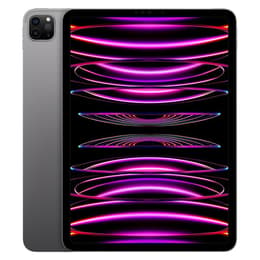
iPad 7 (2019, A10 series) vs iPad Pro (2022, M2 series)

iPad 7 (2019, A10 series)
Starting at

Refurbished price:$88.00

Versus $329.00 new

See options
iPad Pro (2022, M2 series)
Starting at

Refurbished price:$547.00

Versus $799.00 new

See options

Ratings

The iPad 2019, also known as the 7th generation iPad, and the iPad Pro 2022 (M2 Series) represent distinct tiers within Apple's tablet lineup, released in September 2019 and October 2022, respectively. While both devices operate on iPadOS, the iPad Pro 2022 introduces significant advancements in processing power, display technology, and professional capabilities, catering to more demanding workflows compared to the iPad 2019's focus on everyday tasks and media consumption.

Scores

Durability

The longevity of a tablet is influenced by its release date and the duration of software support it receives, alongside its physical resilience.

  • Release Timeline: The iPad 2019 was released in September 2019, making it several years older than the iPad Pro 2022, which debuted in October 2022. This age difference directly impacts the remaining period of software updates and overall practical lifespan.
  • Software Longevity: The iPad Pro 2022, with its newer M2 chip, is expected to receive major iPadOS updates for a significantly longer period than the iPad 2019, which is powered by the A10 Fusion chip. This extended software support ensures access to new features, security enhancements, and app compatibility for a greater number of years.
  • Physical Durability: Both models feature an aluminum chassis. The iPad Pro 2022 maintains a design similar to previous Pro generations, known for its robust build. While specific repairability scores vary, both devices are generally designed with a balance of durability and repair access in mind.

Release Year

2019

2022

Last OS Compatibility

Yes

Yes

OS

iPadOS

iPadOS

Maximum Operating System supported

iPadOS 18

iPadOS 18

Performance

Performance differences between these two iPads are substantial, primarily due to their respective processors and memory configurations, impacting how smoothly they handle various tasks.

  • Processing Power: The iPad 2019 utilizes the A10 Fusion chip, which capably handles everyday tasks, web browsing, and casual gaming. The iPad Pro 2022, however, is equipped with the M2 chip, offering a significant leap in performance with an 8-core CPU and a 10-core GPU. This allows for much smoother operation with demanding applications, advanced multitasking, and professional-grade creative workflows like 4K video editing and complex 3D rendering.
  • Multitasking and Responsiveness: The iPad 2019 comes with 3GB of RAM, sufficient for basic multitasking and app switching. The iPad Pro 2022 offers 8GB or 16GB of RAM, depending on the storage configuration, providing considerably more headroom for running multiple intensive applications simultaneously without slowdowns.
  • Storage Options: The iPad 2019 was available with 32GB or 128GB of internal storage. The iPad Pro 2022 offers a wider range of storage options, from 128GB up to 2TB, catering to users with extensive storage needs for large files and professional projects.

Memory (GB)

3 GB

8 GB

Processor

Apple A10 Fusion

Apple M2

Screen quality

The visual experience differs significantly between these two models, primarily due to advancements in display technology and features.

  • Display Technology and Clarity: The iPad 2019 features a 10.2-inch Retina IPS LCD with a resolution of 2160 x 1620 pixels, providing clear visuals for general use. The iPad Pro 2022 offers two display options: an 11-inch Liquid Retina IPS LCD (2388 x 1668 pixels) or a 12.9-inch Liquid Retina XDR mini-LED display (2732 x 2048 pixels). The 12.9-inch model, in particular, delivers superior contrast and deeper blacks due to its mini-LED technology.
  • Brightness and Color: The iPad 2019 has a maximum brightness of 500 nits. The iPad Pro 2022's 11-inch model reaches 600 nits, while the 12.9-inch Liquid Retina XDR display can achieve 1000 nits of full-screen brightness and up to 1600 nits for HDR content, making it suitable for outdoor use and HDR media consumption.
  • Refresh Rate and Smoothness: The iPad 2019 has a standard 60Hz refresh rate. The iPad Pro 2022 features ProMotion technology, offering an adaptive refresh rate up to 120Hz, which results in noticeably smoother scrolling, more responsive touch input, and a fluid experience, especially in fast-paced content or when using the Apple Pencil.

Resolution

2160 x 1620

2388 x 1668

True Tone

No

Yes

Pro-Motion

No

Yes

Screen type

Retina display

Liquid Retina XDR

Pixel density

264ppp

264ppp

Brightness

500 nits brightness

600 nits brightness max

Sound quality

Speakers

Stereo speakers

Four speaker audio

Audiovisual

The camera systems on these two iPads are designed for different use cases, with the iPad Pro 2022 offering a more advanced and versatile setup.

  • Rear Camera System: The iPad 2019 includes an 8MP rear camera with an f/2.4 aperture, capable of capturing decent photos and 1080p video at 30fps, suitable for document scanning and casual photography. The iPad Pro 2022 features a more comprehensive Pro camera system with a 12MP wide camera (f/1.8) and a 10MP ultrawide camera (f/2.4), along with a LiDAR Scanner. This setup allows for more detailed photos, wider shots, and enhanced augmented reality experiences.
  • Front Camera and Video Capabilities: The iPad 2019 has a 1.2MP front-facing camera for FaceTime calls and basic selfies. The iPad Pro 2022 significantly upgrades this to a 12MP ultrawide front camera with Center Stage, which keeps the user in frame during video calls. It also supports 4K video recording with the rear cameras and ProRes video recording for professional video workflows.
  • Audio Experience: The iPad 2019 features stereo speakers. The iPad Pro 2022 boasts a four-speaker audio system, providing a richer and more immersive sound experience for media consumption and video calls.

Miscellaneous

Beyond core performance and display, several other features contribute to the overall user experience and differentiate these two iPad models.

  • Connectivity: The iPad 2019 supports Wi-Fi 802.11ac and Bluetooth 4.2. The iPad Pro 2022 offers more advanced connectivity with Wi-Fi 6E and Bluetooth 5.3, enabling faster wireless speeds and improved performance in crowded network environments. Cellular models of the iPad Pro 2022 also support 5G, offering faster mobile data speeds.
  • Ports and Accessories: The iPad 2019 uses a Lightning port for charging and data transfer and retains a 3.5mm headphone jack. It supports the 1st generation Apple Pencil and the Smart Keyboard. The iPad Pro 2022 features a versatile Thunderbolt/USB 4 (USB-C) port, offering higher data transfer speeds and external display support. It supports the 2nd generation Apple Pencil, which attaches magnetically and charges wirelessly, and is compatible with the Magic Keyboard.
  • Biometric Authentication and Design: The iPad 2019 uses Touch ID for secure authentication. The iPad Pro 2022 utilizes Face ID for facial recognition. The iPad 2019 has a slightly thicker design compared to the more modern, thinner profile of the iPad Pro 2022.

Weight

17 oz

16 oz

Width

6.8 in

7 in

Height

9.8 in

9.7 in

Depth

0.2 in

0.2 in

Screen size (inches)

10.2

11

Network

Wi-Fi

Wi-Fi

Carrier compatibility

Without SIM Port

Without SIM Port

Wi-Fi technology

Wi-Fi 6 802.11a/b/g/n/ac

Wi-Fi 6 802.11ax

Bluetooth Version

Bluetooth 4.2

Bluetooth 5.3

Face ID

No

Yes

Touch ID

Yes

No

Connector

Lightning connector

USB Type-C

User feedback often highlights the iPad 2019 as a reliable and capable tablet for general use. Many users praise its suitability for media consumption, web browsing, and light productivity tasks, making it a solid choice for students or those seeking a straightforward tablet experience. Criticisms sometimes point to its aging processor for more demanding applications and its less vibrant display compared to newer models.

Conversely, the iPad Pro 2022 consistently receives acclaim for its exceptional performance, driven by the M2 chip, which users find capable of handling intensive creative and professional applications with ease. Its advanced display, particularly the 12.9-inch Liquid Retina XDR, is frequently lauded for its visual quality. Common concerns, however, revolve around the tablet's advanced capabilities potentially being "overkill" for average users and the software experience, while improved, still having limitations for a full laptop replacement.

Users prioritizing a powerful device for professional creative work, advanced multitasking, and a premium visual experience will find the iPad Pro 2022 well-suited to their needs. Its longer software support and advanced accessory compatibility also make it a strong contender for those seeking a device with extended longevity and versatility. For users primarily focused on everyday tasks, media consumption, and note-taking, the iPad 2019 remains a functional option. When considering either device, exploring quality-assured refurbished options can provide a sustainable choice for acquiring these tablets.

See all articles

Our recent comparisons