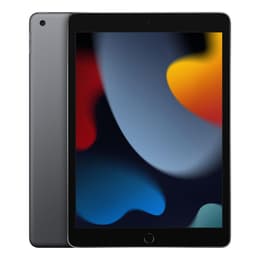
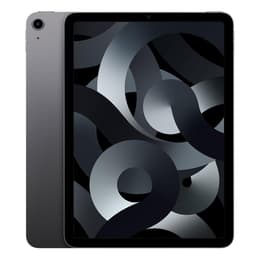
iPad 9 (2021, A13 series) vs iPad Air 5 (2022, M1 series)

iPad 9 (2021, A13 series)
Starting at

Refurbished price:$164.84

Versus $329.00 new

See options
iPad Air 5 (2022, M1 series)
Starting at

Refurbished price:$297.00

Versus $599.00 new

See options

Ratings

The iPad 2021 (9th generation) and the iPad Air 2022 (5th generation) are two distinct tablet offerings from Apple, each catering to different user needs. While both run on the intuitive iPadOS, they present key differences in their internal processing power, display technology, and overall design. The iPad 9th generation, released in September 2021, maintains a classic tablet aesthetic, whereas the iPad Air 5th generation, launched in March 2022, features a more modern design with enhanced capabilities.

Scores

Durability

When considering the longevity of these devices, several factors come into play, primarily their release dates and the underlying hardware. Both models generally offer similar repairability, consistent with Apple's tablet lineup.

  • Release Timeline: The iPad 9th generation was released in September 2021, while the iPad Air 5th generation followed in March 2022. This difference means the iPad Air 5th generation will likely receive software updates for a slightly longer period.
  • OS Support Duration: Both tablets run iPadOS, and Apple typically provides 5-6 years of major OS updates for its devices. The iPad Air 5th generation, with its more advanced processor, is anticipated to support the latest iPadOS features for a longer duration, potentially extending its practical lifespan for demanding applications.
  • Practical Lifespan: The iPad 9th generation was discontinued in May 2024, while the iPad Air 5th generation was also discontinued in May 2024. However, the more powerful internal components of the iPad Air 5th generation may allow it to handle future software and application demands more effectively over time.

Release Year

2021

2022

Last OS Compatibility

Yes

Yes

OS

iPadOS

iPadOS

Maximum Operating System supported

iPadOS 18

iPadOS 18

Performance

The performance of these two iPads is a significant differentiator, largely due to their respective internal components and memory configurations. The iPad Air 5th generation offers a notable upgrade in processing power and multitasking capabilities.

  • Processor Capabilities: The iPad 9th generation is powered by a processor that handles everyday tasks like web browsing, streaming, and light gaming smoothly. The iPad Air 5th generation, however, features a more powerful processor, which offers significantly faster CPU and graphics performance. This translates to smoother multitasking, quicker app loading, and more capable handling of demanding applications such as video editing or graphic design.
  • Multitasking and Responsiveness: The iPad 9th generation comes with 3GB of RAM, which is sufficient for general use and switching between a few applications. The iPad Air 5th generation is equipped with 8GB of RAM, providing substantially more headroom for intensive multitasking, running multiple complex applications simultaneously, and ensuring a more fluid overall user experience.
  • Storage Options: Both the iPad 9th generation and the iPad Air 5th generation are available with 64GB or 256GB of internal storage, providing options for various user storage needs.

Memory (GB)

3 GB

8 GB

Processor

Apple A13 Bionic

Apple M1

Screen quality

The visual experience on these tablets differs due to variations in their display technology and design, offering distinct advantages for different viewing preferences. Both displays offer 500 nits of brightness.

  • Display Technology and Size: The iPad 9th generation features a 10.2-inch Retina IPS LCD display. The iPad Air 5th generation upgrades to a 10.9-inch Liquid Retina IPS LCD display, which includes P3 wide color support and an anti-reflective coating, offering a more expansive and vibrant viewing area.
  • Resolution and Clarity: The iPad 9th generation has a resolution of 2160 x 1620 pixels, while the iPad Air 5th generation offers a higher resolution of 2360 x 1640 pixels. Both maintain a pixel density of 264 pixels per inch, ensuring sharp text and images.
  • Visual Enhancements: The iPad Air 5th generation's fully laminated display and anti-reflective coating reduce glare and make the screen appear closer to the surface, enhancing the viewing experience, especially in bright environments. Both models feature True Tone technology, which adjusts the display's color temperature to match ambient light.

Resolution

2160 x 1620

2360 x 1640

True Tone

Yes

Yes

Pro-Motion

No

No

Screen type

Retina display

Liquid Retina display

Pixel density

264ppp

264ppp

Brightness

500 nits brightness

500 nits brightness

Sound quality

Speakers

Stereo speakers

Stereo speakers

Audiovisual

Both iPads offer capable camera systems for everyday use, with the iPad Air 5th generation providing some enhancements, particularly for video recording and front-facing camera performance. Both feature stereo speakers.

  • Front Camera: The iPad 9th generation features a 12MP ultra-wide front camera with Center Stage, which automatically keeps subjects in frame during video calls. The iPad Air 5th generation also includes a 12MP ultra-wide front camera with Center Stage, offering a similar enhanced video conferencing experience.
  • Rear Camera: The iPad 9th generation has an 8MP wide rear camera. The iPad Air 5th generation features a 12MP wide rear camera, which offers improved detail and color accuracy for photos and supports 4K video recording at up to 60 frames per second.
  • Audio Quality: Both devices provide stereo speakers, suitable for media consumption and video calls. The iPad Air 5th generation's speakers may offer a slightly clearer audio experience compared to the base model iPad.

Miscellaneous

Beyond core performance and display, several practical elements differentiate these two tablets, impacting their connectivity, accessory compatibility, and overall handling.

  • Connectivity and Ports: The iPad 9th generation uses a Lightning port for charging and accessories, and supports Wi-Fi 5 (802.11ac) and Bluetooth 4.2. The iPad Air 5th generation features a USB-C port, offering faster data transfer speeds and broader compatibility with accessories and external displays. It also supports Wi-Fi 6 (802.11ax) and Bluetooth 5.0, along with optional 5G cellular connectivity.
  • Biometric Security: Both tablets incorporate Touch ID for secure authentication. On the iPad 9th generation, it's integrated into the Home button, while on the iPad Air 5th generation, it's conveniently located in the top button.
  • Design and Handling: The iPad 9th generation measures 250.6 x 174.1 x 7.5 mm and weighs 487g (Wi-Fi model). The iPad Air 5th generation is slightly more compact and lighter at 247.6 x 178.5 x 6.1 mm and 461g (Wi-Fi model), contributing to a more portable feel and a more modern, uniform bezel design.

Weight

16 oz

16 oz

Width

7 in

7 in

Height

9.7 in

9.7 in

Depth

0.2 in

0.2 in

Screen size (inches)

10.2

10.9

Network

Wi-Fi

Wi-Fi

Carrier compatibility

Without SIM Port

Without SIM Port

Wi-Fi technology

Wi-Fi 6 802.11a/b/g/n/ac

Wi-Fi 6 802.11ax

Bluetooth Version

Bluetooth 4.2

Bluetooth 5.0

Face ID

No

No

Touch ID

Yes

Yes

Connector

Lightning connector

USB Type-C

Users frequently praise the iPad 9th generation for its reliable performance for everyday tasks and its strong battery life, often noting it as a practical choice for general use. Criticisms sometimes point to its older design with larger bezels and the Lightning port, which some users find less versatile than USB-C.

The iPad Air 5th generation is widely lauded for its significantly enhanced performance, attributed to its powerful processor, making it suitable for more demanding creative and productivity workflows. Its modern design, USB-C connectivity, and improved front camera are also frequently highlighted as advantages. Some users, however, note that while its battery life is good, it may not always match the longevity of the standard iPad in certain heavy usage scenarios.

Users prioritizing a balance of performance for everyday tasks, long battery life, and a familiar design may find the iPad 9th generation well-suited to their needs. This device is a solid option for students, casual users, and those primarily consuming media. Conversely, users who require more robust performance for creative applications, advanced multitasking, and prefer a more modern design with USB-C connectivity and a slightly larger display will likely lean toward the iPad Air 5th generation. It is a strong contender for professionals, content creators, and users who want a more future-ready device. Both models are available as quality-assured refurbished options, providing an eco-friendly alternative for consumers.

See all articles

Our recent comparisons