iPad Pro (2021, M1 series) vs iPad Pro (2022, M2 series)

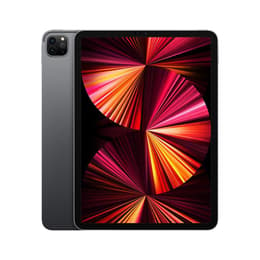
iPad Pro (2021, M1 series)
Starting at

Refurbished price:$434.00

Versus $799.00 new

See options
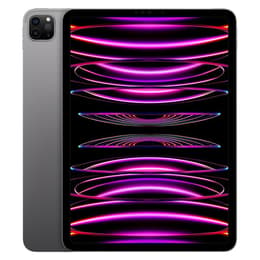
iPad Pro (2022, M2 series)
Starting at

Refurbished price:$547.00

Versus $799.00 new

See options

Ratings

The iPad Pro 2021, powered by the M1 chip, and the iPad Pro 2022, featuring the M2 chip, represent two consecutive generations of Apple's high-performance tablet line. Both devices offer a premium tablet experience, running on iPadOS and sharing a similar design language. The primary distinctions lie in their internal processing power, enhanced wireless capabilities, and subtle refinements to their camera systems and accessory interactions.

Scores

Durability

The longevity of a tablet is influenced by its release timeline, software support, and physical resilience. The iPad Pro M1 series was released in May 2021, while the M2 series followed in October 2022, giving the M2 model a slight advantage in its expected software support window.

  • Software Updates: Both iPad Pro generations are designed to receive iPadOS updates for several years, typically 5-6 years from their release. The M2 model, being newer, will likely receive official software support for approximately one year longer than its M1 predecessor.
  • Physical Durability: Both models share an identical industrial design, featuring a robust aluminum enclosure and durable glass displays. They offer comparable levels of protection against everyday wear and tear, and their repairability scores are generally similar.
  • Practical Lifespan: Given their powerful processors, both devices are expected to maintain strong performance for demanding tasks well into the future. Users can anticipate a practical lifespan where both tablets remain highly functional for a considerable period, with the M2 offering a marginally extended window for cutting-edge applications.

Release Year

2021

2022

Last OS Compatibility

Yes

Yes

OS

iPadOS

iPadOS

Maximum Operating System supported

iPadOS 18

iPadOS 18

Performance

Performance is a key differentiator between these two iPad Pro generations, primarily due to their respective chipsets. While both deliver exceptional speed, the M2 model offers incremental improvements over the already capable M1.

  • Processing Power: The iPad Pro M1 provides robust performance for demanding applications, multitasking, and graphic-intensive tasks, ensuring smooth operation across a wide range of professional and creative workflows. The iPad Pro M2, however, features a next-generation processor that delivers faster CPU and GPU speeds, resulting in quicker app loading times and more fluid handling of complex projects like 4K video editing or 3D rendering.
  • Multitasking and Memory: Both models offer configurations with 8GB or 16GB of unified memory, depending on the storage option. This ample RAM allows for efficient multitasking, keeping numerous applications active in the background without significant slowdowns. The M2's increased memory bandwidth further enhances its ability to manage multiple intensive processes simultaneously.
  • Storage Options: Both the M1 and M2 iPad Pro series are available with identical storage capacities, ranging from 128GB up to 2TB, providing ample space for large files, applications, and media.

Memory (GB)

8 GB

8 GB

Processor

Apple M1

Apple M2

Screen quality

The display technology on both iPad Pro models offers a high-quality visual experience, though the larger 12.9-inch variants stand out with a more advanced panel.

  • Display Technology: The 12.9-inch models of both the M1 and M2 iPad Pro feature a Liquid Retina XDR display, which utilizes mini-LED technology. This allows for exceptional brightness, deep blacks, and a high contrast ratio, making it particularly well-suited for HDR content consumption and professional creative work. The 11-inch models, across both generations, use a Liquid Retina IPS LCD display, which still offers vibrant colors and excellent clarity.
  • Resolution and Refresh Rate: Both the 11-inch and 12.9-inch displays on both generations maintain high resolutions, providing sharp text and detailed images. They also incorporate ProMotion technology, enabling an adaptive refresh rate of up to 120Hz for smooth scrolling and responsive interactions.
  • Brightness: The 12.9-inch Liquid Retina XDR display on both models can achieve a sustained brightness of 1000 nits and a peak brightness of 1600 nits for HDR content, offering excellent visibility even in bright environments. The 11-inch Liquid Retina display on both generations reaches a peak brightness of 600 nits.

Resolution

2388 x 1668

2388 x 1668

True Tone

Yes

Yes

Pro-Motion

Yes

Yes

Screen type

Liquid Retina display

Liquid Retina XDR

Pixel density

264ppp

264ppp

Brightness

600 nits brightness max

600 nits brightness max

Sound quality

Speakers

Four speaker audio

Four speaker audio

Audiovisual

Both iPad Pro generations feature capable camera systems designed for a range of uses, from video conferencing to document scanning and augmented reality. While the hardware remains largely consistent, the M2 model introduces software-driven enhancements.

  • Rear Camera System: Both the M1 and M2 iPad Pro models are equipped with a dual-camera setup on the rear, consisting of a 12MP Wide camera and a 10MP Ultra Wide camera, alongside a LiDAR Scanner for improved depth sensing and augmented reality applications.
  • Front Camera and Video Features: Both generations feature a 12MP Ultra Wide front camera with Center Stage, a feature that automatically keeps the user framed during video calls. The M2 iPad Pro enhances video capabilities with support for ProRes video capture, allowing for higher-quality video recording, and Smart HDR 4 for improved dynamic range in photos.
  • Audio Quality: Both models integrate a four-speaker audio system for a rich media consumption experience and five studio-quality microphones for clear audio input during calls or recordings.

Miscellaneous

Beyond core performance and display, several practical features contribute to the overall user experience of these iPad Pro models.

  • Connectivity: Both the M1 and M2 iPad Pro support fast wireless connectivity, with Wi-Fi 6 on the M1 and the newer Wi-Fi 6E on the M2, offering potentially faster speeds and lower latency on compatible networks. Both also support 5G cellular connectivity in their respective cellular models.
  • Ports and Accessories: Both generations feature a Thunderbolt / USB 4 port, providing high-bandwidth connectivity for external displays up to 6K resolution and a wide range of accessories, including external storage. They are also compatible with the Apple Pencil (2nd generation) and Magic Keyboard. The M2 model introduces Apple Pencil Hover, which allows the display to detect the Apple Pencil up to 12mm above the screen, enabling new interaction possibilities.
  • Design and Handling: Physically, both the M1 and M2 iPad Pro models share identical dimensions and weight for their respective screen sizes, maintaining a sleek and portable design. They are constructed with an all-aluminum enclosure, contributing to a premium feel and structural rigidity.

Weight

25 oz

16 oz

Width

8.6 in

7 in

Height

12 in

9.7 in

Depth

0.2 in

0.2 in

Screen size (inches)

11

11

Network

Wi-Fi

Wi-Fi

Carrier compatibility

Without SIM Port

Without SIM Port

Wi-Fi technology

Wi-Fi 6 802.11ax

Wi-Fi 6 802.11ax

Bluetooth Version

Bluetooth 5.0

Bluetooth 5.3

Face ID

Yes

Yes

Touch ID

No

No

Connector

USB Type-C

USB Type-C

User feedback for both the iPad Pro M1 and M2 series generally highlights their exceptional performance and high-quality displays. Many users praise the M1 iPad Pro for its enduring power, noting that it remains highly capable for most tasks even years after its release. The 12.9-inch Liquid Retina XDR display is consistently lauded for its visual fidelity, particularly for creative professionals and media consumption.

For the M2 iPad Pro, common praise centers on its incremental performance gains, which further solidify its position as a top-tier tablet for demanding workflows. The Apple Pencil Hover feature is also frequently mentioned as a useful addition for artists and designers. However, some users express that the real-world performance difference between the M1 and M2 is not always noticeable for everyday tasks, leading to discussions about the necessity of upgrading from an M1 model. Battery life is a point of mixed sentiment across both generations, with some users reporting consistent performance while others note faster drain under heavy use or during standby.

Users prioritizing the absolute latest processing power and features like ProRes video capture or Apple Pencil Hover may find the iPad Pro M2 series better suited to their needs. Those seeking a highly capable tablet for creative work, productivity, and entertainment, where raw power is still abundant, may lean towards the iPad Pro M1 series. Both devices offer a premium tablet experience, and for those considering a more sustainable choice, quality-assured refurbished options for either model provide an eco-friendly alternative.
See all articles

Our recent comparisons