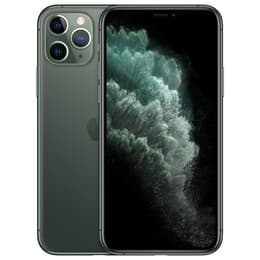
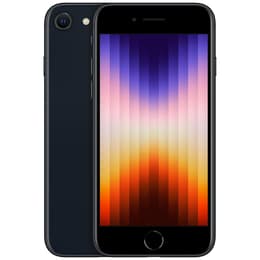

iPhone 11 Pro • Unlocked vs iPhone SE (2022) • Locked AT&T

iPhone 11 Pro • Unlocked
Starting at

Refurbished price:$200.00

Versus $749.00 new

See options
iPhone SE (2022) • Locked AT&T
Starting at

Refurbished price:$102.00

Versus $429.00 new

See options

Ratings

The iPhone 11 Pro, released in September 2019, and the iPhone SE (2022), launched in March 2022, are two distinct Apple smartphones catering to different user preferences. While the iPhone 11 Pro offered a premium experience with advanced camera capabilities and an OLED display at its release, the iPhone SE (2022) focuses on delivering a powerful, modern processor in a classic, compact design. Both devices run on Apple's iOS operating system, ensuring a consistent software experience, though their hardware differences lead to varied practical usage.

Scores

Durability

The practical lifespan of a smartphone is heavily influenced by its release date and subsequent software support. These two models, despite both being iPhones, have different timelines.

  • Release Timeline: The iPhone 11 Pro was released in September 2019, making it an older device compared to the iPhone SE (2022), which launched in March 2022. This age difference directly impacts their remaining software support.
  • OS Support Duration: Apple typically provides major iOS updates for 5-7 years after a device's release. The iPhone 11 Pro is expected to receive major iOS updates until approximately 2026, with security updates potentially extending a couple of years beyond that. The iPhone SE (2022), being newer, is anticipated to receive major iOS updates until around 2033. This means the iPhone SE (2022) offers a significantly longer period of access to the latest features and security patches.
  • Repairability: Both models generally offer average repairability. The iPhone SE (2022) has a repairability score of 5.5 out of 10, with components like the battery and screen being relatively accessible, though specialized tools and care are needed. The iPhone 11 Pro also allows for screen and battery replacements, but its construction, including a stainless steel frame, can make some repairs more involved.

Release Year

2019

2022

Last OS Compatibility

Yes

Yes

OS

iOS

iOS

Foldable

No

No

Performance

Performance is a key differentiator, with the newer iPhone SE (2022) benefiting from a more recent processor, while the iPhone 11 Pro still offers capable performance for many tasks.

  • Processor Capabilities: The iPhone SE (2022) is equipped with a more recent-generation processor, which provides substantial power for demanding applications, smooth multitasking, and efficient handling of graphics-intensive games. The iPhone 11 Pro features an older-generation processor that, while still capable, may show its age more quickly with future software updates and increasingly complex applications.
  • System Responsiveness: Users of the iPhone SE (2022) will experience very fast app loading times and seamless transitions between tasks due to its advanced processing power. The iPhone 11 Pro also offers a responsive user experience for everyday tasks, but the newer model holds an advantage in raw processing speed and efficiency.
  • Battery Behavior: The iPhone 11 Pro generally offers a full day of battery life for moderate to heavy users, a notable improvement over its predecessors at the time of its release. The iPhone SE (2022) has a smaller battery capacity, which means heavy users may find themselves needing to charge more frequently, though it still aims to last a full day with typical usage.

Memory (GB)

4 GB

4 GB

Screen quality

The visual experience on these two iPhones differs significantly due to their display technologies and physical dimensions.

  • Display Technology and Clarity: The iPhone 11 Pro features a Super Retina XDR OLED display, known for its deep blacks, vibrant colors, and high contrast ratio, providing a rich visual experience. The iPhone SE (2022) utilizes a Retina IPS LCD display, which offers good color accuracy and brightness for an LCD panel, but does not achieve the same level of contrast or true black representation as an OLED screen.
  • Screen Size and Viewing Experience: The iPhone 11 Pro has a larger 5.8-inch display, offering a more expansive viewing area for media consumption and productivity. The iPhone SE (2022) has a more compact 4.7-inch display, which some users find easier for one-handed operation, but results in a smaller viewing area and more prominent bezels.
  • Brightness and Refresh Rate: The iPhone 11 Pro's OLED screen can reach higher peak brightness levels, especially when displaying HDR content, making it more visible in bright outdoor conditions. Both devices feature a standard 60Hz refresh rate, providing a smooth but not exceptionally fluid scrolling experience compared to devices with higher refresh rates.

Resolution

1125 x 2436

750 x 1334

Screen type

Super Retina XDR OLED

Retina IPS LCD

Audiovisual

The camera systems on the iPhone 11 Pro and iPhone SE (2022) offer different capabilities, impacting the versatility and quality of captured images and videos.

  • Camera System Capabilities: The iPhone 11 Pro boasts a versatile triple-camera system, including Wide, Ultra Wide, and Telephoto lenses, providing a broader range of photographic options and optical zoom. The iPhone SE (2022) features a single 12-megapixel Wide camera, which is capable but lacks the flexibility of multiple lenses.
  • Low-Light and Everyday Photography: The iPhone 11 Pro includes Night mode, which significantly enhances photo quality in low-light conditions, and Deep Fusion for improved detail in various lighting. The iPhone SE (2022) does not have Night mode, which can result in darker and grainier photos in dimly lit environments, though its advanced processor helps improve overall image processing in good light.
  • Video Recording Quality: Both devices are capable of recording 4K video at up to 60 frames per second, offering high-quality video capture. The iPhone 11 Pro's multiple lenses provide more creative options for video, including optical zoom, while the iPhone SE (2022) offers solid video performance for a single-lens system.

Main camera

12 megapixels

12 megapixels

Front camera

12 megapixels

7 megapixels

Miscellaneous

Beyond core features, several practical elements distinguish the user experience between these two iPhone models.

  • Connectivity Options: The iPhone SE (2022) supports 5G connectivity, offering faster cellular data speeds in compatible areas, alongside Wi-Fi 6 and Bluetooth 5.0. The iPhone 11 Pro supports 4G LTE, Wi-Fi 6, and Bluetooth 5.0, providing reliable but not the absolute fastest cellular speeds.
  • Port Types and Biometrics: Both devices utilize the Lightning port for charging and data transfer. The iPhone SE (2022) retains the classic Home button with Touch ID for secure authentication, which some users prefer for its familiarity and convenience, especially when wearing masks. The iPhone 11 Pro features Face ID for facial recognition, enabling a full-screen display design.
  • Build Materials and Dimensions: The iPhone 11 Pro features a stainless steel frame and textured matte glass back, contributing to a more premium feel and enhanced durability. It weighs 188g and has dimensions of 144 x 71.4 x 8.1 mm. The iPhone SE (2022) has an aluminum frame and glass front and back, with a lighter weight of 144g and more compact dimensions of 138.4 x 67.3 x 7.3 mm. Both offer water and dust resistance, with the iPhone 11 Pro having a slightly higher IP68 rating compared to the iPhone SE (2022)'s IP67.

Weight

7 oz

3 oz

Screen size (inches)

5.8

4.7

Network

LTE

5G

SIM card

Physical SIM + eSIM

Physical SIM + eSIM

Carrier compatibility

Unlocked

AT&T

Connector

Lightning

Lightning

User feedback often highlights the iPhone 11 Pro's strengths in its display and camera system. Many users praise its vibrant OLED screen and the versatility of its triple-lens camera, particularly the inclusion of Night mode for low-light photography. Criticisms, however, sometimes point to its older processor compared to newer models and its eventual end-of-life for major software updates.

Conversely, the iPhone SE (2022) is frequently lauded for its powerful, modern processor, which ensures smooth performance for all tasks, and its compact form factor with Touch ID, appealing to those who prefer a physical home button. Common concerns include its smaller LCD display with larger bezels, the single camera's limitations in low light due to the absence of Night mode, and its comparatively shorter battery life for heavy usage.

Users prioritizing a premium display, a versatile camera system with advanced features like Night mode, and a more modern design with Face ID may find the iPhone 11 Pro better suited to their needs. Those who value a compact device, the familiarity of Touch ID, and the assurance of a longer software support timeline due to a newer, more powerful processor will likely lean towards the iPhone SE (2022). Both devices offer a reliable iOS experience, and choosing between them often comes down to these specific preferences. For those considering either model, exploring quality-assured refurbished options can be an eco-friendly alternative to extend the life cycle of these devices.
See all articles

Our recent comparisons