Compare models
iPhone 12 mini • Unlocked vs iPhone SE (2022) • Locked T-Mobile
- 1-year warranty
- Free standard shipping
- Free 30-day returns
Differences at a glance
The iPhone 12 Mini, released in late 2020, and the iPhone SE (2022), launched in early 2022, represent two distinct approaches to compact smartphone design from Apple. While both offer a smaller form factor compared to larger flagship models, they differ significantly in display technology, internal processing power, and biometric authentication methods. Both devices operate on Apple's iOS platform, ensuring a consistent software experience.
Available Models
Color
Storage (GB)
Scores
Durability
When considering the longevity of these devices, several factors come into play, including their release timelines and expected software support.
- Release Timeline: The iPhone 12 Mini was released in November 2020, making it older than the iPhone SE (2022), which launched in March 2022. This difference in release date impacts their respective software support windows.
- OS Support Duration: The iPhone SE (2022) is expected to receive major iOS updates for a longer period, likely six to seven years from its launch, due to its newer processor. The iPhone 12 Mini, being an earlier model, will likely see its major software support end slightly sooner.
- Repairability: Both models generally receive a similar repairability score, around 5.5 to 6 out of 10, indicating that common repairs like battery and screen replacements are feasible. However, specialized tools are often required, and the glass back on both devices can be challenging to replace if damaged.
Release Year
2020
2022
Last OS Compatibility
Yes
Yes
OS
iOS
iOS
Foldable
No
No
Performance
Both the iPhone 12 Mini and iPhone SE (2022) deliver capable performance for everyday tasks, though there are differences in their underlying hardware that affect overall responsiveness and efficiency.
- Processor Capabilities: The iPhone SE (2022) incorporates a newer generation processor, which provides a notable advantage in raw processing power and graphical performance. This translates to faster app loading, smoother multitasking, and enhanced capabilities for demanding applications and mobile gaming. The iPhone 12 Mini, while still offering robust performance for most users, utilizes an earlier generation processor.
- System Responsiveness: For typical daily use, both phones handle applications and multitasking smoothly. However, the iPhone SE (2022)'s more advanced processor allows for quicker processing of complex tasks, such as high-resolution photo editing or intensive gaming sessions.
- Battery Behavior: The iPhone 12 Mini generally offers longer video playback times. In contrast, the iPhone SE (2022) benefits from efficient power management during standard web browsing and messaging, despite having a smaller battery capacity.
Screen quality
The visual experience on these two devices presents a significant distinction, primarily due to their display technologies and physical dimensions.
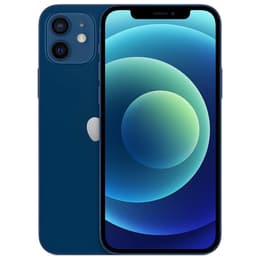
- Display Technology: The iPhone 12 Mini features a Super Retina XDR OLED display, which is known for its deep blacks, high contrast ratio, and vibrant color reproduction. The iPhone SE (2022), on the other hand, uses a Retina HD IPS LCD display, offering good color accuracy but with less contrast and brightness compared to OLED.
- Resolution and Clarity: The iPhone 12 Mini has a 5.4-inch display with a resolution of 2340 x 1080 pixels, resulting in a pixel density of 476 pixels per inch (ppi). The iPhone SE (2022) has a smaller 4.7-inch display with a resolution of 1334 x 750 pixels and a pixel density of 326 ppi. This means the iPhone 12 Mini offers a sharper and more detailed image.
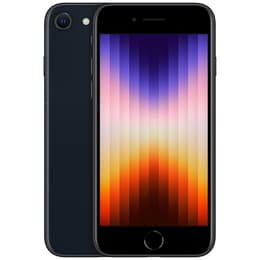
- Screen Size and Viewing Experience: Despite being physically smaller overall, the iPhone 12 Mini boasts a larger 5.4-inch edge-to-edge display due to its modern design without a home button. The iPhone SE (2022) retains the classic iPhone design with a 4.7-inch screen and prominent bezels, including a physical home button.
Resolution
1080 x 2340
750 x 1334
Screen type
Super Retina XDR OLED
Retina IPS LCD
Audiovisual
Both smartphones offer capable camera systems for everyday photography, but they differ in versatility and advanced features.
- Camera System Capabilities: The iPhone 12 Mini features a dual-camera system on the rear, comprising a 12-megapixel wide lens and a 12-megapixel ultrawide lens. This allows for a broader range of shots, including expansive landscapes. The iPhone SE (2022) has a single 12-megapixel wide camera on the rear.
- Low-Light and Everyday Photography: The iPhone 12 Mini's camera system, with its wider aperture on the main lens and Night Mode support across all cameras (including the front-facing camera), generally performs better in low-light conditions, capturing more detail and reducing noise. The iPhone SE (2022) benefits from computational photography enhancements due to its newer processor, improving image quality in various scenarios, but it lacks a dedicated Night Mode.
- Video Recording Quality: Both devices are capable of recording 4K video at up to 60 frames per second. The iPhone 12 Mini also supports HDR video recording with Dolby Vision at up to 30 frames per second. The iPhone SE (2022) offers extended dynamic range video recording up to 30 frames per second.
Main camera
12 megapixels
12 megapixels
Front camera
12 megapixels
7 megapixels
Miscellaneous
Beyond core performance and display, several practical elements differentiate these two compact iPhones.
- Connectivity Options: Both the iPhone 12 Mini and iPhone SE (2022) support 5G cellular communication, offering faster download and upload speeds where available. They also support Wi-Fi 6 and Bluetooth 5.0.
- Port Types and Charging: Both devices utilize Apple's Lightning port for charging and data transfer. The iPhone 12 Mini supports MagSafe, a magnetic system for wireless charging and accessories, offering up to 15W wireless charging (though 12W for the Mini). The iPhone SE (2022) supports standard Qi wireless charging.
- Biometric Authentication: A key difference lies in their security features. The iPhone 12 Mini uses Face ID for secure facial recognition. The iPhone SE (2022) retains the physical home button with integrated Touch ID for fingerprint authentication.
- Weight and Dimensions: The iPhone 12 Mini is slightly more compact and lighter, measuring 131.5 x 64.2 x 7.4 mm and weighing 135 grams. The iPhone SE (2022) measures 138.4 x 67.3 x 7.3 mm and weighs 144 grams. This makes the 12 Mini the more pocket-friendly option.
Weight
7 oz
3 oz
Screen size (inches)
5.4
4.7
Network
5G
5G
SIM card
Physical SIM + eSIM
Physical SIM + eSIM
Carrier compatibility
Unlocked
T-Mobile
Connector
Lightning
Lightning
What the community thinks
Choosing between the iPhone 12 Mini and the iPhone SE (2022) involves weighing modern design and display against raw processing power and a classic form factor. User sentiment often highlights the iPhone 12 Mini's appealing compact size coupled with a vibrant OLED screen as a significant draw. Many users appreciate its edge-to-edge display and dual-camera system, finding it a more premium experience in a small package. However, a frequent criticism of the 12 Mini is its battery life, which some users find insufficient for heavy use throughout a full day.
The iPhone SE (2022) is often praised for its exceptional performance, thanks to its newer processor, which ensures smooth operation and extended software support. Users who prefer the traditional home button and Touch ID also find the SE (2022) appealing. Common criticisms include its dated design with thick bezels and an LCD display that doesn't match the visual quality of OLED screens. Its single camera, while capable, lacks the versatility of the 12 Mini's ultrawide lens.
Users prioritizing a modern, immersive display, a versatile camera system with an ultrawide lens, and Face ID in the most compact form factor may prefer the iPhone 12 Mini. Its design and screen technology offer a more contemporary smartphone experience. Conversely, users who value the latest processing power for demanding tasks, prefer Touch ID, and appreciate a more traditional iPhone design will find the iPhone SE (2022) well-suited to their needs. Both devices offer a quality-assured refurbished option, providing an eco-friendly alternative for those seeking a sustainable choice in their smartphone purchase.