Compare models

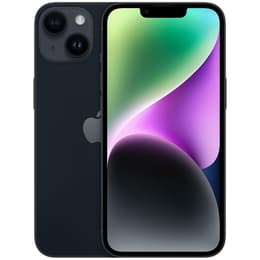
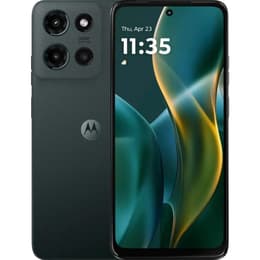
iPhone 14 • Locked Verizon vs Motorola Moto G (2025) • Unlocked

  • 1-year warranty
  • Free standard shipping
  • Free 30-day returns
iPhone 14 • Locked Verizon
Starting at

Refurbished price:$280.19

Versus $599.00 new

See options
Motorola Moto G (2025) • Unlocked
Starting at

Refurbished price:$130.00

Versus $399.00 new

See options

Differences at a glance

The iPhone 14 (2022) and the Motorola Moto G (2025) represent two distinct approaches to everyday mobile technology, catering to different user preferences within the smartphone landscape. While the iPhone 14 operates on Apple's closed ecosystem with iOS, the Motorola Moto G runs on Google's customizable Android platform, offering alternative software environments. These devices differ significantly in their launch timelines, engineering philosophies, and software frameworks, making them suited for users with contrasting daily priorities.

Available Models

Color

Storage (GB)

Scores

Durability

When examining longevity and hardware endurance, both devices handle software support and physical wear differently based on their release years and manufacturer frameworks.

  • Software support timelines: The iPhone 14 benefits from extended operating system update support typical of Apple devices, ensuring prolonged security updates. The Motorola Moto G provides a shorter, standard update window aligned with mid-range Android device lifecycles.
  • Repairability and build durability: The iPhone 14 features an aluminum frame and glass back protected by proprietary ceramic shielding, alongside an IP68 water-resistance rating. The Motorola Moto G typically employs a reinforced polymer build designed to withstand daily handling, with standard splash resistance.
  • Practical lifespan expectations: Users seeking multi-year performance consistency often look toward quality-assured refurbished options like the iPhone 14 to maximize long-term software relevance, whereas the Motorola Moto G serves users who prefer periodic device updates every few years.

Release Year

2022

2025

OS

iOS

Android

Foldable

No

No

Performance

Underneath the exterior, both handsets manage daily workloads, application switching, and power efficiency through distinct hardware configurations.

  • Storage and memory allocation: The iPhone 14 provides multiple internal storage tiers paired with optimized memory management. The Motorola Moto G offers balanced storage configurations often complemented by expandable storage options via microSD cards.
  • Everyday system speed: Both devices handle standard communication apps, web browsing, and media streaming smoothly, though heavier tasks like 3D gaming execute with higher sustained frame stability on the iPhone 14.
  • Battery behavior and daily endurance: Users report that the iPhone 14 comfortably lasts through a full day of mixed use, while the Motorola Moto G often excels in battery stamina due to less demanding display resolutions and efficient processor pairing.

Screen quality

Visual output and display responsiveness vary notably between the two models, influencing media consumption and outdoor readability.

  • Display panel technology: The iPhone 14 utilizes an OLED screen delivering deep contrast levels and rich color accuracy. The Motorola Moto G features an IPS LCD or mid-range OLED panel that offers clear text rendering and adequate brightness for indoor environments.
  • Outdoor visibility and refresh rates: Peak brightness on the iPhone 14 ensures legibility under direct sunlight. Meanwhile, the Motorola Moto G often incorporates higher refresh rate panels for smoother scrolling through feeds and web pages.
  • Size and viewing ergonomics: The compact form factor of the iPhone 14 facilitates single-handed operation, whereas the larger display estate on the Motorola Moto G provides an expansive canvas for reading and watching videos.

Resolution

1170 x 2532

720x1604

Screen type

Super Retina XDR OLED

IPS LCD

Audiovisual

Multimedia capture and audio output capabilities shape how each device handles photography, video recording, and sound reproduction.

  • Camera hardware configuration: The iPhone 14 utilizes a dual-lens rear system optimized with advanced computational photography algorithms for consistent low-light imagery. The Motorola Moto G relies on a high-megapixel main sensor paired with supportive utility lenses for standard daylight snapshots.
  • Video recording performance: Video capture on the iPhone 14 supports stabilization modes and cinematic focus transitions. The Motorola Moto G handles casual video recording adequately for social media sharing and video calls.
  • Audio and media playback: Stereo speakers on both units deliver clear vocal output for calls and hands-free listening, though media consumption benefits from the wider soundstage produced by the iPhone 14's speaker architecture.

Miscellaneous

Practical usability factors such as network connectivity, physical dimensions, and security sensors define the day-to-day handling experience.

  • Network and port standards: The iPhone 14 relies on Apple's proprietary charging port alongside modern 5G and Wi-Fi connectivity. The Motorola Moto G incorporates a universal USB-C port, a physical headphone jack in certain regional variants, and broad 5G compatibility.
  • Biometric security features: Face recognition powers the primary security unlocking mechanism on the iPhone 14, whereas the Motorola Moto G utilizes a responsive fingerprint scanner integrated into the side power button or rear panel.
  • Physical dimensions and weight: Both devices balance their internal components to fit comfortably in pockets, with the iPhone 14 maintaining a denser feel due to glass and metal materials, and the Motorola Moto G offering a lighter, textured grip.

Weight

6 oz

7 oz

Screen size (inches)

6.1

6.7

Network

5G

5G

SIM card

eSIM

Physical SIM + eSIM

Carrier compatibility

Verizon

Unlocked

What the community thinks

User discussions across community forums highlight distinct preferences for each device depending on individual workflow requirements. Owners of the iPhone 14 frequently praise its reliable camera performance, fluid software integration, and long-term hardware durability. Conversely, users of the Motorola Moto G often emphasize appreciation for its clean software interface, reliable battery stamina, and practical inclusion of expandable storage.

Users prioritizing ecosystem integration, advanced video capture capabilities, and extended software lifespans may prefer the iPhone 14. For those seeking an eco-friendly choice, a quality-assured refurbished version of the iPhone 14 provides a sustainable alternative. Meanwhile, users prioritizing everyday battery longevity, expandable storage flexibility, and an Android-based environment will find the Motorola Moto G well-suited to their daily routines. Evaluating these core differences ensures a selection that aligns closely with personal usage habits.

Our recent comparisons