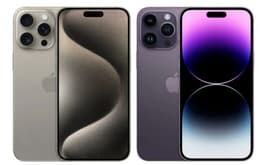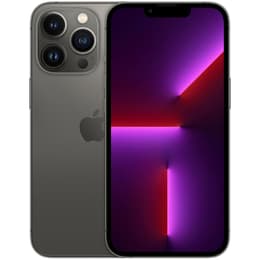
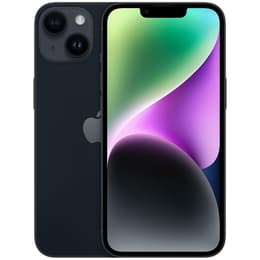

iPhone 13 Pro • Unlocked vs iPhone 14 • Locked Verizon

iPhone 13 Pro • Unlocked
Starting at

Refurbished price:$299.99

Versus $899.00 new

See options
iPhone 14 • Locked Verizon
Starting at

Refurbished price:$300.94

Versus $599.00 new

See options

Ratings

The iPhone 13 Pro, released in 2021, and the iPhone 14, launched in 2022, are both capable smartphones from Apple's lineup. While the iPhone 13 Pro represents a higher-tier model from the previous generation, the iPhone 14 is the standard model of the subsequent year. Both devices operate on Apple's iOS, offering a consistent software experience. The primary distinctions lie in their display technology, camera systems, and the introduction of new safety features in the more recent model.

Scores

Durability

When considering the longevity of these devices, several factors come into play, including their release timelines, software support, and physical construction.

  • Software Support: The iPhone 13 Pro, released in September 2021, and the iPhone 14, released in September 2022, both benefit from Apple's extended software support. Typically, iPhones receive major iOS updates for approximately five to six years from their release. This means the iPhone 14 is likely to receive one additional year of software updates compared to the iPhone 13 Pro, offering a slightly longer period of access to the latest features and security enhancements.
  • Build Materials: Both models feature a Ceramic Shield front cover, designed to offer enhanced durability against drops and scratches. The iPhone 13 Pro utilizes a surgical-grade stainless steel frame, contributing to its robust feel. In contrast, the iPhone 14 features an aerospace-grade aluminum design, which results in a lighter device. Both devices carry an IP68 rating for water and dust resistance, indicating they can withstand submersion up to 6 meters for 30 minutes.
  • Practical Lifespan: Both smartphones are engineered for a considerable practical lifespan, capable of handling daily tasks for many years. The iPhone 14's newer release date provides a marginal advantage in terms of future-proofing due to its extended software support window.

Release Year

2021

2022

Last OS Compatibility

Yes

Yes

OS

iOS

iOS

Foldable

No

No

Performance

The performance of a smartphone is crucial for daily operations, from launching applications to managing multiple tasks simultaneously.

  • Processing Power: The iPhone 13 Pro is equipped with a powerful processor featuring a 6-core CPU and a 5-core GPU, designed to handle demanding applications and graphics-intensive tasks efficiently. The iPhone 14 utilizes the same generation of processor, also with a 6-core CPU and a 5-core GPU, providing comparable performance for everyday use and gaming. This means both devices offer a smooth and responsive user experience across a wide range of activities.
  • Multitasking Capability: Both the iPhone 13 Pro and iPhone 14 come with 6GB of RAM, allowing for efficient multitasking and smooth transitions between applications. This capacity ensures that users can keep multiple apps open in the background without experiencing significant slowdowns.
  • Battery Performance: The iPhone 14 generally offers slightly improved battery life for typical usage compared to the iPhone 13 Pro, particularly in video playback scenarios. The iPhone 13 Pro has a 3095 mAh battery, while the iPhone 14 has a 3279 mAh battery, contributing to the latter's extended endurance.

Memory (GB)

6 GB

6 GB

Screen quality

The display is a primary interface for user interaction, and its quality significantly impacts the overall experience.

  • Display Technology and Size: Both the iPhone 13 Pro and iPhone 14 feature a 6.1-inch Super Retina XDR OLED display, offering vibrant colors, deep blacks, and excellent contrast. They share a resolution of 2532 x 1170 pixels at approximately 460 pixels per inch, ensuring sharp and clear visuals.
  • Brightness: Both models achieve a typical maximum brightness of 800 nits and a peak brightness of 1200 nits when viewing HDR content, providing good visibility even in bright outdoor conditions.
  • Refresh Rate: A key differentiator is the refresh rate. The iPhone 13 Pro features ProMotion technology, offering an adaptive refresh rate that can scale from 10Hz to 120Hz. This results in noticeably smoother scrolling and more fluid animations, particularly beneficial for gaming and fast-paced content. The iPhone 14, however, maintains a standard 60Hz refresh rate, which is sufficient for most daily tasks but does not offer the same level of visual fluidity as the ProMotion display.

Resolution

1170 x 2532

1170 x 2532

Screen type

Super Retina XDR OLED

Super Retina XDR OLED

Audiovisual

Both devices offer advanced camera systems, but with distinct capabilities that cater to different photographic needs.

  • Rear Camera System: The iPhone 13 Pro features a versatile triple-camera system, including a 12MP main wide lens (f/1.5), a 12MP ultrawide lens (f/1.8 with autofocus and macro capabilities), and a 12MP telephoto lens (f/2.8 with 3x optical zoom). It also includes a LiDAR scanner for improved depth sensing and faster autofocus in low light. The iPhone 14 comes with a dual-camera system, comprising a 12MP main wide lens (f/1.5) and a 12MP ultrawide lens (f/2.4). The iPhone 14 introduces the Photonic Engine, an enhanced image pipeline that improves low-light performance across all cameras.
  • Video Capabilities: Both models support Cinematic Mode, which allows for recording videos with a shallow depth of field. The iPhone 13 Pro records Cinematic Mode at 1080p at 30fps and supports ProRes video recording. The iPhone 14 enhances Cinematic Mode to 4K HDR at 30fps and introduces Action Mode for advanced video stabilization, particularly useful for capturing fast-moving subjects.
  • Front Camera: The iPhone 14 features an improved 12MP TrueDepth front camera with a faster f/1.9 aperture and autofocus, leading to better low-light selfies and video calls. The iPhone 13 Pro's 12MP front camera has an f/2.2 aperture.

Main camera

12 megapixels

12 megapixels

Front camera

12 megapixels

12 megapixels

Miscellaneous

Beyond the core features, several practical elements contribute to the overall user experience and device utility.

  • Connectivity: Both the iPhone 13 Pro and iPhone 14 support 5G cellular connectivity, Wi-Fi 6 (802.11ax), and NFC for secure payments. The iPhone 14 features Bluetooth 5.3, a slight upgrade from the iPhone 13 Pro's Bluetooth 5.0, offering minor improvements in efficiency and range.
  • Ports and Sensors: Both devices utilize the Lightning port for charging and data transfer. They both rely on Face ID for secure authentication.
  • Safety Features: The iPhone 14 introduces two significant safety features: Crash Detection, which can automatically alert emergency services in the event of a severe car crash, and Emergency SOS via Satellite, allowing users to contact emergency services in areas without cellular or Wi-Fi coverage (initially available in select regions). The iPhone 13 Pro does not include these features.
  • Physical Attributes: The iPhone 13 Pro weighs approximately 204 grams, while the iPhone 14 is lighter at around 172 grams. Both have similar dimensions, with the iPhone 13 Pro being slightly thicker due to its Pro camera system.

Weight

6 oz

6 oz

Screen size (inches)

6.1

6.1

Network

5G

5G

SIM card

Physical SIM + eSIM

eSIM

Carrier compatibility

Unlocked

Verizon

Connector

Lightning

Lightning

Choosing between the iPhone 13 Pro and the iPhone 14 involves weighing specific priorities, as each device offers a compelling set of features tailored to different user needs. Users often praise the iPhone 13 Pro for its ProMotion display, which delivers an exceptionally smooth visual experience, and its dedicated telephoto lens, providing greater photographic versatility with optical zoom. The inclusion of a LiDAR scanner is also a notable advantage for those interested in augmented reality applications or enhanced low-light focusing.

On the other hand, the iPhone 14 is frequently recognized for its introduction of advanced safety features like Crash Detection and Emergency SOS via Satellite, which offer peace of mind. Its improved main camera, benefiting from the Photonic Engine, and the upgraded front camera with autofocus, are also significant enhancements for everyday photography and video calls. The iPhone 14 also offers a slightly lighter build and marginally better battery life for general use.

Users prioritizing a highly fluid display for scrolling and gaming, along with a more comprehensive camera system including a telephoto lens and LiDAR, may find the iPhone 13 Pro to be a more suitable option. Conversely, individuals who value the latest safety innovations, enhanced low-light photography on the main and front cameras, and a lighter device for daily carrying, might lean towards the iPhone 14. Both devices offer robust performance for everyday tasks and demanding applications. For those seeking a quality-assured refurbished option, both models are excellent choices, providing a sustainable alternative for acquiring advanced smartphone technology.

See all articles

Our recent comparisons