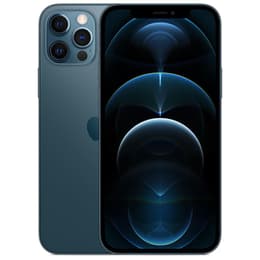

iPhone 12 Pro • Unlocked vs iPhone 8 • Unlocked

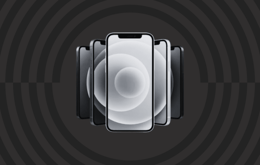
iPhone 12 Pro • Unlocked
Starting at

Refurbished price:$229.00

Versus $799.00 new

See options
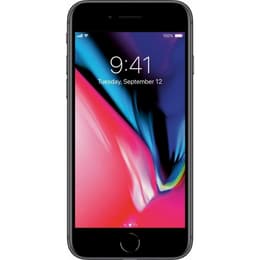
iPhone 8 • Unlocked
iPhone 8 • Unlocked
Starting at

Refurbished price:$103.00

Versus $189.00 new

See options

Ratings

The iPhone 12 Pro, released in October 2020, and the iPhone 8, launched in September 2017, represent different generations of Apple's smartphone evolution. While both devices operate on Apple's iOS ecosystem, the iPhone 12 Pro introduces significant advancements in display technology, camera capabilities, and overall processing power compared to the iPhone 8.

Scores

Durability

The practical lifespan of a smartphone is often influenced by its release timeline, software support, and physical durability.

  • Release Timeline and Software Support: The iPhone 8, released in 2017, launched with iOS 11 and received updates up to iOS 16. However, it is no longer supported by iOS 17 or iOS 18, meaning it will not receive the latest features, security patches, or bug fixes. In contrast, the iPhone 12 Pro, released in 2020, launched with iOS 14 and is currently supported by iOS 26.4 as of March 2026, indicating a longer period of ongoing software support.
  • Durability Features: The iPhone 8 features a glass front and back with an aluminum band, and is rated IP67 for water and dust resistance, allowing submersion up to 1 meter for 30 minutes. The iPhone 12 Pro enhances this with a Ceramic Shield front cover, a glass back, and a stainless steel frame, offering IP68 water and dust resistance for depths up to 6 meters for 30 minutes.
  • Repairability: Both devices received an iFixit repairability score of 6 out of 10. For the iPhone 8, the screen and battery are relatively straightforward to replace, but the glass back is difficult to remove due to strong adhesive. The iPhone 12 Pro also has modular components that are generally accessible, but proprietary screws and enhanced waterproofing measures can complicate repairs.

Release Year

2020

2017

Last OS Compatibility

Yes

No

OS

iOS

iOS

Foldable

No

No

Performance

Performance differences between these two models are notable, impacting daily usage from app responsiveness to multitasking capabilities.

  • Processing Power: The iPhone 8 is powered by the A11 Bionic chip, while the iPhone 12 Pro features the A14 Bionic chip. This generational difference means the iPhone 12 Pro handles demanding applications and complex tasks with greater efficiency and speed. Users will experience faster app loading times and smoother transitions between applications on the newer device.
  • Multitasking and Responsiveness: The iPhone 8 comes with 2GB of RAM, which is sufficient for general use but can show limitations with numerous apps open simultaneously. The iPhone 12 Pro, with 6GB of RAM, offers significantly more capacity for multitasking, allowing users to switch between heavy applications and games without noticeable slowdowns.
  • Storage Options: The iPhone 8 was available with 64GB, 128GB, or 256GB of internal storage. The iPhone 12 Pro starts with 128GB and also offers 256GB and 512GB options, providing more space for apps, photos, and videos, especially for users who store large media files.

Memory (GB)

6 GB

2 GB

Screen quality

The display technology and characteristics vary significantly between the iPhone 8 and iPhone 12 Pro, influencing the visual experience.

  • Display Technology and Resolution: The iPhone 8 features a 4.7-inch Retina HD LCD IPS display with a resolution of 1334x750 pixels, resulting in a pixel density of 326 ppi. The iPhone 12 Pro upgrades to a 6.1-inch Super Retina XDR OLED display, offering a higher resolution of 2532x1170 pixels and a pixel density of 460 ppi. The OLED technology on the 12 Pro provides deeper blacks and more vibrant colors compared to the LCD panel of the iPhone 8.
  • Brightness and Color Accuracy: Both devices support True Tone technology, which adjusts the screen's white balance to match ambient lighting, and Wide Color (P3) for accurate color reproduction. However, the iPhone 8 has a typical maximum brightness of 625 nits, while the iPhone 12 Pro reaches 800 nits typically and up to 1200 nits for HDR content, offering better visibility in bright outdoor conditions and a more dynamic viewing experience for HDR media.
  • Screen Size and Features: The iPhone 8 has a smaller 4.7-inch screen with a traditional bezel design and includes 3D Touch. The iPhone 12 Pro offers a larger 6.1-inch edge-to-edge display, providing a more immersive viewing experience, and replaces 3D Touch with Haptic Touch.

Resolution

1170 x 2532

750 x 1334

Screen type

Super Retina XDR OLED

Retina IPS LCD

Audiovisual

The camera systems of the iPhone 8 and iPhone 12 Pro show substantial advancements, particularly in versatility and low-light performance.

  • Rear Camera System: The iPhone 8 features a single 12MP wide-angle camera with optical image stabilization (OIS) and an f/1.8 aperture, capable of 4K video recording at up to 60 frames per second. The iPhone 12 Pro boasts a triple-camera system, including a 12MP wide (f/1.6), 12MP ultra-wide (f/2.4), and 12MP telephoto (f/2.0) lens, along with a LiDAR Scanner. This setup provides greater photographic flexibility, including optical zoom capabilities and improved depth sensing.
  • Low-Light and Computational Photography: A key differentiator is the iPhone 12 Pro's enhanced low-light performance, featuring Night mode and Deep Fusion, which are absent on the iPhone 8. These technologies allow the 12 Pro to capture significantly brighter and more detailed images in challenging lighting conditions. The LiDAR Scanner also aids in faster autofocus in low light and enables Night mode portraits.
  • Video Recording and Front Camera: Both phones support 4K video recording, but the iPhone 12 Pro elevates video quality with 4K Dolby Vision HDR recording at up to 60fps, offering richer colors and improved contrast. For selfies, the iPhone 8 has a 7MP front camera, while the iPhone 12 Pro features a 12MP TrueDepth front camera with Night mode and 4K video recording, providing sharper and more detailed self-portraits, even in dim environments.

Main camera

12 megapixels

12 megapixels

Front camera

12 megapixels

7 megapixels

Miscellaneous

Beyond core features, several practical elements distinguish the iPhone 8 from the iPhone 12 Pro, affecting daily convenience and future-proofing.

  • Connectivity: The iPhone 8 supports 4G LTE and Wi-Fi 802.11ac. The iPhone 12 Pro introduces 5G connectivity, offering faster cellular data speeds in supported areas, and upgrades to Wi-Fi 6 (802.11ax) for improved wireless network performance. Both devices include Bluetooth 5.0 and NFC.
  • Biometric Authentication and Sensors: The iPhone 8 relies on Touch ID, a fingerprint sensor integrated into the home button, for secure authentication. The iPhone 12 Pro utilizes Face ID, an advanced facial recognition system. Additionally, the 12 Pro incorporates a LiDAR Scanner, which enhances augmented reality experiences and improves camera performance.
  • Physical Design and Handling: The iPhone 8 has a compact design, measuring 138.4 x 67.3 x 7.3 mm and weighing 148g. The iPhone 12 Pro is slightly larger and heavier at 146.7 x 71.5 x 7.4 mm and 189g, due to its larger screen and more advanced internal components. Both devices feature a Lightning port for charging and data transfer.

Weight

7 oz

5 oz

Screen size (inches)

6.1

4.7

Network

5G

LTE

SIM card

Physical SIM + eSIM

Physical SIM

Carrier compatibility

Unlocked

Unlocked

Connector

Lightning

Lightning

Choosing between the iPhone 8 and iPhone 12 Pro involves weighing the benefits of a more modern device against the continued functionality of an older model. Users frequently praise the iPhone 8 for its compact size, the reliability of Touch ID, and its solid performance for everyday tasks, especially considering its age. Common criticisms often revolve around its single camera system, the limitations of its LCD display compared to newer technologies, and its shorter battery life for heavy users.

The iPhone 12 Pro, on the other hand, is often lauded for its advanced camera system with Night mode and multiple lenses, its vibrant OLED display, and its robust performance for demanding applications and multitasking. Users appreciate the inclusion of 5G connectivity and the enhanced durability features. Some common concerns for the 12 Pro include its battery life, which, while generally better than the iPhone 8, can be impacted by 5G usage and intensive gaming.

Users prioritizing a compact form factor, the familiarity of a home button with Touch ID, and a device for essential communication and light media consumption may find the iPhone 8 suitable. However, for those who value advanced photography and videography capabilities, a larger and more immersive display, faster performance for modern applications, and future-proof connectivity like 5G, the iPhone 12 Pro presents a more aligned choice. Both devices are available as quality-assured refurbished options, offering a sustainable choice for consumers.
See all articles

Our recent comparisons