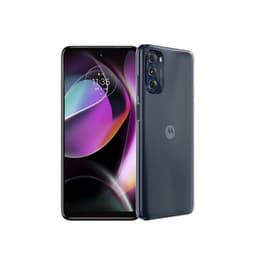

iPhone 13 • Unlocked vs Motorola Moto G (2022) • Unlocked

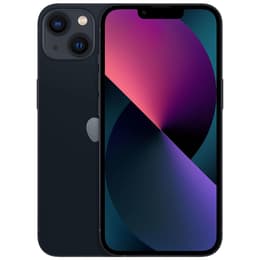
iPhone 13 • Unlocked
Starting at

Refurbished price:$225.00

Versus $629.00 new

See options
Motorola Moto G (2022) • Unlocked
Starting at

Refurbished price:$92.00

Versus $180.99 new

See options

Ratings

The iPhone 13, released in September 2021, and the Motorola Moto G 2022, launched in April 2022, represent distinct approaches to smartphone design and functionality. While the iPhone 13 operates on Apple's iOS ecosystem, the Moto G 2022 runs on Android, offering users different software experiences. The primary differentiators between these two devices lie in their display technology, camera capabilities, and overall system performance, catering to varied user preferences.

Scores

Durability

When considering the long-term usability of these devices, their release timelines and software support policies are key factors.

  • Release and Software Support: The iPhone 13, released in September 2021, is expected to receive iOS updates until approximately 2028, providing a long software lifespan. The Motorola Moto G 2022, launched in April 2022, shipped with Android 12, with some variants receiving an upgrade to Android 13. The duration of future Android updates for the Moto G 2022 is typically shorter than Apple's support for its devices.
  • Physical Durability: The iPhone 13 features a Ceramic Shield front cover and is rated IP68 for water and dust resistance, allowing submersion up to 6 meters for 30 minutes. Drop tests indicate its durability is comparable to its predecessor. The Moto G 2022 has a water-repellent design, offering some protection against splashes.
  • Repairability: The iPhone 13 received a repairability score of 5/10 from iFixit, noting that while some components are modular, replacing certain parts like the screen without Apple's proprietary tools can disable features such as Face ID. Information on the specific repairability score for the Moto G 2022 is less detailed, but Android devices generally offer more straightforward component replacement.

Release Year

2021

2022

Last OS Compatibility

Yes

No

OS

iOS

Android

Foldable

No

No

Performance

The performance of a smartphone significantly impacts daily usage, from app responsiveness to multitasking efficiency.

  • Processing Power: The iPhone 13 is equipped with a powerful processor that handles demanding applications and multitasking smoothly, ensuring a responsive user experience. The Moto G 2022 utilizes a different processor, which provides adequate performance for everyday tasks and general navigation, though it may exhibit slower speeds compared to higher-end chipsets when running intensive applications or games.
  • Storage and Multitasking: The iPhone 13 offers storage options up to 512GB, providing ample space for apps, media, and files. Its system architecture and RAM configuration contribute to efficient multitasking. The Moto G 2022 comes with storage options up to 256GB and includes expandable storage via a microSD card, which can be beneficial for users who require more space for media. Its RAM configurations support typical daily multitasking.
  • Battery Performance: The iPhone 13 features a battery that typically lasts through a full day of heavy use, representing a notable improvement over previous models. The Moto G 2022 is known for its substantial battery capacity, often providing 1.5 to 2 days of usage on a single charge, making it suitable for users who prioritize extended battery life. However, the Moto G 2022's charging speeds are slower compared to the iPhone 13.

Memory (GB)

4 GB

4 GB

Screen quality

The display is a primary interface for smartphone interaction, influencing viewing pleasure and outdoor visibility.

  • Display Technology and Clarity: The iPhone 13 features a 6.1-inch Super Retina XDR OLED display, offering deep blacks, vibrant colors, and high contrast. Its resolution of 2532x1170 pixels results in a sharp image with approximately 460 pixels per inch. The Moto G 2022 has a larger 6.5-inch IPS LCD display with a resolution of 1600x720 pixels, providing a clear but less dense visual experience at around 270 pixels per inch.
  • Brightness and Refresh Rate: The iPhone 13's display can reach up to 800 nits of typical brightness and 1200 nits for HDR content, ensuring good visibility in various lighting conditions. It operates at a standard 60Hz refresh rate. The Moto G 2022 offers a 90Hz refresh rate, which provides a smoother scrolling experience, and its brightness levels are suitable for indoor and moderate outdoor use.
  • Viewing Experience: Users of the iPhone 13 often praise its display for immersive video streaming and gaming due to its color accuracy and brightness. The Moto G 2022's larger screen size can be advantageous for media consumption, though its lower resolution and LCD technology offer a different visual quality.

Resolution

1170 x 2532

720 x 1600

Screen type

Super Retina XDR OLED

IPS LCD

Audiovisual

Camera systems are a significant consideration for many smartphone users, impacting the quality of photos and videos.

  • Rear Camera System: The iPhone 13 features a dual 12MP camera system, including a wide and an ultra-wide lens. The main camera benefits from sensor-shift optical image stabilization and a larger sensor, which improves light gathering and overall image quality, particularly in low-light conditions. The Moto G 2022 has a triple camera setup with a 50MP main sensor, accompanied by 2MP macro and 2MP depth sensors. Its main camera performs adequately in good lighting, but low-light performance can be a challenge, and colors may appear less vibrant.
  • Video Recording Capabilities: The iPhone 13 offers advanced video recording, including 4K at 60 frames per second and a Cinematic mode that provides a depth-of-field effect. Its video quality is often highlighted for its smoothness, detail, and dynamic range. The Moto G 2022 records video at up to 1080p at 30 frames per second. User reviews suggest its video quality is less refined, with potential issues in color reproduction and focus stability.
  • Front Camera: Both devices feature capable front-facing cameras. The iPhone 13 has a 12MP front camera that performs well for selfies and video calls, even in challenging lighting. The Moto G 2022 includes a 13MP front camera, which is suitable for selfies, though it may overexpose in bright sunlight and exhibit washed-out colors in some indoor settings.

Main camera

12 megapixels

50 megapixels

Front camera

12 megapixels

13 megapixels

Miscellaneous

Beyond core features, several practical elements contribute to the overall user experience and device utility.

  • Connectivity and Ports: Both smartphones support 5G connectivity. The iPhone 13 uses a Lightning port for charging and data transfer, while the Moto G 2022 features a USB-C 2.0 port and retains a 3.5mm headphone jack, offering more traditional audio connectivity. The Moto G 2022 lacks NFC, which means it cannot be used for contactless payments.
  • Biometric Security: The iPhone 13 relies on Face ID for secure facial recognition. The Moto G 2022 incorporates a side-mounted fingerprint reader for biometric authentication.
  • Design and Handling: The iPhone 13 has a compact design with a 6.1-inch display, weighing around 174 grams. The Moto G 2022 is a larger device with a 6.5-inch display, weighing approximately 204 grams, which may influence one-handed use and pocketability. Both devices feature distinct build materials and design aesthetics.

Weight

6 oz

7 oz

Screen size (inches)

6.1

6.5

Network

5G

5G

SIM card

Physical SIM + eSIM

Physical SIM

Carrier compatibility

Unlocked

Unlocked

Connector

Lightning

USB-C

The iPhone 13 and Motorola Moto G 2022 cater to different user priorities, reflecting their distinct ecosystems and design philosophies. Users often praise the iPhone 13 for its robust performance, excellent camera capabilities, and long-term software support. Its OLED display is frequently highlighted for its vibrant colors and clarity, and its battery life is generally considered reliable for a full day's use. Some common criticisms include its reliance on the Lightning port and the repairability challenges for third-party services.

The Motorola Moto G 2022 is frequently lauded for its exceptional battery life, often extending beyond a single day, and its inclusion of a headphone jack and expandable storage. Its larger screen size is also a positive for many users. However, some users note that its camera performance, particularly in low light, and its overall system responsiveness are not as refined as higher-end devices. The absence of NFC is also a point of concern for those who use contactless payment methods.

Users prioritizing a powerful and fluid user experience, advanced camera features, and extended software longevity may find the iPhone 13 more aligned with their needs. Conversely, individuals who value extended battery life, a larger display, expandable storage, and a traditional headphone jack might lean towards the Moto G 2022. Both devices offer a quality-assured refurbished option, providing an eco-friendly alternative for consumers seeking to make informed and sustainable choices.


See all articles

Our recent comparisons