iPhone 14 • Locked AT&T vs iPhone 14 Plus • Unlocked

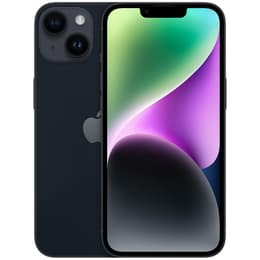
iPhone 14 • Locked AT&T
Starting at

Refurbished price:$225.72

Versus $629.00 new

See options
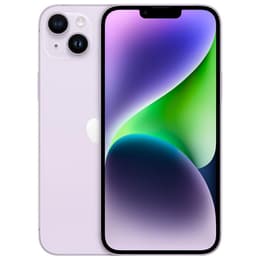
iPhone 14 Plus • Unlocked
Starting at

Refurbished price:$288.32

Versus $729.00 new

See options

Ratings

The iPhone 14 and iPhone 14 Plus, both released in 2022, are part of Apple's sixteenth generation of smartphones. While the "AT&T" designation for the iPhone 14 typically refers to a carrier-locked version of the standard model, this comparison will focus on the hardware differences between the standard iPhone 14 and the larger iPhone 14 Plus. Both devices operate on Apple's iOS platform and share many core features, but they primarily differ in physical size, display dimensions, and battery capacity.

Scores

Durability

When considering the longevity of the iPhone 14 and iPhone 14 Plus, several factors come into play, including software support, physical durability, and expected practical lifespan.

  • Software Support: Both the iPhone 14 and iPhone 14 Plus were launched with iOS 16 in 2022, meaning they will receive software updates for a similar duration. Apple typically provides 5-6 years of major iOS updates for its devices, suggesting both models will continue to receive new features and security patches for several years to come.
  • Physical Durability: Both models feature a Ceramic Shield front cover and an aluminum frame, offering similar levels of protection against drops and scratches. They also share an IP68 rating for water and dust resistance, allowing submersion in up to 6 meters of water for 30 minutes.
  • Practical Lifespan: Users can expect a practical lifespan of several years for both devices, assuming proper care. While battery health naturally degrades over time, both models are designed to retain 80% of their original capacity after 500 complete charge cycles under ideal conditions. The availability of quality-assured refurbished options further extends the lifecycle of these devices, offering a sustainable choice for consumers.

Release Year

2022

2022

Last OS Compatibility

Yes

Yes

OS

iOS

iOS

Foldable

No

No

Performance

The performance of the iPhone 14 and iPhone 14 Plus is largely identical, as both devices are equipped with the same internal components designed to handle a wide range of tasks efficiently.

  • Processor Capabilities: Both models utilize the A15 Bionic chip, which includes a 6-core CPU with two performance and four efficiency cores, a 5-core GPU, and a 16-core Neural Engine. This processor ensures smooth operation for everyday applications, multitasking, and graphically demanding games.
  • Storage Options: Users have the same storage choices for both the iPhone 14 and iPhone 14 Plus, with options typically including 128GB, 256GB, and 512GB. This allows users to select a capacity that suits their needs for apps, photos, and videos.
  • Battery Behavior: While both phones share the same processor, the iPhone 14 Plus features a significantly larger battery (4325 mAh) compared to the iPhone 14 (3279 mAh). This translates to a noticeable difference in battery life, with the iPhone 14 Plus offering up to 26 hours of video playback, compared to the iPhone 14's 20 hours. This extended battery life makes the Plus model particularly suitable for heavy users or those who frequently travel.

Memory (GB)

6 GB

6 GB

Screen quality

The visual experience on the iPhone 14 and iPhone 14 Plus is a key differentiator, primarily due to their varying display sizes and resolutions, though they share similar underlying display technology.

  • Display Technology and Clarity: Both devices feature a Super Retina XDR OLED display, providing vibrant colors, deep blacks, and excellent contrast. The iPhone 14 has a 6.1-inch display with a resolution of 2532 x 1170 pixels, resulting in approximately 460 pixels per inch (ppi). The iPhone 14 Plus, on the other hand, boasts a larger 6.7-inch display with a resolution of 2778 x 1284 pixels, maintaining a similar pixel density of around 458 ppi. This means both offer sharp and clear visuals, but the Plus provides a more expansive viewing area.
  • Brightness Levels: Both models offer a typical brightness of up to 800 nits and a peak HDR brightness of up to 1200 nits. This ensures good visibility in various lighting conditions, including bright outdoor environments.
  • Refresh Rate: Both the iPhone 14 and iPhone 14 Plus feature a standard 60Hz refresh rate. This provides a smooth experience for most daily tasks, though it differs from the higher refresh rates found in some other smartphone models.

Resolution

1170 x 2532

1284 x 2778

Screen type

Super Retina XDR OLED

Super Retina XDR OLED

Audiovisual

The camera systems on the iPhone 14 and iPhone 14 Plus are identical, offering users the same photographic and videographic capabilities across both models.

  • Camera System Capabilities: Both devices are equipped with a dual-camera system on the rear, featuring a 12MP Main camera with an f/1.5 aperture and sensor-shift optical image stabilization, alongside a 12MP Ultra Wide camera with an f/2.4 aperture and a 120-degree field of view. The front-facing TrueDepth camera is also 12MP with an f/1.9 aperture and includes autofocus for improved selfies.
  • Photography Performance: Both models benefit from features like Photonic Engine, Deep Fusion, and Smart HDR 4, which enhance image quality, particularly in low-light conditions. They also support Portrait mode with Focus and Depth Control, Night mode, and Photographic Styles.
  • Video Recording Quality: For video, both phones can record in 4K at various frame rates (24, 25, 30, or 60 fps) with Dolby Vision HDR. They also include Cinematic mode for shallow depth-of-field effects and Action mode for enhanced video stabilization, making them suitable for capturing dynamic footage.

Main camera

12 megapixels

12 megapixels

Front camera

12 megapixels

12 megapixels

Miscellaneous

Beyond their core functionalities, the iPhone 14 and iPhone 14 Plus share many practical features and design elements, with key differences primarily revolving around their physical dimensions and weight.

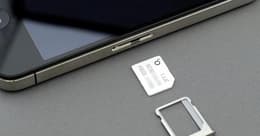
  • Connectivity and Ports: Both models support 5G cellular connectivity, Wi-Fi 6, and Bluetooth 5.3, ensuring fast and reliable wireless connections. They both feature a Lightning port for charging and data transfer. Notably, for US models, both devices rely exclusively on eSIM technology and do not support physical SIM cards.
  • Dimensions and Handling: The iPhone 14 measures 146.7 x 71.5 x 7.80 mm and weighs 172 grams, offering a more compact and lighter feel. The iPhone 14 Plus is larger at 160.8 x 78.1 x 7.80 mm and weighs 203 grams, providing a more substantial feel and a larger screen for interaction.
  • Build Materials and Sensors: Both phones feature a Ceramic Shield front, a glass back, and an aluminum frame. They include essential sensors like Face ID for secure authentication. Both also incorporate safety features such as Crash Detection and Emergency SOS via satellite.

Weight

6 oz

7 oz

Width

2,82 in

3.07 in

Height

5,78 in

6.33 in

Depth

0,31 in

0.31 in

Screen size (inches)

6.1

6.7

Network

5G

5G

SIM card

eSIM

eSIM

Carrier compatibility

AT&T

Unlocked

Connector

Lightning

Lightning

User sentiment for both the iPhone 14 and iPhone 14 Plus generally highlights their reliable performance and robust feature set. Common praise for both devices centers on their capable camera systems, consistent software experience, and the inclusion of new safety features like Crash Detection and Emergency SOS via satellite. Users appreciate the vibrant OLED displays and the overall responsiveness provided by the A15 Bionic chip.

The primary distinction and a frequent point of discussion among users is the size and battery life. The iPhone 14 is often lauded for its more compact form factor, making it easier for one-handed use and pocketability. Conversely, the iPhone 14 Plus receives significant acclaim for its extended battery life, which many users report easily lasts a full day or more, even with heavy usage. Its larger display is also a major draw for those who prioritize media consumption or need more screen real estate for productivity. Some users, however, note that the 60Hz refresh rate on both models, while adequate, is not as smooth as the higher refresh rates found in some competing devices.

Users prioritizing a more compact device that is comfortable to handle and carry will find the iPhone 14 well-suited to their needs. Those who value a larger display for immersive viewing experiences and require significantly longer battery endurance will likely prefer the iPhone 14 Plus. Both devices offer a consistent and powerful smartphone experience. For those considering these models, exploring quality-assured refurbished options can provide an eco-friendly alternative to new purchases, allowing access to these features while supporting sustainable choices.
See all articles

Our recent comparisons