iPhone 14 • Locked AT&T vs iPhone SE (2022) • Locked AT&T

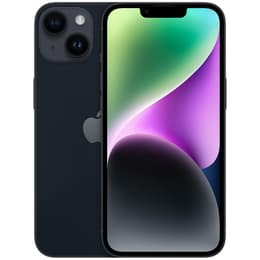
iPhone 14 • Locked AT&T
Starting at

Refurbished price:$225.72

Versus $629.00 new

See options
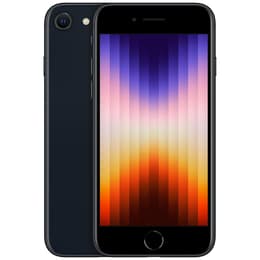
iPhone SE (2022) • Locked AT&T
Starting at

Refurbished price:$102.00

Versus $429.00 new

See options

Ratings

The iPhone 14, released in September 2022, and the iPhone SE (2022), launched in March 2022, represent distinct approaches within Apple's smartphone lineup. While both devices operate on the same iOS platform and share a similar internal processing foundation, they offer different user experiences primarily due to their form factor, display technology, and camera capabilities. The iPhone 14 features a modern, edge-to-edge display with Face ID, whereas the iPhone SE (2022) maintains a classic design with a physical home button and Touch ID.

Scores

Durability

When considering the longevity of these devices, both the iPhone 14 and the iPhone SE (2022) offer substantial software support, though there are differences in their physical resilience and repairability.

  • Software Support: Both models are expected to receive major iOS updates for approximately five to seven years from their respective release dates. This means users can anticipate continued access to new features and security patches well into the late 2020s, with the iPhone 14 potentially receiving support slightly longer due to its later release.
  • Build Materials: The iPhone 14 incorporates a Ceramic Shield front cover, which offers enhanced drop protection compared to the strengthened glass used on the iPhone SE (2022). Additionally, the iPhone 14 has an IP68 rating for water and dust resistance, allowing for deeper submersion than the iPhone SE's IP67 rating.
  • Repairability: The iPhone 14 features a redesigned internal structure that can make certain repairs, such as replacing the back glass, more straightforward. However, both devices generally require specialized tools for internal repairs, and the iPhone SE's older chassis design is well-understood by many repair professionals.

Release Year

2022

2022

Last OS Compatibility

Yes

Yes

OS

iOS

iOS

Foldable

No

No

Performance

Both the iPhone 14 and the iPhone SE (2022) are equipped with a capable processor, delivering smooth performance for everyday tasks, though the iPhone 14 has a slight edge in demanding scenarios.

  • System Responsiveness: Both devices handle daily applications, web browsing, and general multitasking with fluidity. The shared processor ensures a responsive user experience across common activities.
  • Gaming and Graphics: The iPhone 14's processor includes an additional graphics core compared to the iPhone SE (2022), which can result in slightly smoother frame rates and improved visual fidelity in graphically intensive games and applications.
  • Memory and Storage: The iPhone 14 comes with 6GB of RAM, providing more headroom for multitasking and keeping more applications active in the background without needing to reload. The iPhone SE (2022) has 4GB of RAM. Storage options for the iPhone 14 start at 128GB, while the iPhone SE (2022) begins at 64GB.
  • Battery Endurance: The iPhone 14 generally offers longer battery life, with up to 20 hours of video playback, compared to the iPhone SE (2022)'s up to 15 hours. This difference is notable for heavy users or those who spend extended periods away from a charger.

Memory (GB)

6 GB

4 GB

Screen quality

The display is a significant differentiator between these two iPhone models, impacting the visual experience and overall device interaction.

  • Display Technology and Size: The iPhone 14 features a 6.1-inch Super Retina XDR OLED display, which delivers deep blacks, high contrast, and vibrant colors. In contrast, the iPhone SE (2022) utilizes a 4.7-inch Retina HD LCD display, offering good clarity but lacking the contrast and color depth of an OLED panel.
  • Resolution and Clarity: The iPhone 14 boasts a higher resolution of 2532 x 1170 pixels at approximately 460 pixels per inch (ppi), resulting in sharper images and text. The iPhone SE (2022) has a resolution of 1334 x 750 pixels at 326 ppi.
  • Brightness and Refresh Rate: The iPhone 14's display can reach higher brightness levels, up to 800 nits typical and 1200 nits peak for HDR content, making it more visible in bright outdoor conditions. The iPhone SE (2022) has a typical brightness of 625 nits. The iPhone 14 also features a 120Hz refresh rate for smoother scrolling and animations, while the iPhone SE (2022) has a standard 60Hz refresh rate.

Resolution

1170 x 2532

750 x 1334

Screen type

Super Retina XDR OLED

Retina IPS LCD

Audiovisual

The camera systems on the iPhone 14 and iPhone SE (2022) offer different capabilities, with the iPhone 14 providing a more versatile and advanced photography experience.

  • Rear Camera System: The iPhone 14 is equipped with a dual 12-megapixel camera system, including a main wide lens and an ultra-wide lens. This allows for more creative shots and wider perspectives. The iPhone SE (2022) features a single 12-megapixel wide camera.
  • Photography Features: The iPhone 14 includes advanced features such as Night Mode for improved low-light photography, Cinematic Mode for video with shallow depth of field, and improved image processing for better detail and color accuracy. The iPhone SE (2022) lacks Night Mode and the ultra-wide lens.
  • Front Camera: The iPhone 14 has a 12-megapixel TrueDepth front camera, offering higher resolution and more advanced features for selfies and video calls. The iPhone SE (2022) has a 7-megapixel front camera.
  • Video Recording: Both devices support 4K video recording, but the iPhone 14 offers enhanced video stabilization and features like Action Mode for smoother footage during movement.

Main camera

12 megapixels

12 megapixels

Front camera

12 megapixels

7 megapixels

Miscellaneous

Beyond core performance and display, several practical elements differentiate the iPhone 14 and iPhone SE (2022), influencing daily usability and connectivity.

  • Biometric Security: The iPhone 14 utilizes Face ID for secure authentication, allowing users to unlock the device and authorize payments with facial recognition. The iPhone SE (2022) retains the physical home button with Touch ID, which uses fingerprint recognition.
  • Connectivity: Both models support 5G cellular connectivity for faster mobile data speeds. However, the iPhone 14 includes more modern Bluetooth 5.3 and Wi-Fi 6 standards, potentially offering more stable connections with accessories and improved wireless performance compared to the iPhone SE's Bluetooth 5.0. The iPhone 14 also supports mmWave 5G in some regions, while the SE only supports sub-6GHz 5G.
  • Physical Design and Handling: The iPhone 14 is larger and heavier, measuring 146.7 x 71.5 x 7.8 mm and weighing 172 grams, with an edge-to-edge display. The iPhone SE (2022) is more compact and lighter at 138.4 x 67.3 x 7.3 mm and 144 grams, featuring a more traditional design with bezels and a home button. This makes the SE easier for one-handed use for some users.
  • Ports: Both devices continue to use the Lightning port for charging and data transfer.

Weight

6 oz

3 oz

Screen size (inches)

6.1

4.7

Network

5G

5G

SIM card

eSIM

Physical SIM + eSIM

Carrier compatibility

AT&T

AT&T

Connector

Lightning

Lightning

User feedback often highlights the iPhone 14's modern design, vibrant OLED display, and enhanced camera capabilities as significant advantages. Many appreciate the larger screen for media consumption and the improved low-light photography. Some users, however, find the larger size less convenient for one-handed use. The iPhone SE (2022) is frequently praised for its compact form factor, the familiarity and reliability of Touch ID, and its overall performance for its size. Criticisms often point to its smaller, older LCD display and less versatile camera system compared to more contemporary models.

Users prioritizing a larger, more immersive display, advanced camera features, and Face ID for security will find the iPhone 14 well-suited to their needs. Its improved durability and slightly longer software support timeline also make it a strong contender for those seeking a device with a longer practical lifespan. Conversely, individuals who prefer a compact phone that is easy to use with one hand, value the tactile feedback of a home button with Touch ID, and primarily need reliable performance for everyday tasks will likely lean toward the iPhone SE (2022). Both models offer a robust iOS experience, and choosing a quality-assured refurbished option for either can be an eco-friendly alternative to purchasing new, allowing users to make an informed and sustainable choice.


See all articles

Our recent comparisons