Compare models
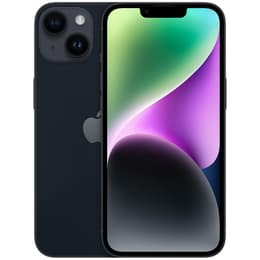
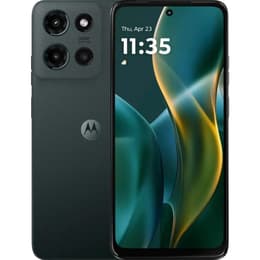
iPhone 14 • Locked AT&T vs Motorola Moto G (2025) • Unlocked
- 1-year warranty
- Free standard shipping
- Free 30-day returns
Differences at a glance
The iPhone 14 (locked to AT&T) and the Motorola Moto G (2025, unlocked) represent two distinct approaches to everyday mobile technology, balancing Apple's established ecosystem with Motorola's versatile, open-network design. While the iPhone 14 operates on Apple's streamlined iOS platform within specific carrier constraints, the Motorola Moto G runs on Android 15 with full network freedom. Selecting between these devices involves looking past surface specifications to evaluate how each smartphone handles daily demands.
Available Models
Color
Storage (GB)
Scores
Durability
When examining longevity and durability, both devices offer contrasting timelines and hardware protections suited to different user expectations.
- Software Lifespan: The iPhone 14 benefits from extended software support typical of Apple devices, ensuring years of regular security updates, whereas the Motorola Moto G (2025) provides a standard window of major Android version updates.
- Build and Repairability: The iPhone 14 features rigid glass and aluminum construction paired with an official water resistance rating, while the Motorola Moto G utilizes resilient composite materials and scratch-resistant glass designed for daily resilience.
- Practical Longevity: Users opting for a quality-assured refurbished option through Back Market can also secure extended device lifecycles while participating in an eco-friendly alternative for everyday tech needs.
Release Year
2022
2025
OS
iOS
Android
Foldable
No
No
Performance
Processing power and energy management define how smoothly each device handles multitasking, casual gaming, and everyday utility apps.
- System Responsiveness: The iPhone 14 handles demanding mobile games and intensive applications smoothly with rapid app switching, while the Motorola Moto G manages everyday tasks, messaging, and web browsing reliably using its current-generation processor and dedicated memory configuration.
- Battery Behavior: The iPhone 14 offers balanced day-to-day power efficiency for standard use, whereas the Motorola Moto G features a high-capacity battery designed to easily sustain extended periods of heavy media consumption between charges.
- Storage Management: The iPhone 14 relies on fixed internal storage tiers, whereas the Motorola Moto G provides flexibility through expandable storage options using a microSD card slot.
Screen quality
Display characteristics shape visual clarity, media playback quality, and outdoor readability across both smartphone options.
- Display Technology: The iPhone 14 utilizes an OLED panel with deep contrast ratios and vibrant color accuracy, while the Motorola Moto G features a larger LCD screen emphasizing smooth visual transitions through an elevated refresh rate.
- Outdoor Brightness: The iPhone 14 reaches high peak brightness levels for comfortable visibility under direct sunlight, whereas the Motorola Moto G provides adequate illumination for outdoor messaging and navigation.
- Viewing Area: The iPhone 14 presents a compact form factor optimized for single-handed use, while the Motorola Moto G offers an expansive viewing surface suited for watching videos and reading articles.
Resolution
1170 x 2532
720x1604
Screen type
Super Retina XDR OLED
IPS LCD
Audiovisual
Imaging capabilities and media output vary significantly based on lens configurations, computational processing, and audio hardware.
- Photography Performance: The iPhone 14 relies on dual rear sensors equipped with advanced image stabilization for crisp low-light captures, while the Motorola Moto G centers its system around a high-resolution main sensor supported by macro capabilities for close-up shots.
- Video and Audio: The iPhone 14 records steady, high-definition video with cinematic depth adjustments and clear stereo sound, whereas the Motorola Moto G captures reliable standard-definition footage accompanied by flexible audio recording options including a traditional headphone jack.
- Media Playback: Both devices deliver clear speaker output suitable for hands-free calls, casual music listening, and video streaming.
Miscellaneous
Practical everyday features, physical dimensions, and connectivity standards shape the handling experience of each smartphone.
- Connectivity and Ports: The iPhone 14 operates exclusively within AT&T network parameters using a proprietary charging port, while the Motorola Moto G offers unlocked dual-SIM flexibility and uses a universal USB-C connection.
- Security and Sensors: The iPhone 14 utilizes facial recognition technology for secure authentication, whereas the Motorola Moto G incorporates a physical fingerprint reader alongside face unlock options.
- Physical Handling: The iPhone 14 presents a slightly heavier, compact metallic frame, while the Motorola Moto G features a lighter build distributed across a noticeably taller chassis.
Weight
6 oz
7 oz
Screen size (inches)
6.1
6.7
Network
5G
5G
SIM card
eSIM
Physical SIM + eSIM
Carrier compatibility
AT&T
Unlocked
What the community thinks
Online community discussions and user feedback indicate that buyers appreciate the iPhone 14 for its reliable ecosystem integration, robust video capture, and long-term software support, though some users note limitations regarding carrier locking restrictions. Conversely, users frequently praise the Motorola Moto G for its all-day battery endurance, expandable storage flexibility, and unconstrained carrier freedom, while noting that its screen technology and processing speeds cater more toward casual tasks than heavy-duty gaming.
Users prioritizing tight software synergy, premium display contrast, and dedicated ecosystem features will find the iPhone 14 well-suited to their preferences, provided they use AT&T network services. Meanwhile, users prioritizing network versatility, expandable storage, and extended battery endurance will lean toward the Motorola Moto G. Evaluating these practical factors ensures a clear choice aligned with individual daily requirements.