
Compare models
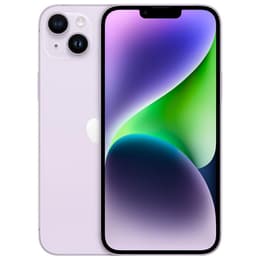
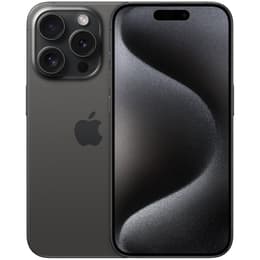
iPhone 14 Plus • Unlocked vs iPhone 15 Pro • Unlocked
- 1-year warranty
- Free standard shipping
- Free 30-day returns
Differences at a glance
The iPhone 14 Plus, released in October 2022, and the iPhone 15 Pro, launched in September 2023, represent different tiers within Apple's smartphone lineup. While both devices operate on Apple's iOS ecosystem, the iPhone 15 Pro introduces a more advanced camera system, a higher-refresh-rate display, and a newer processor, distinguishing it from the larger-screen-focused iPhone 14 Plus.
Available Models
Color
Storage (GB)
Scores
Durability
When considering the practical lifespan of these devices, several factors come into play, including their release dates and Apple's typical software support cycle.
- Release Timeline: The iPhone 14 Plus was released in October 2022, while the iPhone 15 Pro followed almost a year later in September 2023. This difference in launch date means the iPhone 15 Pro will likely receive major iOS updates for a longer period.
- Software Longevity: Apple generally provides major iOS updates for approximately five to seven years after a device's release, with security updates often extending beyond that. The iPhone 15 Pro, being a newer model, is expected to receive software support for a longer duration, potentially until around 2035, compared to the iPhone 14 Plus, which might see support until approximately 2034.
- Repairability: Both models feature a design that allows for easier back glass replacement compared to older iPhones. The iPhone 15 Pro received an initial repairability score of 7 out of 10 from PBKreviews, and iFixit later promoted iPhone 15 models to a 7/10 score due to software changes that facilitate part calibration. This indicates a commitment to extending the practical lifespan through maintainability.
Release Year
2022
2023
Last OS Compatibility
Yes
Yes
OS
iOS
iOS
Foldable
No
No
Performance
The performance capabilities of the iPhone 14 Plus and iPhone 15 Pro differ due to their respective internal components, impacting how they handle demanding applications and multitasking.
- Processor Capabilities: The iPhone 14 Plus is equipped with a processor that handles everyday tasks, web browsing, and most applications smoothly. It provides a responsive experience for general use and casual gaming. The iPhone 15 Pro features a newer, more advanced processor designed for enhanced performance. This translates to faster app loading times, smoother transitions between applications, and more fluid gameplay in graphically intensive titles.
- Multitasking and Responsiveness: For users who frequently switch between multiple demanding applications or engage in intensive tasks like video editing on their device, the iPhone 15 Pro offers a noticeable advantage in overall system responsiveness and efficiency. The iPhone 14 Plus, while capable, may exhibit slightly longer loading times or less instantaneous responses in such scenarios.
- Storage Options: Both devices offer various internal storage configurations, allowing users to choose based on their needs for apps, photos, and videos. The iPhone 15 Pro also offers a 1TB storage option, which is not available on the iPhone 14 Plus.
Screen quality
The visual experience on the iPhone 14 Plus and iPhone 15 Pro is distinct, primarily due to differences in display technology and features.
- Display Technology and Size: The iPhone 14 Plus features a 6.7-inch Super Retina XDR OLED display, providing ample screen real estate for media consumption and productivity. The iPhone 15 Pro has a slightly smaller 6.1-inch Super Retina XDR OLED display. Both displays offer deep blacks and vibrant colors characteristic of OLED technology.
- Refresh Rate and Smoothness: A key difference lies in the refresh rate. The iPhone 14 Plus has a standard 60Hz refresh rate. The iPhone 15 Pro incorporates ProMotion technology, offering an adaptive refresh rate up to 120Hz. This results in noticeably smoother scrolling, more fluid animations, and a more responsive feel during interactions on the iPhone 15 Pro.
- Brightness and Features: The iPhone 15 Pro offers higher peak brightness levels, especially for outdoor viewing (up to 2000 nits), making it more legible in direct sunlight compared to the iPhone 14 Plus (up to 1200 nits peak HDR). Additionally, the iPhone 15 Pro includes an Always-On display and the Dynamic Island, which integrates alerts and activities into an interactive area at the top of the screen.
Resolution
1284 x 2778
1179 x 2556
Screen type
Super Retina XDR OLED
LTPO Super Retina XDR OLED
Audiovisual
The camera systems on the iPhone 14 Plus and iPhone 15 Pro offer different capabilities, particularly for advanced photography and videography.
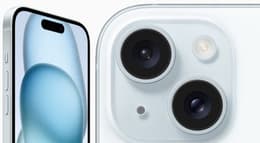
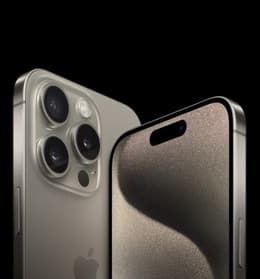
- Main Camera System: The iPhone 14 Plus features a dual-camera system with a 12MP Main camera and a 12MP Ultra Wide camera. The Main camera includes sensor-shift optical image stabilization for improved low-light performance and stability. The iPhone 15 Pro steps up with a triple-camera system, featuring a 48MP Main camera, a 12MP Ultra Wide, and a 12MP 3x Telephoto lens. The 48MP Main sensor on the 15 Pro captures more detail and allows for 24MP and 48MP super-high-resolution photos.
- Zoom and Low-Light Performance: The iPhone 15 Pro's dedicated 3x telephoto lens provides optical zoom capabilities, allowing for clearer close-up shots from a distance. The iPhone 14 Plus relies on digital zoom beyond its 2x optical zoom out from the Ultra Wide lens. Both devices offer Night mode, but the 15 Pro's larger sensor and advanced processing contribute to improved low-light photography.
- Video Recording: Both models support 4K video recording at various frame rates and Cinematic mode. The iPhone 15 Pro further enhances video capabilities with ProRes video recording and Log video recording, offering more control for professional video workflows.
Main camera
12 megapixels
48 megapixels
Front camera
12 megapixels
12 megapixels
Miscellaneous
Beyond core performance and display, several practical features and design elements differentiate the iPhone 14 Plus and iPhone 15 Pro.
- Connectivity and Ports: Both devices support 5G, Wi-Fi 6, and Bluetooth 5.3 for robust wireless connectivity. A significant difference is the charging and data port: the iPhone 14 Plus uses the Lightning connector, while the iPhone 15 Pro adopts a USB-C port with USB 3 speeds, enabling faster data transfers and broader compatibility with accessories.
- Build Materials and Design: The iPhone 14 Plus features a Ceramic Shield front, a glass back, and an aluminum frame. The iPhone 15 Pro utilizes a titanium frame with a textured matte glass back, contributing to a lighter yet durable feel. The iPhone 15 Pro also introduces a customizable Action button, replacing the traditional mute switch.
- Dimensions and Weight: The iPhone 14 Plus is a larger device, weighing 203 grams. The iPhone 15 Pro is more compact and lighter at 187 grams. Both maintain an IP68 rating for water and dust resistance.
Weight
7 oz
187 oz
Screen size (inches)
6.7
6.1
Network
5G
5G
SIM card
eSIM
eSIM
Carrier compatibility
Unlocked
Unlocked
Connector
Lightning
USB-C (USB 3)
What the community thinks
User feedback often highlights the iPhone 14 Plus for its exceptional battery life, with many reporting it can comfortably last through a full day of heavy use, and sometimes even longer. Its large display is also frequently praised for providing an expansive viewing experience for media and general browsing. Some users, however, note the 60Hz refresh rate as a point of comparison to more modern displays. The iPhone 15 Pro, conversely, receives acclaim for its advanced camera system, particularly the versatility offered by the telephoto lens and the improved low-light capabilities. Its ProMotion display is consistently lauded for its smooth scrolling and responsive feel, and the faster processor is appreciated by those who engage in demanding tasks. Criticisms sometimes point to its smaller screen size compared to the Plus models for users who prefer a larger canvas.
Users prioritizing extended battery life and a larger display for general media consumption and everyday tasks may find the iPhone 14 Plus well-suited to their needs. Its robust battery performance makes it a reliable companion for long days without access to charging. Conversely, individuals who prioritize cutting-edge camera technology, a smoother display experience, and higher performance for gaming or professional applications will likely lean toward the iPhone 15 Pro. Its more compact form factor also appeals to those who prefer a smaller device for one-handed use.
For those considering either model, exploring quality-assured refurbished options can be an eco-friendly alternative to purchasing new, offering a sustainable choice without compromising on functionality.