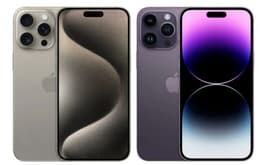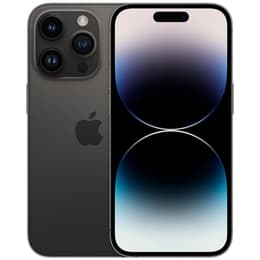
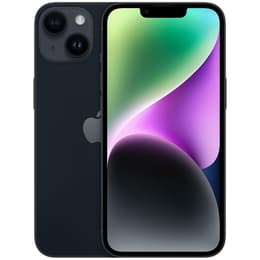

iPhone 14 Pro • Unlocked vs iPhone 14 • Locked Verizon

iPhone 14 Pro • Unlocked
Starting at

Refurbished price:$354.99

Versus $999.00 new

See options
iPhone 14 • Locked Verizon
Starting at

Refurbished price:$299.00

Versus $599.00 new

See options

Ratings

The iPhone 14 Pro and the iPhone 14, both released in September 2022, represent distinct tiers within Apple's smartphone lineup. While they share the same operating system and fundamental design language, the Pro model introduces several advanced features and hardware enhancements that differentiate it from the standard iPhone 14, particularly in display technology, camera capabilities, and processing power.

Scores

Durability

Both the iPhone 14 Pro and iPhone 14 are designed for durability and receive consistent software support, contributing to a practical lifespan of several years.

  • Release Timeline: Both devices were launched in September 2022, meaning they began their software support cycle at the same time.
  • OS Support Duration: Apple typically provides iOS updates for five to seven years from a device's initial release. While both models are expected to receive updates for a similar duration, the iPhone 14 Pro's more advanced processor may allow it to handle future demanding software features more efficiently for a slightly longer period.
  • Repairability: Both models feature a design that allows for component replacement, contributing to their overall repairability.

Release Year

2022

2022

Last OS Compatibility

Yes

Yes

OS

iOS

iOS

Foldable

No

No

Performance

The performance capabilities of the iPhone 14 Pro and iPhone 14 differ due to their internal components, impacting how they handle demanding tasks and overall responsiveness.

  • Processor Capabilities: The iPhone 14 Pro is equipped with a newer generation processor, which provides enhanced speed and efficiency for complex computations and graphics-intensive applications. The standard iPhone 14 utilizes a powerful processor from the previous generation, still capable of handling everyday tasks smoothly.
  • Multitasking and App Loading: Users will experience fluid navigation and quick app launches on both devices. However, the iPhone 14 Pro may demonstrate a slight advantage in responsiveness and sustained performance during prolonged heavy usage, such as intensive gaming or video editing.
  • Storage Options: The iPhone 14 Pro offers a wider range of storage configurations, including a 1TB option, providing more space for large files, high-resolution media, and numerous applications compared to the iPhone 14.

Memory (GB)

6 GB

6 GB

Screen quality

The displays on both the iPhone 14 Pro and iPhone 14 offer vibrant visuals, but the Pro model incorporates advanced technologies for a more dynamic viewing experience.

  • Display Technology and Refresh Rate: Both phones feature 6.1-inch Super Retina XDR OLED displays, delivering deep blacks and rich colors. The iPhone 14 Pro, however, includes ProMotion technology, allowing for an adaptive refresh rate that can scale up to 120Hz for smoother scrolling and more fluid animations, and down to 1Hz for power efficiency. The iPhone 14 maintains a consistent 60Hz refresh rate.
  • Brightness and Outdoor Visibility: The iPhone 14 Pro achieves significantly higher peak brightness levels, especially in outdoor conditions (up to 2000 nits) and for HDR content (up to 1600 nits), making content more legible under direct sunlight compared to the iPhone 14's peak brightness (1200 nits for HDR).
  • Interactive Elements: A notable difference is the iPhone 14 Pro's Dynamic Island, an adaptive area that replaces the traditional notch and integrates alerts, notifications, and ongoing activities. The iPhone 14 retains the standard notch design. The Pro model also features an Always-On Display, which keeps essential information visible on the screen at a low power state.

Resolution

1179 x 2556

1170 x 2532

Screen type

LTPO Super Retina XDR OLED

Super Retina XDR OLED

Audiovisual

The camera systems on the iPhone 14 Pro and iPhone 14 offer capable photography and videography, with the Pro model providing more advanced hardware and features.

  • Main Camera Sensor: The iPhone 14 Pro features a 48MP main camera sensor, which uses pixel-binning technology to capture detailed 12MP photos and offers the option for full 48MP ProRAW images. The iPhone 14 comes with an advanced 12MP main camera. Both models include improved low-light performance and a new Photonic Engine for enhanced image processing.
  • Additional Lenses and Capabilities: The iPhone 14 Pro includes a dedicated telephoto lens, enabling 3x optical zoom and improved portrait mode capabilities. It also supports macro photography and features a LiDAR scanner for enhanced augmented reality experiences and faster autofocus in low light. The iPhone 14 features a dual-camera system with wide and ultrawide lenses but lacks the telephoto and macro capabilities.
  • Video Recording: Both devices offer high-quality video recording, including a new Action Mode for stabilized footage. The iPhone 14 Pro supports ProRes video recording up to 4K at 30 frames per second, providing more flexibility for professional video editing, a feature not available on the standard iPhone 14.

Main camera

48 megapixels

12 megapixels

Front camera

12 megapixels

12 megapixels

Miscellaneous

Beyond core features, several practical elements distinguish the iPhone 14 Pro and iPhone 14, influencing daily usability and overall experience.

  • Build Materials and Weight: The iPhone 14 Pro features a more robust stainless steel frame, contributing to a more premium feel and increased weight (206g). The iPhone 14 uses an aerospace-grade aluminum frame, resulting in a lighter device (172g).
  • Connectivity and Ports: Both models support 5G connectivity, Wi-Fi 6, and Bluetooth 5.3, ensuring fast and reliable wireless communication. Both also utilize the Lightning port for charging and data transfer.
  • Safety Features: Both the iPhone 14 Pro and iPhone 14 include Emergency SOS via Satellite, allowing users to contact emergency services outside of cellular and Wi-Fi coverage, and Crash Detection, which can automatically alert emergency contacts in the event of a severe car crash.

Weight

7 oz

6 oz

Width

2.81 in

2.82 in

Height

5.81 in

5.78 in

Depth

0.31 in

0.31 in

Screen size (inches)

6.1

6.1

Network

5G

5G

SIM card

eSIM

eSIM

Carrier compatibility

Unlocked

Verizon

Connector

Lightning

Lightning

The iPhone 14 Pro and iPhone 14, both released in 2022, cater to different user needs, with user feedback highlighting distinct strengths for each. Users frequently praise the iPhone 14 Pro for its advanced display, particularly the Dynamic Island and Always-On functionality, and its significantly upgraded camera system, especially the 48MP main sensor and telephoto lens. Some users, however, have noted that the iPhone 14 Pro's battery life, while generally good, might not always surpass its predecessor's, and its heavier build can be a consideration.

The standard iPhone 14 is often commended for its solid performance, reliable camera for everyday use, and slightly lighter design. Criticisms for the iPhone 14 sometimes center on its processor being a carry-over from the previous generation and its display lacking the higher refresh rate and advanced features of the Pro model.

Users prioritizing cutting-edge camera technology, a highly responsive and interactive display, and the most powerful processing available will find the iPhone 14 Pro well-suited to their needs. This model is ideal for those who engage in mobile photography, videography, or demanding applications. Conversely, users seeking a dependable smartphone with strong core performance, a capable camera for general use, and a slightly lighter form factor may prefer the iPhone 14. It offers a robust experience for daily communication, media consumption, and casual photography. For those considering either device, exploring quality-assured refurbished options can provide an eco-friendly alternative to new purchases.


See all articles

Our recent comparisons