iPhone 14 • Locked Verizon vs Motorola Moto G Play (2024) • Unlocked

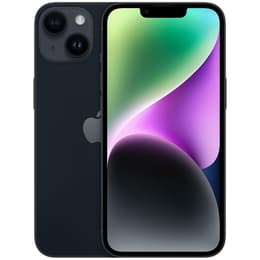
iPhone 14 • Locked Verizon
Starting at

Refurbished price:$299.00

Versus $599.00 new

See options
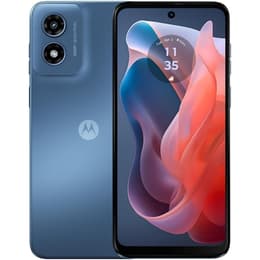
Motorola Moto G Play (2024) • Unlocked
Starting at

Refurbished price:$100.00

Versus $128.99 new

See options

Ratings

The iPhone 14, released in September 2022, and the Motorola Moto G Play 2024, launched in early 2024, represent distinct approaches to smartphone design and functionality. While the iPhone 14 operates on Apple's iOS ecosystem, offering a streamlined user experience, the Moto G Play 2024 runs on Android, providing more customization options. Key differentiators include their display technologies, camera capabilities, and expected software support timelines.

Scores

Durability

The longevity of a smartphone is influenced by its release date, software support, and physical durability.

  • Release Timeline: The iPhone 14 was released in September 2022, while the Motorola Moto G Play 2024 became available in early 2024. This difference in launch dates means the iPhone 14 has already received several software updates, whereas the Moto G Play 2024 is newer to the market.
  • Software Longevity: Apple typically provides iOS updates for its devices for approximately 5 to 6 years from their release. The iPhone 14 launched with iOS 16, suggesting a prolonged period of software support. In contrast, the Motorola Moto G Play 2024, running Android 13, is expected to receive only one major OS update to Android 14 and security updates for about two years.
  • Durability Features: The iPhone 14 features a Ceramic Shield front and an IP68 rating for water and dust resistance, indicating a robust build. The Moto G Play 2024 includes Corning Gorilla Glass 3 for screen protection and a water-repellent design, offering a degree of protection against splashes.

Release Year

2022

2024

Last OS Compatibility

Yes

No

OS

iOS

Android

Foldable

No

No

Performance

Performance in smartphones is determined by the internal processing unit, available memory, and how efficiently the software utilizes these resources for daily tasks.

  • Processing Power: The iPhone 14 is equipped with a powerful processor that handles demanding applications and multitasking with fluidity. Users can expect smooth navigation, rapid app launches, and consistent performance even during intensive gaming sessions. The Moto G Play 2024 features a processor designed for everyday tasks like email, web browsing, and media playback. While it can manage light tasks and app switching without hesitation, some users have reported that performance can feel less smooth during more demanding use.
  • Memory and Storage: The iPhone 14 comes with 6GB of RAM and offers internal storage options of 128GB, 256GB, or 512GB, without expandable storage. The Moto G Play 2024 includes 4GB of RAM and 64GB of internal storage, with the flexibility to expand storage up to 1TB using a microSD card.
  • Battery Behavior: The iPhone 14's battery is designed to comfortably last a full day for most users, typically requiring an overnight charge. The Moto G Play 2024, with its larger battery capacity, can last multiple days for some users, with claims of up to 46 hours on a single charge. Both devices support wired charging, with the Moto G Play 2024 supporting 15W charging.

Memory (GB)

6 GB

4 GB

Screen quality

The visual experience on a smartphone is significantly shaped by its display technology, resolution, and brightness levels.

  • Display Technology: The iPhone 14 features a 6.1-inch Super Retina XDR OLED display, known for its deep blacks, vibrant colors, and excellent contrast. The Moto G Play 2024 utilizes a 6.5-inch IPS LCD panel, which provides clear visuals and good viewing angles.
  • Resolution and Clarity: The iPhone 14 offers a resolution of 2532 x 1170 pixels at approximately 460 pixels per inch (ppi), resulting in sharp and detailed images and text. The Moto G Play 2024 has a 1600 x 720 pixel (HD+) resolution with about 270 ppi, which is suitable for everyday viewing.
  • Brightness and Refresh Rate: The iPhone 14's display can reach up to 800 nits typical brightness and 1200 nits peak brightness for HDR content, ensuring good visibility in various lighting conditions. It has a standard 60 Hz refresh rate. The Moto G Play 2024 offers a 90 Hz refresh rate for smoother scrolling and animations, with a typical brightness of 500 nits.

Resolution

1170 x 2532

720 x 1600

Screen type

Super Retina XDR OLED

IPS LCD

Audiovisual

Camera systems are a crucial aspect for many users, influencing the quality of photos and videos captured in various environments.

  • Rear Camera System: The iPhone 14 features a dual 12MP camera system, including a main camera with a wide f/1.5 aperture and sensor-shift optical image stabilization, and a 12MP ultra-wide camera with a 120-degree field of view. The Moto G Play 2024 comes with a single 50MP rear camera with an f/1.8 aperture, which uses pixel binning to produce 12.5MP images.
  • Photography Performance: The iPhone 14 incorporates advanced computational photography features like Photonic Engine, Deep Fusion, and Smart HDR 4, enhancing detail and color accuracy, especially in challenging lighting. The Moto G Play 2024 includes features such as HDR, Phase Detection Autofocus (PDAF), and a Night Vision mode to improve image quality in different scenarios.
  • Video and Audio: The iPhone 14 supports 4K video recording at up to 60 frames per second, with features like Cinematic mode for shallow depth of field effects and Action mode for enhanced video stabilization. Both devices offer stereo sound recording for videos. The Moto G Play 2024 records video at 1080p and includes a 3.5mm headphone jack and Dolby Atmos support for an immersive audio experience.

Main camera

12 megapixels

50 megapixels

Front camera

12 megapixels

8 megapixels

Miscellaneous

Beyond core features, several practical elements contribute to the overall user experience and device utility.

  • Connectivity: The iPhone 14 supports 5G cellular networks, Wi-Fi 6, and Bluetooth 5.3, offering fast and reliable wireless connections. The Moto G Play 2024 is a 4G-only device, supporting Wi-Fi 5 and Bluetooth 5.1.
  • Ports and Sensors: The iPhone 14 uses a Lightning port for charging and data transfer and relies on Face ID for biometric authentication. The Moto G Play 2024 features a USB-C port, a 3.5mm headphone jack, and a side-mounted fingerprint sensor for unlocking.
  • Design and Handling: The iPhone 14 has dimensions of 146.7 x 71.5 x 7.8 mm and weighs 172 grams, with an aluminum frame and glass back. The Moto G Play 2024 measures 163.8 x 75 x 8.3 mm and weighs 185 grams, featuring a plastic frame and back, contributing to a comfortable hold.

Weight

6 oz

6 oz

Screen size (inches)

6.1

6.5

Network

5G

LTE

SIM card

eSIM

Physical SIM

Carrier compatibility

Verizon

Unlocked

Connector

Lightning

USB-C + Jack 3.5mm

The iPhone 14 and Motorola Moto G Play 2024 cater to different user priorities, each excelling in specific areas. User feedback for the iPhone 14 often praises its consistent performance, high-quality camera system, and the seamless integration within the iOS ecosystem. Some users have noted concerns regarding battery degradation over time. For the Moto G Play 2024, common praise points include its extended battery life, the inclusion of a headphone jack, and expandable storage. Criticisms frequently revolve around its limited software update policy and the absence of 5G connectivity.

Users prioritizing a device with a premium OLED display, advanced camera features, and a longer period of software support will find the iPhone 14 well-suited to their needs. Its robust build and powerful processing capabilities make it a strong choice for those who engage in demanding applications or prefer a highly integrated mobile experience. Conversely, individuals who value exceptional battery endurance, the flexibility of expandable storage, and a traditional headphone jack may lean towards the Motorola Moto G Play 2024. This device is a practical option for users focused on essential smartphone functions and media consumption without the need for the latest network speeds.

Both devices are available as quality-assured refurbished options, providing an eco-friendly alternative for consumers looking to make informed and sustainable choices.

See all articles

Our recent comparisons