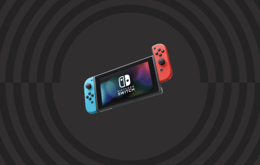
Refurbished price:$1,148.99
Versus $1,999.99 new


Updated on August 27, 2026
August 27, 2026
5 mins read

Thomas Hobbs
Journalist
After news Sony will end disc-based PlayStation games from 2028 onwards, Back Market’s Thomas Hobbs ponders how the joy of gaming went from being accessible to feeling more and more like a hobby for the affluent.
“I grew up with physical media, so I find it really sad what’s happening,” responded video games legend and Metal Gear Solid creator Hideo Kojima after Sony announced it would cease releasing PlayStation games on discs from 2028 onwards. “What’s happening to video games, and the switch over to digital-only, might also happen to movies, too," Kojima warned.
His fears were echoed by millions of video game fans across the internet, with the July announcement of Sony’s move away from physical discs met with widespread criticism (and even prompting a reaction statement from Sony’s CFO). This wave of discontent was summarised in a statement from the Entertainment Retailers Association CEO, Kim Bayley, who said: “Every year, millions of gamers still choose to buy physical copies because they value true ownership. A disc can be shared with family, traded in, collected, preserved and, crucially, still played years from now. A download licence often offers none of those freedoms.” ”
Currently, if you don’t log into your PlayStation account online within 36 months, Sony can also remove your digital games (meaning the games would need to be re-purchased altogether); a licensing rule that is making many question whether they really own the games that they pay to download at all, or are in fact just renting them under a license. This news was compounded by developer Rockstar’s decision to initially make the looming Grand Theft Auto 6 digital-only; another decision that resulted in widespread anger, primarily due to people desperately wanting to add a GTA 6 disc to their collection.
"There was a time when owning a video game console was the great equalizer in society. Everyone could afford one. But that now feels like a long, long time ago" – Thomas Hobbs
Yet beyond these obvious ownership issues, the move by Sony feels like yet more proof of just how elitist video game culture is becoming. There was a time when owning a video game console was the great equalizer in society. Whether you were middle or working class, it’s likely you grew up with a PlayStation, Sega, Xbox, or Nintendo under your TV. This love of gaming culture was captured perfectly by Back Market’s interview with US rap legend Curren$y, who spoke about how 1990s consoles provided escapism for poorer communities: “My mom was poor, so the Sega Genesis was like our vacation!”

Gaming fans are upset that Rockstar's Grand Theft Auto 6 will launch as digital-only.
However, in 2026, you’ll need a small fortune just to own a next-generation console, making it a crippling expense amid a global cost-of-living crisis. And, if you’re not fortunate enough to have access to high-speed internet, a fact for millions of people across the world, the move to always-online digital gaming will potentially lock you out of the art form completely. This landscape risks pricing those from humble backgrounds out of gaming, effectively making it a rich kid’s hobby.
"When you make gaming feel so elitist, you risk taking some of its magic away" – Thomas Hobbs
Let’s look deeper at the numbers. Despite being released five years ago, Sony recently put prices of its PlayStation 5 up by £90 in the UK and up to $100-$150 in the US, blaming the global RAM shortage for its decision. Meanwhile, a Nintendo Switch 2 goes for up to $450 in the US and £400 in the UK, while getting your hands on either an Xbox or Steam Box will require deep pockets and at least $1,500 to spare. These high prices would be easier to swallow if a vibrant second-hand market existed, where gamers could trade in their old games and find titles at heavily discounted prices.
But by getting rid of discs, the games you buy on the Sony PlayStation 6 won’t be able to be traded in and will have no resale value whatsoever, and a durable second-hand market filled with bargains will be phased out as disc-free becomes the mainstream norm. Developers are likely to keep their games at maximum price for as long as possible in this digital-only marketplace, something summarised perfectly by a recent Ars Technica report titled: “RIP gaming’s bargain bin.”
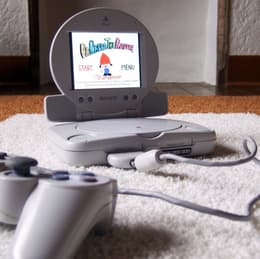
Some are embracing retro consoles like Sony's PlayStation 1 as a protest against digital-only gaming.
It all feels like an example of maximizing profits, as the gaming industry looks to safeguard its future by passing on costs to the customer. That’s not even going into what all this does to archiving, with a loss of physical media, gaming leaves less of a tangible imprint. Trusting big business to preserve pop culture has historically been naive.
So, what can you do to protest all of this? Beyond signing petitions and calling for boycotts, many are turning backwards for answers. The revival of analogue era retro gaming consoles, particularly among Gen Z audiences, shows gamers are seeing more value in embracing older, offline devices, which will always be connected to a second-hand market. There’s something immensely satisfying about playing a 30-year-old-plus console and it does not require a day-one patch just to load; all that adventure is just a dusty blow of a cartridge away.
Refurbished price:$1,148.99
Versus $1,999.99 new
Refurbished price:$1,413.99
Versus $1,799.99 new

Refurbished price:$1,460.99

Refurbished price:$1,632.99
Versus $1,799.99 new

Refurbished price:$1,739.99
Versus $1,899.99 new

Refurbished price:$1,771.99
Versus $2,099.99 new
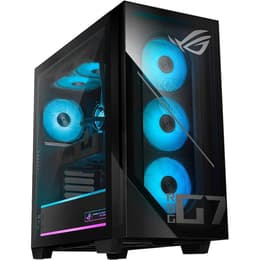
Refurbished price:$1,882.99
Versus $2,199.99 new

Refurbished price:$2,017.71
Versus $3,679.74 new

Refurbished price:$2,175.99
Versus $2,499.99 new

Refurbished price:$2,181.99
Versus $3,112.99 new

Refurbished price:$2,286.99
Versus $2,499.99 new

Refurbished price:$2,397.99
Versus $2,749.99 new

Refurbished price:$2,554.99
Versus $2,899.99 new

Refurbished price:$2,718.99

Refurbished price:$2,753.99
Versus $2,999.99 new

Refurbished price:$3,164.99

However, even if there are viable alternatives such as retro, it’s hard not to feel sad about gaming’s slide into digital-only. I get the feeling that when it comes to the next generation of consoles, many are naturally going to be excluded from experiencing it. An art form that used to feel so accessible, and something that catered for just about everyone’s whims, is becoming unrecognizable and so obviously engineered for only society’s most cash-rich individuals to enjoy. And, when you make gaming feel so elitist, you also risk taking some of its magic away.
Thomas Hobbs is a UK-based freelance journalist who has written for titles including the Guardian, Financial Times, Telegraph, Pitchfork, New Statesman, Stereogum, BBC Culture and many others. He has interviewed everyone from Nas to Usher, Weyes Blood, and Joe Hisaishi, while collecting and playing vintage video games is one of his favourite past times.