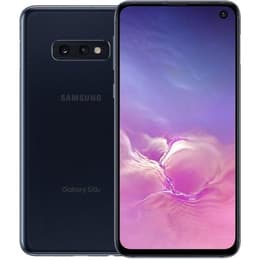
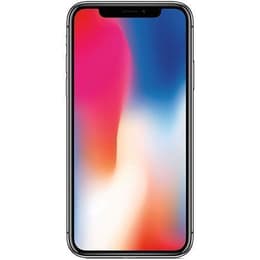

Galaxy S10E • Unlocked vs iPhone X • Unlocked

Galaxy S10E • Unlocked
Starting at

Refurbished price:$117.00

Versus $459.00 new

See options
iPhone X • Unlocked
iPhone X • Unlocked
Starting at

Refurbished price:$145.00

Versus $449.00 new

See options

Ratings

The Samsung Galaxy S10e, released in March 2019, and the iPhone X, launched in November 2017, represent distinct approaches to flagship smartphones from their respective manufacturers. While both devices offer a compact form factor and advanced features for their time, they differ significantly in their operating systems, design philosophies, and core functionalities. The Galaxy S10e runs on Android, providing a customizable experience, whereas the iPhone X operates on Apple's iOS, known for its integrated ecosystem.

Scores

Durability

When considering the long-term usability of these devices, their release timelines and software support are key factors.

  • Release Timeline: The Galaxy S10e was released in March 2019, making it approximately 16 months newer than the iPhone X, which debuted in November 2017. This difference in age can impact how much longer each device receives official software updates.
  • Software Longevity: The iPhone X's last major iOS update was iOS 16, and it does not support iOS 17 or newer versions. However, it continued to receive security updates for iOS 16 as of September 2025. The Galaxy S10e received its last major Android update with Android 12 (One UI 4.1) and continued to receive security updates into June 2024 for some models.
  • Repairability: The iPhone X generally has a better repairability score, rated at 6 out of 10 by iFixit, with the display and battery being relatively easier to replace. In contrast, the Galaxy S10e received a lower iFixit score of 3 out of 10, largely due to the extensive use of adhesive and components like the charging port being soldered to the board, making repairs more challenging.

Release Year

2019

2017

Last OS Compatibility

No

No

OS

Android

iOS

Foldable

No

No

Performance

The performance of both smartphones is influenced by their internal components and software optimization.

  • Processor Capabilities: The Galaxy S10e, depending on the region, is powered by a processor that handles demanding applications and multitasking smoothly. The iPhone X features a processor designed to deliver responsive performance across iOS applications.
  • Multitasking and Responsiveness: The Galaxy S10e typically comes with 6GB or 8GB of RAM, which supports fluid multitasking and app switching. The iPhone X has 3GB of RAM, and its performance relies on iOS's efficient memory management to maintain responsiveness.
  • Battery Behavior: The Galaxy S10e is equipped with a 3100 mAh battery, which some heavy users have noted may require more frequent charging throughout the day. The iPhone X has a 2716 mAh battery, and some users have reported that its battery life can be a concern, especially with heavy usage or on older iOS versions, potentially leading to overheating.

Memory (GB)

6 GB

3 GB

Screen quality

Both devices offer high-quality displays, but with different underlying technologies and characteristics.

  • Display Technology: The Galaxy S10e features a 5.8-inch Dynamic AMOLED display, known for its vibrant colors, deep blacks, and HDR10+ support. The iPhone X also has a 5.8-inch Super Retina OLED display, which was a first for Apple, offering excellent contrast, HDR10, and Dolby Vision.
  • Resolution and Clarity: The Galaxy S10e provides a resolution of 2280 x 1080 pixels with a pixel density of 438 ppi, delivering a clear viewing experience. The iPhone X offers a slightly higher resolution of 2436 x 1125 pixels, resulting in a pixel density of 458 ppi, contributing to sharp images and text.
  • Brightness and Viewing Experience: Both OLED panels offer good brightness levels for outdoor visibility. The Galaxy S10e's display is praised for its perfectly adjusted brightness and outstanding contrast. The iPhone X's OLED display is noted for its sharpness, quality, and color reproduction, filling the entire front of the phone.

Resolution

1080 x 2280

1125 x 2436

Screen type

Dynamic AMOLED

Super Retina OLED

Audiovisual

The camera systems on the Galaxy S10e and iPhone X provide distinct photographic capabilities.

  • Rear Camera System: The Galaxy S10e features a dual-camera setup on the rear, including a 12 MP wide-angle lens and a 16 MP ultrawide lens, offering versatility for different shooting scenarios. The iPhone X also has a dual 12 MP rear camera system, consisting of a wide-angle lens and a telephoto lens with 2x optical zoom, both with optical image stabilization (OIS).
  • Photography Performance: The Galaxy S10e is capable of producing decent daylight photos, with its ultrawide lens being a notable feature. The iPhone X's camera system is known for its ability to capture detailed images with good color accuracy, and its telephoto lens is useful for portraits and zoomed shots.
  • Front Camera and Video: The Galaxy S10e includes a 10 MP front camera. The iPhone X features a 7 MP TrueDepth front camera that enables Face ID and supports Portrait Mode. Both devices are capable of recording high-quality video, with the iPhone X offering 4K video recording at various frame rates.

Main camera

12 megapixels

12 megapixels

Front camera

10 megapixels

7 megapixels

Miscellaneous

Beyond core features, several practical elements differentiate these two smartphones.

  • Connectivity and Ports: The Galaxy S10e offers a USB-C port for charging and data transfer, along with a 3.5mm headphone jack, providing traditional audio connectivity. The iPhone X uses Apple's proprietary Lightning port and does not include a headphone jack, requiring adapters or wireless audio solutions.
  • Biometric Authentication: The Galaxy S10e features a side-mounted capacitive fingerprint sensor integrated into the power button, which is noted for its speed. The iPhone X relies solely on Face ID, its facial recognition system, for secure unlocking and authentication.
  • Design and Handling: The Galaxy S10e has an aluminum frame and a glass front and back, weighing 150g. Its compact size is often praised for comfortable one-handed use. The iPhone X features a stainless steel frame with a glass front and back, weighing 174g, giving it a more substantial feel.

Weight

5 oz

6 oz

Screen size (inches)

5.8

5.8

Network

LTE

LTE

SIM card

Physical SIM

Physical SIM

Carrier compatibility

Unlocked

Unlocked

Connector

USB-C + Jack 3.5mm

Lightning

The Samsung Galaxy S10e and iPhone X, while both compact and capable smartphones, cater to different user preferences due to their distinct ecosystems and feature sets. Users often praise the Galaxy S10e for its comfortable, smaller form factor, the inclusion of a traditional headphone jack, and its versatile ultrawide camera. Some common concerns for the S10e include its battery life for heavy users and a less robust vibration motor.

The iPhone X is frequently lauded for its pioneering OLED display and the innovative Face ID system. However, some users have expressed criticisms regarding its gesture-based navigation, the placement of Control Center, and potential issues with battery degradation and overheating over time.

Users prioritizing a highly customizable Android experience, a physical headphone jack, and a compact design with a side-mounted fingerprint sensor may find the Galaxy S10e well-suited to their needs. Conversely, those who prefer the integrated iOS ecosystem, Face ID for security, and a telephoto camera lens might lean towards the iPhone X. Both devices, despite their age, can still serve as reliable daily drivers for many, especially when considering quality-assured refurbished options as an eco-friendly alternative.


See all articles

Our recent comparisons