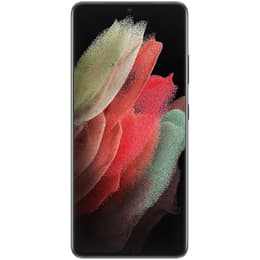

Galaxy S10+ • Unlocked vs Galaxy S21 Ultra 5G • Unlocked

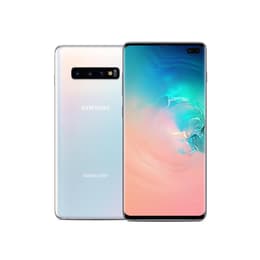
Galaxy S10+ • Unlocked
Starting at

Refurbished price:$165.00

Versus $719.00 new

See options
Galaxy S21 Ultra 5G • Unlocked
Starting at

Refurbished price:$237.00

Versus $1,299.99 new

See options

Ratings

The Samsung Galaxy S10 Plus, released in March 2019, and the Samsung Galaxy S21 Ultra 5G, launched in January 2021, represent different generations of Samsung's premium smartphone line. While both devices offer a high-end Android experience, the S21 Ultra introduces significant advancements in camera technology, display fluidity, and overall performance, alongside 5G connectivity. Both run on the Android operating system, though the S21 Ultra benefits from a longer period of software support due to its later release.

Scores

Durability

When considering the practical lifespan of these devices, their release dates play a crucial role in software support and overall longevity.

  • Release Timeline: The Galaxy S10 Plus was released in March 2019, while the Galaxy S21 Ultra 5G followed in January 2021, creating a nearly two-year gap between their introductions.
  • OS Support Duration: The Galaxy S10 Plus launched with Android 9.0 and received major Android updates up to Android 12, with official software and regular security support having concluded. The Galaxy S21 Ultra 5G, released with Android 11, is part of Samsung's policy to provide four major Android updates and five years of security updates, ensuring a longer period of official software evolution and security patches.
  • Physical Durability: Both models feature an IP68 rating for dust and water resistance, offering similar protection against environmental elements. The S10 Plus uses Gorilla Glass 6 on the front and Gorilla Glass 5 on the back, while the S21 Ultra features the more advanced Gorilla Glass Victus on both the front and back for enhanced scratch and drop resistance.

Release Year

2019

2021

Last OS Compatibility

No

Yes

OS

Android

Android

Foldable

No

No

Performance

The performance capabilities of these two devices reflect the advancements made over two generations of smartphone technology, impacting speed and efficiency.

  • Storage Options: The Galaxy S10 Plus offered configurations with 8GB or 12GB of RAM and storage options up to 1TB, with expandable microSD storage. The Galaxy S21 Ultra 5G comes with 12GB or 16GB of RAM and internal storage up to 512GB, but it does not include a microSD card slot for expansion.
  • Processor Capabilities: The Galaxy S21 Ultra 5G features a more powerful and efficient processor, enabling smoother multitasking, faster app loading, and superior performance in demanding applications and modern games. The S10 Plus handles everyday tasks competently but may show slowdowns with intensive use or newer, graphically rich applications.
  • Battery Behavior: The S10 Plus is equipped with a 4100 mAh battery, generally providing a full day of use for moderate users. The S21 Ultra 5G houses a larger 5000 mAh battery, and combined with a more efficient processor and adaptive display technology, it often delivers extended usage, with many users reporting 6-7 hours of screen-on time even with demanding settings enabled.

Memory (GB)

8 GB

12 GB

Screen quality

Both smartphones offer high-quality displays, but the S21 Ultra introduces key enhancements for a more fluid and brighter visual experience.

  • Display Technology: Both devices feature Dynamic AMOLED displays, known for their vibrant colors, deep blacks, and excellent contrast. The S21 Ultra's display is a Dynamic AMOLED 2X, offering further refinements in color accuracy and brightness, and incorporates a new low-power OLED panel for improved efficiency.
  • Resolution and Clarity: The S10 Plus has a 6.4-inch display with a 3040x1440 (QHD+) resolution, resulting in a pixel density of 522 PPI. The S21 Ultra 5G features a slightly larger 6.8-inch display with a 3200x1440 (QHD+) resolution and 515 PPI, offering a more expansive viewing area.
  • Refresh Rate and Brightness: The S10 Plus has a standard 60Hz refresh rate and can reach up to 1200 nits peak brightness. The S21 Ultra 5G features an adaptive refresh rate that can dynamically adjust from 10Hz to 120Hz, providing smoother scrolling and animations while conserving battery. It also boasts a higher peak brightness of 1500 nits, improving outdoor visibility.

Resolution

1440 x 3040

1440 x 3200

Screen type

Dynamic AMOLED

Dynamic AMOLED 2X

Audiovisual

The camera systems on these devices showcase significant generational improvements, particularly in versatility and advanced features.

  • Rear Camera System: The Galaxy S10 Plus features a triple-camera setup with a 12 MP main lens, a 12 MP telephoto lens with 2x optical zoom, and a 16 MP ultra-wide lens. The Galaxy S21 Ultra 5G boasts a quad-camera system, including a 108 MP main sensor, a 12 MP ultra-wide lens that also functions for macro shots, and two 10 MP telephoto lenses offering 3x and 10x optical zoom, capable of up to 100x digital 'Space Zoom'.
  • Front Camera Capabilities: The S10 Plus has a dual front camera setup with a 10 MP main sensor and an 8 MP depth sensor for enhanced portrait selfies. The S21 Ultra 5G features a single, higher-resolution 40 MP front camera.
  • Video Recording and Features: Both phones support 4K video recording, with the S10 Plus capable of 4K at 60fps on the rear and 4K at 30fps on the front. The S21 Ultra 5G elevates this by offering 4K at 60fps recording across all five of its cameras (front and rear), along with 8K video recording and a 'Director's View' mode for multi-camera capture.

Main camera

12 megapixels

108 megapixels

Front camera

10 megapixels

40 megapixels

Miscellaneous

Beyond core specifications, several practical elements distinguish these two Samsung flagships in terms of connectivity, design, and user interaction.

  • Connectivity Options: The Galaxy S10 Plus supports 4G LTE networks and features Wi-Fi 6 and Bluetooth 5.0. The Galaxy S21 Ultra 5G introduces support for 5G networks, offering faster mobile data speeds where available, alongside Wi-Fi 6E and Bluetooth 5.2.
  • Ports and Biometrics: A notable difference is the presence of a 3.5mm headphone jack on the Galaxy S10 Plus, a feature absent on the S21 Ultra 5G, which relies solely on its USB-C port for charging and audio. Both devices utilize an ultrasonic in-display fingerprint sensor for secure unlocking.
  • Design and Handling: The S10 Plus has dimensions of 157.6 x 74.1 x 7.8 mm and weighs 175g (or 198g for the ceramic model). The S21 Ultra 5G is larger and heavier at 165.1 x 75.6 x 8.9 mm and 227g (or 229g for the mmWave model), which can impact one-handed use. The S21 Ultra also introduced S Pen support, a feature previously exclusive to the Note series, though the S Pen is sold separately.

Weight

6 oz

8 oz

Screen size (inches)

6.4

6.8

Network

LTE

5G

SIM card

Physical SIM

Physical SIM + eSIM

Carrier compatibility

Unlocked

Unlocked

Connector

USB-C + Jack 3.5mm

USB-C

User sentiment for the Galaxy S10 Plus often highlights its balanced design, the inclusion of a headphone jack, and its capable camera system for its time. Many users appreciated its display quality and reliable performance for everyday tasks. Criticisms sometimes focused on its battery life not being exceptional compared to some rivals, and its software support cycle has now concluded, meaning no further major Android updates or regular security patches.

The Galaxy S21 Ultra 5G is frequently praised for its exceptional and versatile camera system, particularly its advanced zoom capabilities and comprehensive video features. Its vibrant, adaptive 120Hz display and strong overall performance are also common highlights. Users generally report excellent battery life, even with demanding features enabled. Some common points of discussion include its larger size and weight, and the absence of a headphone jack and expandable storage.

Users prioritizing a more compact device with a traditional headphone jack and expandable storage may find the Galaxy S10 Plus well-suited to their needs, especially for general daily use. Conversely, users who prioritize cutting-edge camera technology, a highly fluid display, 5G connectivity, and a longer software support window will likely lean towards the Galaxy S21 Ultra 5G. For those seeking an eco-friendly alternative, both models are available as quality-assured refurbished options, providing a sustainable choice for either preference.


See all articles

Our recent comparisons