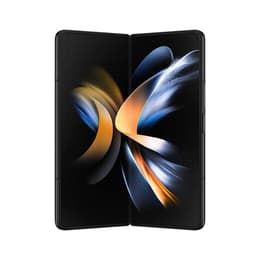

Galaxy S10+ • Unlocked vs Galaxy Z Fold4 • Unlocked

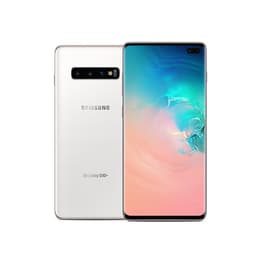
Galaxy S10+ • Unlocked
Starting at

Refurbished price:$165.00

Versus $719.00 new

See options
Galaxy Z Fold4 • Unlocked
Starting at

Refurbished price:$364.00

Versus $2,000.00 new

See options

Ratings

The Samsung Galaxy S10 Plus, released in March 2019, is a traditional smartphone that represented a peak in conventional smartphone design at its launch. In contrast, the Samsung Galaxy Z Fold4, launched in August 2022, is a foldable device that transforms from a compact smartphone into a larger tablet-like experience. These devices offer fundamentally different user experiences, primarily distinguished by their form factors, display technologies, and the significant generational gap in their underlying hardware and software capabilities.

Scores

Durability

The practical lifespan of a smartphone is heavily influenced by its release date and the manufacturer's software support policy. These two devices, separated by over three years, exhibit notable differences in this regard.

  • Software Support: The Galaxy S10 Plus, having been released in early 2019, has reached the end of its major Android operating system updates, concluding around Android 12. The Galaxy Z Fold4, released in late 2022, was promised four major Android OS updates and five years of security updates, extending its support well into 2027 and potentially up to Android 16.
  • Physical Durability: The Galaxy S10 Plus features a robust design with Corning Gorilla Glass 6 on the front and Gorilla Glass 5 on the back, encased in an aluminum frame, offering IP68 dust and water resistance. The Galaxy Z Fold4 incorporates Gorilla Glass Victus+ on its cover screen and back panel, with a specialized Ultra-Thin Glass for its foldable inner display, and boasts an IPX8 water resistance rating. However, the unique folding mechanism of the Z Fold4 introduces specific durability considerations, such as the potential for screen protector peeling and concerns regarding the long-term resilience of the inner display.
  • Expected Lifespan: While the physical build of the S10 Plus is designed for longevity, its software support has concluded, meaning it will no longer receive the latest features or security enhancements. The Z Fold4, with its ongoing software support, offers a longer period of up-to-date functionality and security, though its foldable nature presents a different set of long-term durability factors for users to consider.

Release Year

2019

2022

Last OS Compatibility

No

Yes

OS

Android

Android

Foldable

No

Yes

Performance

Performance is a key differentiator, with the newer Galaxy Z Fold4 benefiting from significant advancements in processing power and efficiency compared to the Galaxy S10 Plus.

  • System Responsiveness: The Galaxy S10 Plus, powered by its generation's leading processor, handles everyday tasks and most applications smoothly. However, the Galaxy Z Fold4 features a more advanced and efficient processor, resulting in noticeably faster app loading, seamless multitasking across multiple applications, and a more fluid experience with demanding games and complex productivity tasks.
  • Multitasking and Memory: The Galaxy S10 Plus typically offers 8GB or 12GB of RAM, which is sufficient for most multitasking needs. The Galaxy Z Fold4 comes standard with 12GB of RAM, which, combined with its optimized software for foldable displays, allows for more robust and efficient handling of multiple applications simultaneously, particularly when utilizing its larger inner screen.
  • Storage and Battery Behavior: Both devices offer various internal storage options, including 256GB, 512GB, and 1TB variants, though only the S10 Plus supports expandable storage via microSD. The Galaxy S10 Plus, with its 4100 mAh battery, generally provides a full day of use for many users. The Galaxy Z Fold4, equipped with a 4400 mAh battery and a more power-efficient processor, also delivers reliable full-day battery life, even with its larger, high-refresh-rate displays.

Memory (GB)

8 GB

12 GB

Screen quality

The display experience is where these two devices diverge most significantly, with the Galaxy Z Fold4 introducing a revolutionary foldable design and higher refresh rates.

  • Display Technology and Clarity: Both phones utilize Samsung's Dynamic AMOLED technology, known for vibrant colors and deep blacks. The Galaxy S10 Plus features a single 6.4-inch display with a Quad HD+ resolution (3040 x 1440 pixels), offering a high pixel density of 522 pixels per inch. The Galaxy Z Fold4, however, has two Dynamic AMOLED 2X displays: a 6.2-inch cover screen (2316 x 904 pixels) and a foldable 7.6-inch main inner screen (2176 x 1812 pixels). The main screen of the Z Fold4 offers a tablet-like viewing area when unfolded, ideal for immersive content consumption and productivity.
  • Brightness and Refresh Rate: The S10 Plus offers a bright display, capable of reaching up to 1200 nits of peak brightness. The Z Fold4's displays also provide excellent brightness, with the main screen reaching up to 1000 nits peak brightness, ensuring good visibility in various lighting conditions. A key difference is the refresh rate: the S10 Plus has a standard 60Hz refresh rate, while both the cover and main displays of the Z Fold4 feature a smooth 120Hz adaptive refresh rate, providing a more fluid scrolling and gaming experience.
  • Viewing Experience: The S10 Plus offers a premium, traditional smartphone display experience. The Z Fold4 provides versatility, allowing users to choose between a conventional smartphone experience on the cover screen or an expansive, tablet-like canvas on the main foldable display, enhancing media consumption and multitasking.

Resolution

1440 x 3040

1812 x 2176

Screen type

Dynamic AMOLED

Foldable Dynamic AMOLED 2X

Audiovisual

Both devices offer capable camera systems, but the Galaxy Z Fold4 benefits from newer sensor technology and improved image processing, particularly in challenging conditions.

  • Rear Camera Systems: The Galaxy S10 Plus features a versatile triple-camera setup on the rear: a 12-megapixel wide-angle lens with a variable aperture, a 12-megapixel telephoto lens offering 2x optical zoom, and a 16-megapixel ultra-wide lens. The Galaxy Z Fold4 also has a triple-camera array, but with upgraded sensors: a 50-megapixel wide-angle main sensor, a 12-megapixel ultra-wide lens, and a 10-megapixel telephoto lens with 3x optical zoom.
  • Photography Performance: The S10 Plus captures excellent color and exposure in bright light, with a versatile set of lenses for various scenarios. Its low-light performance can be adequate but may show some dullness in colors. The Z Fold4, with its larger main sensor and improved processing, delivers vibrant and detailed shots, performing notably better in low-light conditions and offering enhanced dynamic range.
  • Front Cameras and Video: The S10 Plus includes a dual front camera system (10-megapixel wide and 8-megapixel depth sensor) capable of 4K video recording. The Z Fold4 has a 10-megapixel camera on its cover screen and a 4-megapixel under-display camera on the main screen, primarily intended for video calls. For video recording, the S10 Plus supports up to 4K at 60 frames per second, while the Z Fold4 can record up to 8K at 24 frames per second, in addition to 4K at 60 frames per second. Both devices offer stereo speakers and Dolby Atmos support for an enhanced audio experience, with the S10 Plus retaining a 3.5mm headphone jack.

Main camera

12 megapixels

50 megapixels

Front camera

10 megapixels

4 megapixels

Miscellaneous

Beyond core features, several practical elements distinguish the Galaxy S10 Plus from the Galaxy Z Fold4, reflecting advancements in connectivity, design, and user interaction.

  • Connectivity and Ports: The Galaxy S10 Plus supports 4G LTE, Wi-Fi 6, and Bluetooth 5.0, and notably includes a 3.5mm headphone jack and a USB-C port. The Galaxy Z Fold4, being a newer device, offers advanced connectivity with 5G support, Wi-Fi 6E, and Bluetooth 5.2, relying solely on a USB-C port for charging and data transfer.
  • Biometric Security and Handling: The S10 Plus features an ultrasonic in-screen fingerprint reader and face recognition for secure unlocking. The Z Fold4 utilizes a side-mounted fingerprint sensor integrated into the power button, alongside face recognition. In terms of physical handling, the S10 Plus is a relatively slim and light device, measuring 157.6 x 74.1 x 7.8 mm and weighing 175 grams. The Z Fold4 is significantly heavier at 263 grams and thicker when folded (155.1 x 67.1 x 14.2-15.8 mm), though it offers a much wider display when unfolded (155.1 x 130.1 x 6.3 mm).
  • Build Materials and Additional Features: The S10 Plus combines a glass front and back with an aluminum frame. The Z Fold4 uses more advanced materials, including Gorilla Glass Victus+ and an Armor Aluminum frame, designed to enhance durability for its foldable form factor. The Z Fold4 also supports S Pen input on its main display, offering enhanced productivity for note-taking and drawing.

Weight

6 oz

7 oz

Screen size (inches)

6.4

7.6

Network

LTE

5G

SIM card

Physical SIM

Physical SIM + eSIM

Carrier compatibility

Unlocked

Unlocked

The Samsung Galaxy S10 Plus and Galaxy Z Fold4 cater to distinct user preferences, reflecting different eras of smartphone innovation. Users often praise the S10 Plus for its vibrant display, reliable camera performance in good lighting, and its impressive battery life for a traditional smartphone of its generation. Its inclusion of a headphone jack and expandable storage are also frequently cited as positive attributes by those who value these features.

Conversely, the Galaxy Z Fold4 receives acclaim for its transformative foldable design, offering an expansive screen ideal for multitasking, media consumption, and productivity. Users appreciate the improved camera system, which delivers strong performance across various conditions, and the enhanced efficiency of its newer processor. However, common concerns for the Z Fold4 revolve around the long-term durability of the inner screen and its screen protector, as well as its increased weight and thickness compared to traditional smartphones.

Users prioritizing a classic, refined smartphone experience with a proven track record for reliability and essential features like a headphone jack may find the Galaxy S10 Plus well-suited to their needs. For those who desire cutting-edge technology, a versatile tablet-like display for enhanced productivity and immersive content, and a longer software support window, the Galaxy Z Fold4 presents a compelling option. Both devices can be excellent choices, and considering a quality-assured refurbished option for either model can be an eco-friendly alternative to purchasing new.


See all articles

Our recent comparisons