
Galaxy S10+ • Unlocked vs iPhone 14 Pro • Unlocked

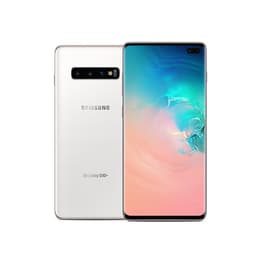
Galaxy S10+ • Unlocked
Starting at

Refurbished price:$174.00

Versus $719.00 new

See options
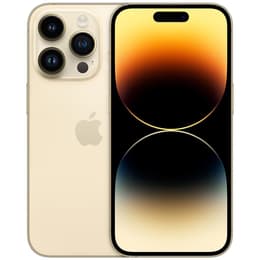
iPhone 14 Pro • Unlocked
Starting at

Refurbished price:$359.99

Versus $999.00 new

See options

Ratings

The Samsung Galaxy S10 Plus, released in March 2019, and the iPhone 14 Pro, launched in September 2022, represent different generations and operating systems in the smartphone landscape. While the Galaxy S10 Plus runs on Android, the iPhone 14 Pro operates on iOS. The iPhone 14 Pro introduces more recent advancements in camera technology and display features, alongside a newer processing architecture.

Scores

Durability

The lifespan of a smartphone is influenced by its release timeline, software support, and physical durability. These two devices, separated by several years, offer different expectations in these areas.

  • Release Timeline and Software Support: The Galaxy S10 Plus, released in March 2019, concluded its major Android OS updates with Android 12. This means it no longer receives new feature updates, though security updates may continue for a period. In contrast, the iPhone 14 Pro, launched in September 2022, benefits from Apple's longer software support cycle, typically receiving iOS updates for 5-6 years from its release. This provides the iPhone 14 Pro with a significantly longer period of new features and security enhancements.
  • Physical Durability: Both devices feature glass front and back panels with metal frames, offering a premium feel. The Galaxy S10 Plus uses Corning Gorilla Glass 6 for its front display and Gorilla Glass 5 for the back, along with an aluminum frame. The iPhone 14 Pro incorporates Ceramic Shield on the front, which is designed for enhanced drop performance, and a textured matte glass back with a stainless steel frame. Both models carry an IP68 rating for dust and water resistance, indicating protection against immersion in water up to 6 meters for 30 minutes.
  • Expected Practical Lifespan: For users prioritizing the latest software features and security, the iPhone 14 Pro offers a longer practical lifespan due to its more recent release and extended software support. The Galaxy S10 Plus remains a functional device, but its software experience will be static compared to the iPhone.

Release Year

2019

2022

Last OS Compatibility

No

Yes

OS

Android

iOS

Foldable

No

No

Performance

Performance in smartphones is determined by the interplay of processing power, memory, and battery optimization, impacting how smoothly applications run and how long a device lasts on a single charge.

  • Processing Capabilities: The iPhone 14 Pro features a more recent generation processor, which translates to faster application loading times, smoother multitasking, and more efficient handling of graphically intensive games and demanding applications. The Galaxy S10 Plus, while capable for everyday tasks, relies on an older processor that may show limitations with the most current and resource-heavy applications.
  • Multitasking and Responsiveness: The iPhone 14 Pro's newer architecture and optimized software contribute to a highly responsive user experience, allowing for seamless transitions between apps and efficient background processes. The Galaxy S10 Plus, with its 8GB or 12GB of RAM, handles multitasking well for its generation, but the overall system responsiveness will be noticeably different compared to the newer iPhone.
  • Battery Behavior: The Galaxy S10 Plus is equipped with a 4100 mAh battery, providing ample power for a full day of moderate to heavy use. The iPhone 14 Pro has a 3200 mAh battery, but its highly efficient processor and software optimization allow it to deliver comparable, and in some scenarios, longer usage times for typical daily activities. Users report the iPhone 14 Pro can last through a full day of use.

Memory (GB)

8 GB

6 GB

Screen quality

The display is a primary interface for smartphone interaction, and both devices offer high-quality viewing experiences with distinct characteristics.

  • Display Technology and Clarity: The Galaxy S10 Plus features a 6.4-inch Dynamic AMOLED display with a resolution of 1440 x 3040 pixels, resulting in a pixel density of 522 pixels per inch (ppi). This display offers vibrant colors and deep blacks. The iPhone 14 Pro has a 6.1-inch Super Retina XDR OLED display with a resolution of 2556 x 1179 pixels, providing a pixel density of approximately 460 ppi. Both utilize OLED technology for excellent contrast.
  • Brightness and Refresh Rate: The Galaxy S10 Plus has a standard 60Hz refresh rate. The iPhone 14 Pro features ProMotion technology, offering an adaptive refresh rate that can go up to 120Hz for smoother scrolling and more fluid animations, and can drop down to 1Hz for power efficiency with its Always-On display. The iPhone 14 Pro also boasts higher peak brightness levels, reaching up to 2000 nits outdoors, compared to the Galaxy S10 Plus's peak brightness.
  • Screen Size and Features: The Galaxy S10 Plus offers a slightly larger screen at 6.4 inches, providing more screen real estate. The iPhone 14 Pro, at 6.1 inches, introduces the Dynamic Island, an interactive area around the front camera cutout that displays alerts and background activities.

Resolution

1440 x 3040

1179 x 2556

Screen type

Dynamic AMOLED

LTPO Super Retina XDR OLED

Audiovisual

Both smartphones offer capable camera systems, but the advancements in mobile photography over time mean there are notable differences in their imaging capabilities.

  • Rear Camera System: The Galaxy S10 Plus features a triple rear camera setup: a 12MP wide-angle lens, a 12MP telephoto lens with 2x optical zoom, and a 16MP ultrawide lens. It supports 4K video recording at 60 frames per second. The iPhone 14 Pro boasts a more advanced triple camera system, including a 48MP main sensor that uses pixel binning for improved detail, a 12MP ultrawide, and a 12MP telephoto lens with 3x optical zoom.
  • Low-Light and Everyday Photography: The iPhone 14 Pro's larger main sensor and enhanced image processing, including the Photonic Engine, contribute to significantly improved low-light performance and overall detail in everyday photos. While the Galaxy S10 Plus was a strong performer in its time, the iPhone 14 Pro generally captures more detail and handles challenging lighting conditions more effectively.
  • Video Recording and Front Camera: Both devices offer 4K video recording. The iPhone 14 Pro includes advanced video features like Cinematic mode for shallow depth of field effects and Action mode for stabilized handheld footage. The Galaxy S10 Plus has a dual front camera system with a 10MP main sensor and an 8MP depth sensor. The iPhone 14 Pro features a 12MP front camera with autofocus and improved low-light capabilities.

Main camera

12 megapixels

48 megapixels

Front camera

10 megapixels

12 megapixels

Miscellaneous

Beyond core features, several practical elements contribute to the overall user experience and daily functionality of these devices.

  • Connectivity Options: The Galaxy S10 Plus supports 4G LTE, Wi-Fi 6, and Bluetooth 5.0. The iPhone 14 Pro offers more advanced connectivity with 5G capabilities, Wi-Fi 6, and Bluetooth 5.3. The iPhone 14 Pro also includes Emergency SOS via satellite for communication in areas without cellular service.
  • Ports and Biometrics: A key difference lies in physical ports: the Galaxy S10 Plus includes a 3.5mm headphone jack and a USB-C port. The iPhone 14 Pro uses a Lightning port for charging and data transfer and does not have a headphone jack. For security, the Galaxy S10 Plus features an ultrasonic in-display fingerprint sensor and face recognition. The iPhone 14 Pro relies solely on Face ID for biometric authentication.
  • Design and Handling: The Galaxy S10 Plus measures 157.6 x 74.1 x 7.8 mm and weighs 175 grams. The iPhone 14 Pro is slightly more compact at 147.5 x 71.5 x 7.85 mm and weighs 206 grams. The iPhone 14 Pro's stainless steel frame contributes to its higher weight compared to the aluminum frame of the Galaxy S10 Plus.

Weight

6 oz

7 oz

Screen size (inches)

6.4

6.1

Network

LTE

5G

SIM card

Physical SIM

eSIM

Carrier compatibility

Unlocked

Unlocked

User feedback often highlights the Galaxy S10 Plus for its expansive display, the inclusion of a headphone jack, and its versatile camera system at the time of its release. Common criticisms, particularly in the current landscape, often revolve around its aging software support and the performance gap compared to newer devices. Users appreciate its ability to still handle many daily tasks effectively.

The iPhone 14 Pro frequently receives praise for its powerful performance, advanced camera capabilities, and the innovative Dynamic Island feature. Users also value its strong software support and robust build quality. Some common concerns might include its reliance on Face ID as the sole biometric option and the absence of a universal USB-C port (though this has changed in subsequent models). Its battery life is generally well-regarded for a device of its size.

Users prioritizing a larger screen, the convenience of a headphone jack, and a more established Android ecosystem may find the Galaxy S10 Plus suitable for their needs. Conversely, those who value cutting-edge camera technology, a longer period of software updates, superior processing power, and the iOS ecosystem will likely lean towards the iPhone 14 Pro. Both devices, when considering refurbished options, offer an eco-friendly alternative for consumers seeking quality technology.


See all articles

Our recent comparisons