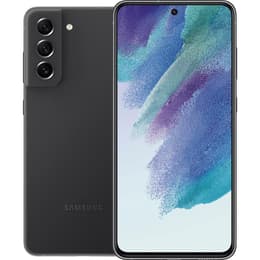
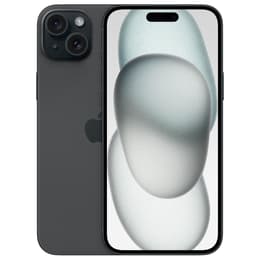

Galaxy S21 FE 5G • Locked Verizon vs iPhone 15 Plus • Unlocked

Galaxy S21 FE 5G • Locked Verizon
Starting at

Refurbished price:$143.00

Versus $699.99 new

See options
iPhone 15 Plus • Unlocked
Starting at

Refurbished price:$389.99

Versus $829.00 new

See options

Ratings

The Samsung Galaxy S21 FE 5G, released in January 2022, and the iPhone 15 Plus, launched in September 2023, are both prominent smartphones offering distinct user experiences. While the Galaxy S21 FE operates on the Android platform, the iPhone 15 Plus runs on Apple's iOS, leading to fundamental differences in interface and ecosystem. Key differentiators between these two devices include their display technologies, camera systems, and software support timelines.

Scores

Durability

When considering the long-term usability of a smartphone, software support and physical resilience are important factors. The Galaxy S21 FE 5G and the iPhone 15 Plus offer varying timelines for updates and different approaches to durability.

  • Software Longevity: The Galaxy S21 FE, launched with Android 12, is expected to receive major Android OS updates up to Android 16, along with security updates until at least the end of 2025, and potentially beyond for critical fixes. The iPhone 15 Plus, released with iOS 17, typically receives major iOS updates for about 5 to 6 years and security updates for a minimum of five years from its release date.
  • Physical Durability: Both devices feature an IP68 rating for dust and water resistance, indicating protection against immersion in water. The Galaxy S21 FE utilizes Corning Gorilla Glass Victus for screen protection, while the iPhone 15 Plus incorporates Apple's Ceramic Shield front cover, which is designed for enhanced drop performance.
  • Repairability: The Galaxy S21 FE has a repairability score of 7.5 out of 10, suggesting a relatively straightforward repair process for common issues. The iPhone 15 Plus initially received a lower repairability score, but this was later improved to 7 out of 10, partly due to advancements in repair assistance features.

Release Year

2022

2023

Last OS Compatibility

Yes

Yes

OS

Android

iOS

Foldable

No

No

Performance

The performance of a smartphone impacts everything from app loading times to multitasking efficiency and gaming experiences. Both the Galaxy S21 FE 5G and the iPhone 15 Plus are designed to handle daily tasks smoothly, though they achieve this with different underlying architectures.

  • Everyday Responsiveness: The Galaxy S21 FE provides a responsive experience for general use, handling common applications and navigation without significant delays. Users report that day-to-day tasks are fluid. The iPhone 15 Plus offers brisk performance, ensuring that demanding applications and multitasking run smoothly.
  • Multitasking and App Handling: With its processing capabilities, the Galaxy S21 FE can manage multiple applications simultaneously, though some users have noted occasional stutters during extended heavy gaming sessions. The iPhone 15 Plus is well-suited for intensive tasks and gaming, providing consistent performance even with graphically demanding content.
  • Storage Options: The Galaxy S21 FE is available with 128GB or 256GB of internal storage. The iPhone 15 Plus offers more storage flexibility, with options for 128GB, 256GB, or 512GB. Neither device supports expandable storage via a microSD card.

Memory (GB)

6 GB

6 GB

Screen quality

The display is a primary interface for smartphone interaction, and both devices offer vibrant visuals, but with distinct characteristics in technology and refresh rates.

  • Display Technology and Clarity: The Galaxy S21 FE features a 6.4-inch Dynamic AMOLED 2X display with a resolution of 1080 x 2400 pixels, providing clear and vibrant colors. The iPhone 15 Plus comes with a larger 6.7-inch Super Retina XDR OLED display, offering a higher resolution of 2796 x 1290 pixels and a pixel density of 460 ppi, resulting in sharp images and deep blacks.
  • Brightness and Outdoor Visibility: The Galaxy S21 FE's display has a peak brightness of around 700 nits, with good outdoor visibility. The iPhone 15 Plus boasts significantly higher peak brightness levels, reaching up to 1000 nits typical, 1600 nits for HDR content, and an impressive 2000 nits for peak outdoor brightness, making it very easy to read even in direct sunlight.
  • Refresh Rate and Smoothness: The Galaxy S21 FE offers a 120Hz refresh rate, which contributes to smoother scrolling and a more fluid visual experience. In contrast, the iPhone 15 Plus features a standard 60Hz refresh rate, which is sufficient for most users but does not offer the same level of visual fluidity as higher refresh rate displays.

Resolution

1080 x 2340

1290 x 2796

Screen type

Dynamic AMOLED 2X

Super Retina XDR OLED

Audiovisual

Camera capabilities are a significant consideration for many users, and both the Galaxy S21 FE 5G and the iPhone 15 Plus provide advanced photographic tools, albeit with different hardware configurations and processing approaches.

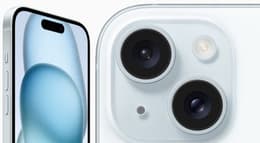
  • Rear Camera Systems: The Galaxy S21 FE features a versatile triple-camera setup on the rear, including a 12MP wide lens, a 12MP ultrawide lens, and an 8MP telephoto lens with 3x optical zoom. The iPhone 15 Plus has a dual-camera system, highlighted by a 48MP main camera and a 12MP ultrawide camera. The high-resolution main sensor allows for effective 2x optical quality zoom by cropping.
  • Photography Performance: The Galaxy S21 FE is noted for producing detailed and colorful images in various lighting conditions, with its telephoto lens offering good zoom capabilities. The iPhone 15 Plus delivers brilliant photos with excellent color reproduction and rich detail across a wide range of conditions, and its portrait mode is praised for accurate edge detection.
  • Video Recording and Front Camera: Both devices support 4K video recording. The Galaxy S21 FE's video recording is stable, and its 32MP front camera performs well even in low light. The iPhone 15 Plus also offers high-quality video recording, including Cinematic mode, and features a 12MP front camera.

Main camera

12 megapixels

48 megapixels

Front camera

32 megapixels

12 megapixels

Miscellaneous

Beyond the core features, several practical elements contribute to the overall user experience, including connectivity, physical design, and additional functionalities.

  • Connectivity and Ports: Both smartphones support 5G connectivity for fast network speeds. The Galaxy S21 FE supports Wi-Fi 6 and Bluetooth 5.0, while the iPhone 15 Plus features newer Wi-Fi 6E and Bluetooth 5.3 standards. Both devices utilize a USB-C port for charging and data transfer.
  • Biometrics and Sensors: The Galaxy S21 FE includes an optical in-screen fingerprint sensor for secure unlocking. The iPhone 15 Plus relies on Face ID for biometric authentication. The iPhone 15 Plus also introduces the Dynamic Island, a functional area around the front camera that displays alerts and live activities.
  • Dimensions and Build: The Galaxy S21 FE measures 155.7 x 74.5 x 7.9 mm and weighs 177 grams, featuring an aluminum frame and a plastic back. The iPhone 15 Plus is slightly larger and heavier at 160.9 x 77.8 x 7.8 mm and 201 grams, with an aluminum design and a color-infused glass back.

Weight

6 oz

201 oz

Screen size (inches)

6.4

6.7

Network

5G

5G

SIM card

Physical SIM

eSIM

Carrier compatibility

Verizon

Unlocked

The Samsung Galaxy S21 FE 5G and the iPhone 15 Plus cater to different preferences within the smartphone market, each bringing a set of strengths to the table. Users often praise the Galaxy S21 FE for its vibrant 120Hz AMOLED display and versatile triple-camera system, which includes a dedicated telephoto lens. Its performance is generally considered robust for everyday tasks, though some heavy users have noted that battery life can be a concern, particularly with intensive use.

The iPhone 15 Plus is frequently lauded for its exceptional battery life, often lasting a full day or more even with heavy usage, and its bright, high-resolution OLED display. Its camera system, particularly the 48MP main sensor, receives positive feedback for producing high-quality images. The integration of the Dynamic Island and the shift to USB-C are also seen as significant improvements. However, some users might find the 60Hz refresh rate less fluid compared to devices with higher refresh rates.

Users prioritizing a smoother display experience and a dedicated optical zoom lens might lean towards the Galaxy S21 FE 5G. Conversely, those who value extended battery life, a larger and brighter screen, and a robust software ecosystem with longer update support may find the iPhone 15 Plus more aligned with their needs. Both devices represent solid choices in their respective categories, and considering a quality-assured refurbished option for either model can be an eco-friendly alternative for consumers.
See all articles

Our recent comparisons