
Galaxy S21 FE 5G • Unlocked vs Motorola Moto G Play (2024) • Unlocked

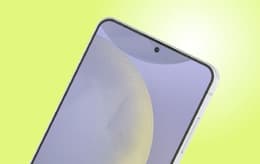
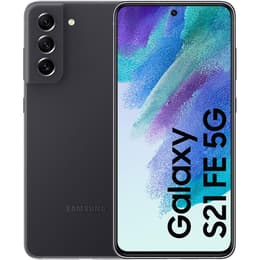
Galaxy S21 FE 5G • Unlocked
Starting at

Refurbished price:$133.00

Versus $699.99 new

See options
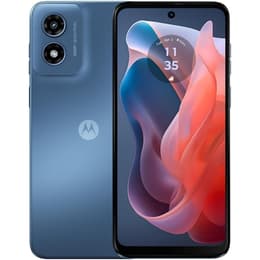
Motorola Moto G Play (2024) • Unlocked
Starting at

Refurbished price:$100.00

Versus $128.99 new

See options

Ratings

The Samsung Galaxy S21 FE 5G, released in January 2022, and the Motorola Moto G Play 2024, launched in January 2024, are both Android smartphones designed for different user priorities. While the Galaxy S21 FE 5G offers a more advanced display and camera system, the Moto G Play 2024 focuses on extended battery life and essential smartphone functionalities. Both devices operate on the Android platform, providing access to a wide ecosystem of applications and services.

Scores

Durability

When considering the long-term usability of these devices, their release timelines and software support policies are key differentiators.

  • Release Timeline and OS Support: The Galaxy S21 FE 5G, released in January 2022, typically receives a longer period of operating system and security updates from Samsung, often extending to four years of OS upgrades and five years of security patches. This means it launched with Android 12 and is expected to receive updates up to Android 16. In contrast, the Motorola Moto G Play 2024, released in January 2024 with Android 13, is generally expected to receive only one major OS update to Android 14, limiting its software longevity.
  • Practical Lifespan: Users prioritizing extended software support and access to the latest Android features will find the Galaxy S21 FE 5G better suited for a longer practical lifespan. The Moto G Play 2024, while newer, will likely see its software support end sooner, potentially impacting its ability to run future applications or maintain optimal security.
  • Durability Features: The Galaxy S21 FE 5G features Corning Gorilla Glass Victus for display protection and an IP68 rating for dust and water resistance, indicating a higher level of protection against environmental elements. The Moto G Play 2024 includes Corning Gorilla Glass 3 for its display and a water-repellent design, offering basic protection against splashes.

Release Year

2022

2024

Last OS Compatibility

Yes

No

OS

Android

Android

Foldable

No

No

Performance

The performance capabilities of these two smartphones cater to different usage demands, primarily influenced by their internal components and software optimization.

  • Processor Capabilities: The Galaxy S21 FE 5G is equipped with a processor designed for demanding tasks, enabling smooth multitasking, responsive app loading, and capable performance for graphically intensive games. The Moto G Play 2024 features a processor that handles everyday tasks like browsing, social media, and media playback efficiently, though some users may experience occasional sluggishness or stuttering with more intensive applications or heavy multitasking.
  • Storage and RAM: The Galaxy S21 FE 5G offers configurations with 6GB or 8GB of RAM and 128GB or 256GB of internal storage, providing ample space and memory for a wide range of applications and user data. The Moto G Play 2024 comes with 4GB of RAM and 64GB of internal storage, which can be expanded up to 1TB via a microSD card, offering flexibility for users who need more storage for photos and videos.
  • Battery Behavior: The Moto G Play 2024 stands out with its 5000 mAh battery, frequently reported by users to last for two days or more on a single charge, making it suitable for users who prioritize extended usage without frequent recharging. The Galaxy S21 FE 5G has a 4500 mAh battery, which generally provides a full day of use for most users, though heavy usage with the high refresh rate display enabled may require an evening charge.

Memory (GB)

6 GB

4 GB

Screen quality

The visual experience on these devices differs significantly due to their display technologies and specifications.

  • Display Technology and Resolution: The Galaxy S21 FE 5G features a 6.4-inch Dynamic AMOLED 2X display with a Full HD+ resolution (2340 x 1080 pixels). This technology delivers deep blacks, vibrant colors, and high contrast, contributing to a rich viewing experience. The Moto G Play 2024 has a 6.5-inch IPS LCD panel with an HD+ resolution (720 x 1600 pixels). While it offers a large viewing area, the LCD technology and lower resolution result in less vibrant colors and less sharp details compared to the AMOLED display.
  • Refresh Rate and Brightness: The Galaxy S21 FE 5G offers an adaptive 120Hz refresh rate, providing smooth scrolling and fluid animations, which enhances the overall user interaction and gaming experience. Its display also achieves high brightness levels, ensuring good visibility even in bright outdoor conditions. The Moto G Play 2024 features a 90Hz refresh rate, which offers a smoother experience than standard 60Hz displays, but it may not match the fluidity of a 120Hz panel. Its typical brightness of 500 nits is adequate for indoor use but can be challenging to view under direct sunlight.
  • Screen Protection: The Galaxy S21 FE 5G is protected by Corning Gorilla Glass Victus, offering enhanced resistance against scratches and drops. The Moto G Play 2024 uses Corning Gorilla Glass 3, which provides a good level of protection for everyday use.

Resolution

1080 x 2340

720 x 1600

Screen type

Dynamic AMOLED 2X

IPS LCD

Audiovisual

The camera systems on these two devices are designed with different photographic capabilities and user expectations in mind.

  • Rear Camera System: The Galaxy S21 FE 5G features a versatile triple-camera setup on the rear, including a 12MP main sensor, a 12MP ultrawide sensor, and an 8MP telephoto lens with 3x optical zoom. This configuration allows for a range of photographic styles, from wide landscape shots to zoomed-in details, and is noted for its dependable performance in various lighting conditions. The Moto G Play 2024 is equipped with a single 50MP main camera that uses pixel-binning technology to produce 12.5MP images by default. While it can capture decent photos in good lighting, its performance in low-light conditions and its ability to capture fine details in distant subjects are more limited. It lacks the versatility of ultrawide or telephoto lenses.
  • Front Camera and Video Quality: For selfies and video calls, the Galaxy S21 FE 5G has a 32MP front-facing camera, capable of capturing detailed images. Both devices support 1080p video recording. The Moto G Play 2024 features an 8MP front camera, which performs adequately for casual selfies and video calls.
  • Audio Experience: The Galaxy S21 FE 5G offers a generally good audio experience for media consumption. The Moto G Play 2024 includes stereo speakers with Dolby Atmos support, which can enhance the audio experience for media playback.

Main camera

12 megapixels

50 megapixels

Front camera

32 megapixels

8 megapixels

Miscellaneous

Beyond core specifications, several practical features and design elements distinguish these two smartphones.

  • Connectivity and Ports: The Galaxy S21 FE 5G supports 5G connectivity, offering faster mobile data speeds where available, along with modern Wi-Fi standards. It typically uses a USB-C port for charging and data transfer but lacks a 3.5mm headphone jack. The Moto G Play 2024 is a 4G LTE-only device, meaning it does not support 5G networks. It includes Wi-Fi 5 and Bluetooth 5.1, and notably retains a 3.5mm headphone jack, which can be a convenience for users with wired audio accessories. It also uses a USB-C port.
  • Security and Sensors: Both devices offer fingerprint recognition for secure unlocking. The Galaxy S21 FE 5G uses an optical in-display fingerprint sensor and supports face recognition. The Moto G Play 2024 features a side-mounted fingerprint sensor integrated into the power button. A notable omission on the Moto G Play 2024 is NFC, which means it cannot be used for contactless payments.
  • Design and Handling: The Galaxy S21 FE 5G has dimensions of 155.7 x 74.5 x 7.9 mm and weighs 177g, featuring a glass front, plastic back, and metal frame. The Moto G Play 2024 measures 163.8 x 75 x 8.3 mm and weighs 185g, with a glass front, plastic frame, and plastic back, along with a water-repellent coating. Its slightly narrower body can make it comfortable to hold.

Weight

7 oz

6 oz

Screen size (inches)

6.4

6.5

Network

5G

LTE

SIM card

Physical SIM

Physical SIM

Carrier compatibility

Unlocked

Unlocked

The Samsung Galaxy S21 FE 5G and the Motorola Moto G Play 2024 cater to distinct user needs, each excelling in different areas. User feedback for the Galaxy S21 FE 5G often praises its vibrant display, capable camera system, and overall smooth performance, making it a well-rounded device for those seeking a near-flagship experience. Some users have noted that its battery life, while generally sufficient, can be impacted by heavy use of the 120Hz display.

The Motorola Moto G Play 2024 is frequently lauded for its exceptional battery life, often lasting multiple days, and its inclusion of a 3.5mm headphone jack. Users appreciate its solid build and decent performance for everyday tasks. However, common criticisms include its 4G-only connectivity, the absence of NFC for contactless payments, and a camera that performs best in ideal lighting conditions. Its limited software update policy is also a point of consideration for long-term users.

Users prioritizing a high-quality display, a versatile camera, and longer software support, along with 5G connectivity, may find the Galaxy S21 FE 5G to be a more suitable choice. Conversely, individuals who value extended battery life, a headphone jack, and a device primarily for essential communication and media consumption, and who do not require 5G or contactless payment features, might lean towards the Moto G Play 2024. Both devices offer reliable performance within their respective categories, and considering a quality-assured refurbished option for either model can be an eco-friendly alternative for making an informed, sustainable choice.


See all articles

Our recent comparisons