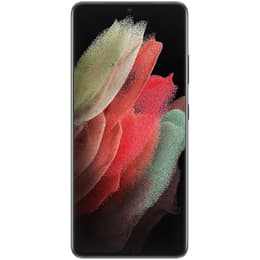
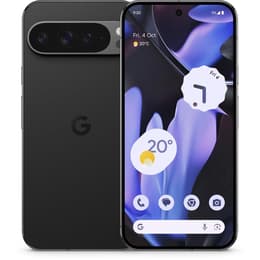

Galaxy S21 Ultra 5G • Unlocked vs Google Pixel 9 Pro • Unlocked

Galaxy S21 Ultra 5G • Unlocked
Starting at

Refurbished price:$257.00

Versus $1,199.99 new

See options
Google Pixel 9 Pro • Unlocked
Starting at

Refurbished price:$435.86

Versus $899.99 new

See options

Ratings

The Samsung Galaxy S21 Ultra 5G, released in January 2021, and the Google Pixel 9 Pro, launched in September 2024, represent different generations of flagship smartphones. While both devices offer premium experiences, the Pixel 9 Pro benefits from several years of technological advancements, particularly in software longevity, processing power, and camera capabilities. These differences cater to distinct user priorities, from long-term software support to advanced computational photography.

Scores

Durability

The expected lifespan and ongoing support for these devices vary significantly due to their respective release dates and manufacturer policies.

  • Release Timeline: The Galaxy S21 Ultra 5G was introduced in January 2021, making it an earlier generation device. The Google Pixel 9 Pro, released in September 2024, is a much newer model, benefiting from more recent hardware and software development cycles.
  • Software Longevity: The Galaxy S21 Ultra 5G received major Android updates until Android 15 (One UI 7.0) in the first half of 2025, with security updates concluding around the first quarter of 2026. In contrast, the Google Pixel 9 Pro is guaranteed seven years of operating system and security updates, extending its support until at least August 2031. This extended support means the Pixel 9 Pro will receive new features and security patches for a considerably longer period.
  • Practical Lifespan: Users prioritizing the latest software features and security updates for an extended duration will find the Pixel 9 Pro more aligned with their needs. For those considering an eco-friendly alternative, a quality-assured refurbished Galaxy S21 Ultra 5G still offers robust hardware, though its software update cycle has concluded.

Release Year

2021

2024

Last OS Compatibility

Yes

Yes

OS

Android

Android

Foldable

No

No

Performance

Performance differences between these two devices are notable, primarily influenced by the generational gap in their internal components.

  • Processing Capabilities: The Galaxy S21 Ultra 5G is powered by a processor from early 2021, which capably handles everyday applications and multitasking. The Google Pixel 9 Pro features a more recent processor, designed for enhanced efficiency and performance in demanding applications, complex multitasking, and advanced on-device artificial intelligence tasks.
  • System Responsiveness: Users of the Pixel 9 Pro can expect a highly responsive experience, with faster app loading times and smoother transitions, particularly when running multiple intensive applications simultaneously. The Galaxy S21 Ultra 5G provides a fluid experience for most users, though it may exhibit slightly longer load times or less seamless transitions in very demanding scenarios compared to the newer Pixel.
  • Multitasking and Storage: Both devices offer ample RAM for efficient multitasking, with the Pixel 9 Pro typically featuring 16GB of RAM, while the S21 Ultra 5G was available with 12GB or 16GB. Storage options are generous on both, though neither supports expandable storage via microSD cards.

Memory (GB)

12 GB

16 GB

Screen quality

Both smartphones feature high-quality displays, but the Pixel 9 Pro incorporates newer display technology for an enhanced viewing experience.

  • Display Technology and Clarity: The Galaxy S21 Ultra 5G boasts a 6.8-inch Dynamic AMOLED 2X display with a QHD+ resolution (3200x1440 pixels), offering sharp visuals and vibrant colors. The Google Pixel 9 Pro features a 6.3-inch OLED display with a resolution of 2856x1280 pixels, providing excellent clarity and color accuracy.
  • Brightness and Refresh Rate: The S21 Ultra 5G's display reaches a peak brightness of 1500 nits, with an adaptive refresh rate that scales from 10Hz to 120Hz for smooth scrolling and power efficiency. The Pixel 9 Pro offers a significantly brighter experience, with typical brightness around 2000 nits and a peak of 3000 nits, ensuring excellent visibility even in bright outdoor conditions. Its adaptive refresh rate also ranges from 1Hz to 120Hz, optimizing for both smoothness and battery conservation.
  • Viewing Experience: The larger screen of the S21 Ultra 5G provides a more expansive canvas for media consumption and productivity. The Pixel 9 Pro, while slightly smaller, offers superior brightness and newer display technology, including Adaptive Touch for improved responsiveness in various conditions, which can enhance the overall viewing and interaction experience.

Resolution

1440 x 3200

1280 x 2856

Screen type

Dynamic AMOLED 2X

LTPO OLED

Audiovisual

Both devices offer advanced camera systems, but they approach photography with different strengths and capabilities.

  • Rear Camera Systems: The Galaxy S21 Ultra 5G features a versatile quad-camera setup, including a 108 MP main sensor, a 12 MP ultrawide, and two 10 MP telephoto lenses offering 3x and 10x optical zoom, culminating in a 100x hybrid 'Space Zoom'. This setup excels in capturing distant subjects with clarity. The Google Pixel 9 Pro comes with a triple-camera system, featuring a 50 MP main sensor, a 48 MP ultrawide, and a 48 MP telephoto lens with 5x optical zoom. The Pixel's strength lies in its computational photography, delivering consistent image quality across various lighting conditions and lenses.
  • Photography Performance: The S21 Ultra 5G captures detailed images, particularly with its main 108 MP sensor and impressive optical zoom capabilities. The Pixel 9 Pro leverages its advanced processing and AI to produce images with natural colors, excellent dynamic range, and strong low-light performance, often praised for its point-and-shoot reliability.
  • Video and Front Camera: Both phones support high-resolution video recording, with the S21 Ultra 5G capable of 8K at 24fps and the Pixel 9 Pro offering 8K video on its Pro model, alongside features like Video Boost and Super Res Zoom Video. The Pixel 9 Pro features a 42 MP front camera, a significant upgrade from its predecessors, while the S21 Ultra 5G has a 40 MP front camera, both capable of detailed selfies and video calls.

Main camera

108 megapixels

50 megapixels

Front camera

40 megapixels

42 megapixels

Miscellaneous

Beyond core features, several practical elements differentiate the user experience of these two smartphones.

  • Connectivity and Ports: Both devices support 5G connectivity, ensuring access to modern cellular networks. The Galaxy S21 Ultra 5G includes Wi-Fi 6E and Bluetooth 5.2, with a USB-C 3.2 port for charging and data transfer. The Google Pixel 9 Pro is expected to feature newer standards like Wi-Fi 7 and Bluetooth 5.4, along with a USB-C port, offering potentially faster wireless and wired connections.
  • Biometric Security and Build: The S21 Ultra 5G incorporates an ultrasonic under-display fingerprint sensor. The Pixel 9 Pro also features an under-display ultrasonic fingerprint sensor, alongside face unlock for convenient security. Both phones offer IP68 water and dust resistance, providing durability against environmental elements.
  • Physical Characteristics: The Galaxy S21 Ultra 5G has a larger form factor with a 6.8-inch display and a weight of approximately 227-229 grams. The Pixel 9 Pro is a more compact device with a 6.3-inch display and a lighter build at around 199 grams, potentially offering easier one-handed use and pocketability.

Weight

8 oz

7 oz

Screen size (inches)

6.8

6.3

Network

5G

5G

SIM card

Physical SIM + eSIM

Physical SIM + eSIM

Carrier compatibility

Unlocked

Unlocked

User sentiment for the Samsung Galaxy S21 Ultra 5G often highlights its impressive camera system, particularly its versatile zoom capabilities, and its vibrant, expansive display. Many users appreciated its premium build and the introduction of S Pen support to the S series. Common criticisms sometimes pointed to its considerable size and weight, and for some, battery life could be inconsistent with heavy usage, especially with the high refresh rate and resolution enabled.

The Google Pixel 9 Pro, being a more recent release, is frequently praised for its exceptional computational photography, delivering reliable and high-quality images across various conditions, and its extended software support commitment. Users also note its strong battery performance and the integration of advanced AI features. Some discussions might revolve around its design changes compared to previous Pixel generations or the nuances of its processor's performance in specific benchmarks versus real-world usage.

Users prioritizing a large, immersive display and a camera system with extensive optical zoom capabilities may find the Galaxy S21 Ultra 5G well-suited to their needs. Conversely, individuals who value long-term software support, cutting-edge computational photography, and a more compact form factor will likely lean towards the Google Pixel 9 Pro. Both devices offer robust performance, and for those seeking a sustainable choice, considering a quality-assured refurbished option for either model can provide an excellent user experience while contributing to environmental responsibility.

See all articles

Our recent comparisons