
Galaxy S22 5G • Locked T-Mobile vs iPhone 16 • Unlocked

Galaxy S22 5G • Locked T-Mobile
Starting at

Refurbished price:$212.99

Versus $783.99 new

See options
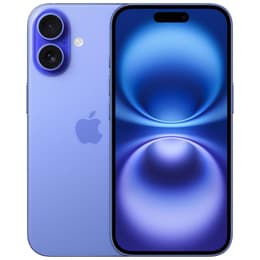
iPhone 16 • Unlocked
Starting at

Refurbished price:$516.00

Versus $729.00 new

See options

Ratings

The Samsung Galaxy S22 5G, released in February 2022, and the Apple iPhone 16, launched in September 2024, represent different generations within the competitive smartphone market. While the Galaxy S22 operates on the Android ecosystem, the iPhone 16 runs on Apple's iOS, offering distinct user experiences. The primary differentiators between these two devices lie in their release timelines, core processing power, and the evolution of camera and display technologies over a two-year period.

Scores

Durability

When considering the practical lifespan of a smartphone, factors like software support, physical resilience, and repairability are key. The Galaxy S22 and iPhone 16 offer different longevity prospects due to their respective release dates and manufacturer support policies.

  • Software Support: The Galaxy S22, released in February 2022, shipped with Android 12 and typically receives major Android OS updates for about four to five years, with security updates extending slightly longer. The iPhone 16, released in September 2024, shipped with iOS 18 and is expected to receive major iOS updates until approximately 2036, offering a longer period of new features and system enhancements. [19, 20, 23, 38]
  • Physical Durability: The Galaxy S22 features Corning Gorilla Glass Victus+ for screen protection, while the iPhone 16 utilizes Apple's Ceramic Shield front cover, which is designed for enhanced drop performance. Both devices carry an IP68 rating for dust and water resistance, indicating a high level of protection against environmental elements. [1, 20, 41]
  • Repairability: While specific repairability scores can vary, Apple generally provides extended support for parts and service for its devices, often for five to seven years after a product is last distributed. The newer iPhone 16 benefits from this longer support window compared to the earlier Galaxy S22. [38]

Release Year

2022

2024

Last OS Compatibility

Yes

Yes

Foldable

No

No

Performance

The performance of a smartphone is largely dictated by its internal processing unit and how efficiently it manages tasks, from everyday applications to demanding multimedia. The Galaxy S22 and iPhone 16 showcase the advancements in mobile processing over two generations.

  • Processing Capabilities: The Galaxy S22 is equipped with a flagship-level processor from its release year, enabling smooth operation for daily tasks, multitasking, and moderate gaming. The iPhone 16 features a newer-generation processor, which offers improved speed and efficiency, resulting in faster app loading, more fluid multitasking, and enhanced performance for graphically intensive applications and advanced AI features. [1, 9, 10, 15, 17, 19, 23, 24, 35, 43]
  • System Responsiveness: Users of the iPhone 16 will experience a more responsive interface and quicker execution of commands due to its more advanced processor and optimized software. The Galaxy S22 provides a capable and generally smooth experience, though the generational gap means the iPhone 16 handles complex operations with greater ease and speed. [1, 17]
  • Battery Behavior: The Galaxy S22 includes a 3700 mAh battery, providing power for a full day of typical use for many users. The iPhone 16 is designed with an optimized power management system and a more efficient processor, contributing to extended usage times, with up to 22 hours of video playback. [1, 18, 35, 36, 41, 43]

Memory (GB)

8 GB

8 GB

Screen quality

The visual experience on a smartphone is heavily influenced by its display technology, resolution, and brightness. Both the Galaxy S22 and iPhone 16 offer high-quality screens, but with differences reflecting their respective development cycles.

  • Display Technology and Clarity: The Galaxy S22 features a 6.1-inch Dynamic AMOLED 2X display with FHD+ resolution, known for its vibrant colors and deep blacks. The iPhone 16 comes with a 6.1-inch Super Retina XDR OLED display, also offering excellent contrast and color accuracy. Both provide sharp visuals for everyday viewing. [1, 18, 19, 20, 23, 35, 37, 43]
  • Brightness Levels: The Galaxy S22 offers high brightness suitable for various lighting conditions. The iPhone 16's display provides a typical maximum brightness of 1000 nits, with peak HDR brightness reaching 1600 nits and up to 2000 nits peak brightness outdoors, which can be beneficial for visibility in bright sunlight. [1]
  • Refresh Rate and Smoothness: The Galaxy S22 features an adaptive 120Hz refresh rate, contributing to smoother scrolling and a more fluid visual experience. The standard iPhone 16 models do not include a 120Hz ProMotion display, maintaining a standard refresh rate, which means animations and scrolling may appear less fluid compared to the Galaxy S22. [1, 18, 35, 43]

Resolution

1080 x 2340

1179 x 2556

Screen type

Dynamic AMOLED 2X

Super Retina XDR OLED

Audiovisual

Camera capabilities are a significant consideration for many users, and both devices offer advanced systems for capturing photos and videos. The Galaxy S22 and iPhone 16 approach mobile photography with different hardware and software enhancements.

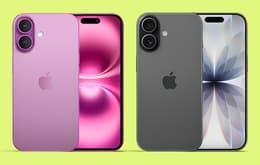
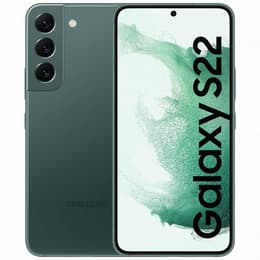
  • Camera System Configuration: The Galaxy S22 features a versatile triple-camera setup on the rear, including a 50MP wide lens, a 12MP ultrawide, and a 10MP telephoto lens with 3x optical zoom. The iPhone 16 has a dual-camera system with a 48MP main sensor and a 12MP ultrawide lens, arranged vertically. [3, 5, 6, 8, 18, 19, 20, 23, 24, 35, 41, 43]
  • Photography Performance: The Galaxy S22 is capable of capturing detailed images with good low-light performance and offers features like 8K video recording and improved Portrait mode. The iPhone 16 benefits from a newer processor that enhances computational photography, leading to improved image processing, better dynamic range, and enhanced low-light capabilities. It also introduces macro photography to the standard models and supports spatial video recording. [3, 5, 6, 8, 24, 27, 29, 35, 40]
  • User Experience Features: The iPhone 16 introduces a new Capture Button on all models, designed to offer more intuitive control over camera functions, including autofocus and zooming, mimicking a dedicated camera shutter. Both devices provide high-quality video recording and clear audio capture for calls and media. [2, 6, 12, 13, 14, 17, 25, 27, 28]

Main camera

50 megapixels

48 megapixels

Front camera

10 megapixels

12 megapixels

Miscellaneous

Beyond core performance and display, several practical elements contribute to the overall user experience. The Galaxy S22 and iPhone 16 offer different connectivity options, physical features, and design considerations.

  • Connectivity and Ports: Both devices support 5G connectivity for fast mobile data. The Galaxy S22 supports Wi-Fi 6 and Bluetooth 5.2, and uses a USB Type-C port. The iPhone 16 features the newer Wi-Fi 7 standard and Bluetooth 5.3, and also utilizes a USB-C port, though with USB 2.0 data transfer speeds on the standard models. [1, 11, 20, 21, 26, 35]
  • Physical Design and Handling: The Galaxy S22 has dimensions of 5.74 x 2.77 x 0.30 inches and weighs 5.92 ounces. The iPhone 16 maintains a similar 6.1-inch display size for its standard model, with a vertical camera alignment and the inclusion of an Action Button, previously exclusive to Pro models, offering customizable shortcuts. [12, 13, 14, 17, 20, 24, 28, 29, 32, 34, 41]
  • Biometric Security: The Galaxy S22 typically uses an under-display fingerprint sensor for biometric authentication. The iPhone 16 relies on Face ID, Apple's facial recognition system, for secure unlocking and payments.

Weight

7 oz

6000 oz

Screen size (inches)

6.1

6.1

Network

5G

5G

SIM card

Physical SIM + eSIM

eSIM

Carrier compatibility

T-Mobile

Unlocked

Connector

USB-C

USB-C (USB 2)

The Galaxy S22 and iPhone 16 cater to users with varying priorities, largely influenced by their release timelines and operating systems. Users often praise the Galaxy S22 for its vibrant AMOLED display with a high refresh rate and its versatile camera system, offering a comprehensive Android experience. Some users, however, note that its battery life might require more frequent charging for heavy use compared to newer devices. The iPhone 16, being a more recent release, is frequently lauded for its significantly upgraded processing power, extended software support, and enhanced computational photography capabilities, including new features like the Capture Button and spatial video recording. Criticisms for the standard iPhone 16 often revolve around the absence of a high refresh rate display, a feature present in many Android counterparts from earlier generations.

Users prioritizing an established Android ecosystem, a high refresh rate display, and a telephoto camera at a potentially more accessible point in its lifecycle may find the Galaxy S22 well-suited to their needs. Conversely, those who value the latest processing technology, longer software longevity, the iOS ecosystem, and cutting-edge camera features like spatial video and the new Capture Button will likely lean towards the iPhone 16. Both devices are available as quality-assured refurbished options, providing an eco-friendly alternative for consumers looking to make informed and sustainable choices.

See all articles

Our recent comparisons