
Galaxy Z Fold6 • Unlocked vs iPhone 15 • Locked AT&T

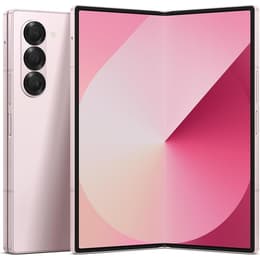
Galaxy Z Fold6 • Unlocked
Starting at

Refurbished price:$549.99

Versus $1,499.00 new

See options
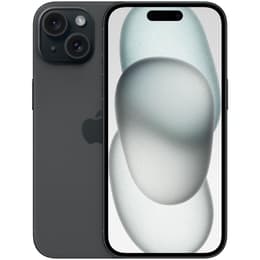
iPhone 15 • Locked AT&T
Starting at

Refurbished price:$349.43

Versus $729.00 new

See options

Ratings

The Samsung Galaxy Z Fold6, released in July 2024, and the Apple iPhone 15, launched in September 2023, represent distinct approaches to modern smartphone design. The primary differentiator lies in their form factor: the Z Fold6 offers a foldable design that transforms from a traditional smartphone into a tablet-like experience, while the iPhone 15 maintains a conventional, rigid smartphone structure. Both devices operate on their respective advanced ecosystems, Android for the Z Fold6 and iOS for the iPhone 15, each offering a unique user interface and app experience.

Scores

Durability

When considering the long-term usability of these devices, several factors contribute to their expected practical lifespan.

  • Software Support: The Galaxy Z Fold6 is notable for its commitment to seven years of software support, including major Android updates and security patches. The iPhone 15, while historically well-supported, has a publicly stated minimum of five years of software support from its release date, with Apple typically providing updates for 5-7 years.
  • Physical Durability: The iPhone 15 features a Ceramic Shield front and an IP68 rating for water and dust resistance, indicating robust protection against environmental elements. The Galaxy Z Fold6, with its foldable design, incorporates an enhanced Armor Aluminum frame and an IP48 rating, offering water and some solid particle resistance. However, the inner foldable screen, made with Ultra Thin Glass, is more susceptible to scratches than a traditional glass display.
  • Repairability Considerations: While both devices are complex, the folding mechanism of the Z Fold6 introduces unique repair considerations. Users of foldable phones often report that the inner screen's durability is a key concern, though the Z Fold6's hinge has shown improvements.

Release Year

2024

2023

Last OS Compatibility

Yes

Yes

OS

Android

iOS

Foldable

Yes

No

Performance

Both the Galaxy Z Fold6 and the iPhone 15 are equipped with high-performance processors designed to handle demanding tasks, though their architectural approaches differ.

  • Processing Power: The Galaxy Z Fold6 utilizes a current-generation processor optimized for its ecosystem, enabling smooth operation across multiple applications and efficient handling of intensive tasks like gaming and video editing. The iPhone 15 is powered by a high-performance chip from the previous year's Pro lineup, which provides a responsive experience for everyday use, demanding apps, and graphic-intensive games.
  • Multitasking Capabilities: The Z Fold6's large, foldable display significantly enhances multitasking, allowing users to run multiple applications simultaneously with ample screen real estate, akin to a small tablet. This is supported by its substantial 12 GB of RAM. The iPhone 15, with 6 GB of RAM, offers efficient multitasking within a traditional smartphone interface, smoothly switching between apps.
  • Overall Responsiveness: Users can expect fluid navigation and quick app loading times on both devices. The Z Fold6's powerful internals are well-suited for its dual-screen functionality, ensuring a seamless transition between folded and unfolded modes. The iPhone 15 delivers a consistently smooth and optimized experience within the iOS environment.

Memory (GB)

12 GB

6 GB

Screen quality

The display experience on these two devices is a major point of divergence, primarily due to the Z Fold6's unique foldable design.

  • Display Technology and Size: The Galaxy Z Fold6 features two Dynamic AMOLED 2X displays: a 7.6-inch inner foldable screen and a 6.3-inch outer cover screen. Both offer vibrant colors and deep blacks. The iPhone 15 has a single 6.1-inch Super Retina XDR OLED display, known for its excellent color accuracy and contrast.
  • Brightness and Clarity: Both devices offer high brightness levels, with the Z Fold6's displays reaching a peak of 2600 nits, making them highly visible even in bright outdoor conditions. The iPhone 15 also boasts impressive brightness, with a peak outdoor brightness of 2000 nits, ensuring good visibility in various lighting environments. Both screens provide sharp visuals with high pixel densities.
  • Refresh Rate and Smoothness: The Z Fold6's displays feature an adaptive refresh rate of up to 120Hz, contributing to smoother scrolling and more fluid animations. The iPhone 15 maintains a standard 60Hz refresh rate, which is consistent for everyday use but does not offer the same level of visual fluidity as higher refresh rate displays.

Resolution

1856 x 2160

1179 x 2556

Screen type

Foldable Dynamic LTPO AMOLED 2X

Super Retina XDR OLED

Audiovisual

Both smartphones offer advanced camera systems designed to capture high-quality images and videos, though with different strengths and capabilities.

  • Rear Camera Systems: The Galaxy Z Fold6 is equipped with a versatile triple-camera setup, including a 50 MP main sensor with optical image stabilization (OIS), a 12 MP ultra-wide lens, and a 10 MP telephoto lens with 3x optical zoom and OIS. The iPhone 15 features an advanced dual-camera system with a 48 MP main sensor that includes sensor-shift OIS and enables a 2x telephoto option through its quad-pixel sensor, alongside a 12 MP ultra-wide camera.
  • Photography Performance: The Z Fold6's camera system is generally competent for most situations, with improvements in its ultrawide camera over its predecessor. However, some user feedback suggests it may not match the low-light performance or zoom capabilities of other top-tier flagship phones. The iPhone 15 is known for its consistent image processing, delivering reliable and detailed photos in various conditions, with strong performance in everyday photography.
  • Video Recording and Front Cameras: Both devices offer high-quality video recording capabilities, with the Z Fold6 supporting up to 8K video and the iPhone 15 offering 4K HDR video. For selfies and video calls, the Z Fold6 has a 10 MP camera on its cover screen and a 4 MP under-display camera on the main screen, while the iPhone 15 features a 12 MP TrueDepth front camera.

Main camera

50 megapixels

48 megapixels

Front camera

4 megapixels

12 megapixels

Miscellaneous

Beyond core performance and display, several practical features and design elements differentiate these two devices.

  • Connectivity and Ports: Both smartphones support 5G connectivity, Wi-Fi 6 (or Wi-Fi 6E for the Z Fold6), and Bluetooth 5.3. A significant change for the iPhone 15 is the adoption of a USB-C port, aligning with the Z Fold6, which also uses USB-C. However, the iPhone 15's USB-C port operates at USB 2.0 speeds, while the Z Fold6's port likely supports faster data transfer.
  • Physical Design and Handling: The Galaxy Z Fold6 is a larger and heavier device, weighing 239 grams, compared to the iPhone 15's 171 grams. When folded, the Z Fold6 is thicker, but when unfolded, it becomes a slim, tablet-like device. The iPhone 15 offers a more compact and lighter traditional smartphone form factor.
  • Biometric Security and Other Features: The Z Fold6 typically features a side-mounted fingerprint sensor, while the iPhone 15 relies on Face ID for biometric authentication. The iPhone 15 also includes the Dynamic Island for interactive alerts and activities. The Z Fold6 supports S Pen input on its main display, though the stylus is sold separately.

Weight

8 oz

171 oz

Screen size (inches)

7.6

6.1

Network

5G

5G

SIM card

Physical SIM + eSIM

eSIM

Carrier compatibility

Unlocked

AT&T

The choice between the Samsung Galaxy Z Fold6 and the Apple iPhone 15 largely depends on individual priorities and how a user intends to interact with their device.

The Galaxy Z Fold6 is often praised for its innovative foldable design, which offers unparalleled multitasking capabilities and a large screen experience for media consumption and productivity. Users appreciate the ability to switch between a compact smartphone and a tablet-sized display. Criticisms sometimes revolve around its bulkier form factor when folded and the perceived durability of the inner screen, though recent models have shown improvements in hinge design and overall resilience. Some users also note that while the camera system is good, it may not always compete with the absolute best traditional flagship cameras in specific scenarios like extreme low light or zoom.

Conversely, the iPhone 15 is lauded for its consistent performance, user-friendly iOS ecosystem, and robust build quality. Users frequently highlight its reliable camera system, vibrant display with the Dynamic Island, and long-term software support as key advantages. Common feedback sometimes points to the 60Hz refresh rate as a limitation compared to many Android flagships, and some users might desire more advanced zoom capabilities in the camera.

Users prioritizing a versatile device for productivity, extensive multitasking, and a large screen experience will find the Galaxy Z Fold6 well-suited to their needs. Its unique form factor and robust software support make it an appealing option for those who want a phone that can double as a small tablet. For users who value a streamlined, compact, and consistently high-performing smartphone with a strong emphasis on camera quality and a long-standing software ecosystem, the iPhone 15 presents a compelling choice. Both devices are available as quality-assured refurbished options, providing a sustainable choice for consumers.

See all articles

Our recent comparisons