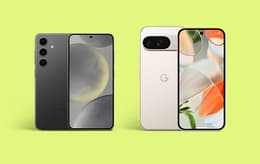
Google Pixel 9 • Unlocked vs iPhone 14 Plus • Locked T-Mobile

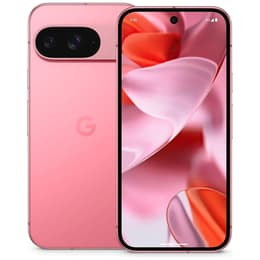
Google Pixel 9 • Unlocked
Starting at

Refurbished price:$379.00

Versus $799.00 new

See options
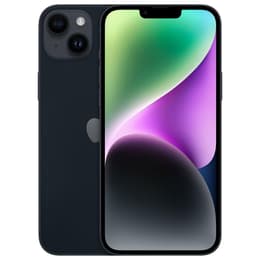
iPhone 14 Plus • Locked T-Mobile
Starting at

Refurbished price:$344.23

Versus $699.00 new

See options

Ratings

The Google Pixel 9, released in August 2024, and the iPhone 14 Plus, launched in October 2022, represent distinct approaches to the modern smartphone experience. While both devices offer robust performance and capable camera systems, they differ significantly in their operating system ecosystems, display technologies, and long-term software support. The Pixel 9 runs on Android, emphasizing AI integration and a customizable interface, whereas the iPhone 14 Plus operates on Apple's iOS, known for its intuitive design and strong ecosystem integration.

Scores

Durability

When evaluating the practical lifespan of these devices, several factors come into play, including their release timelines, software support, and physical durability.

  • Release Timeline and OS Support: The Google Pixel 9, being a newer device from August 2024, benefits from Google's commitment to providing seven years of OS and security updates, extending support until at least August 2031. The iPhone 14 Plus, released in October 2022, typically receives software updates for approximately five to six years from its launch, offering a slightly shorter, though still substantial, support period.
  • Software Longevity: Users prioritizing the longest possible software support and access to the latest operating system features will find the Pixel 9's extended update policy advantageous. Both devices, however, provide a consistent and secure software experience throughout their supported lifespans.
  • Repairability and Durability: Both the Pixel 9 and iPhone 14 Plus feature an IP68 rating for water and dust resistance, indicating a high level of protection against environmental elements. The Pixel 9 incorporates Gorilla Glass Victus 2 on both its front and back, while the iPhone 14 Plus uses Apple's Ceramic Shield front cover and a glass back. The Pixel 9 has a provisional repairability score of 5/10 from iFixit, noting that screen repairs are prioritized, but the battery is firmly adhered. The iPhone 14 Plus is generally considered to offer similar ease of repair to its contemporary models, contributing to its potential for an extended practical lifespan through maintenance.

Release Year

2024

2022

Last OS Compatibility

Yes

Yes

OS

Android

iOS

Foldable

No

No

Performance

The performance of a smartphone is crucial for daily tasks, app responsiveness, and multitasking capabilities. Both the Google Pixel 9 and iPhone 14 Plus deliver smooth experiences, though they achieve this through different hardware and software optimizations.

  • Processor Capabilities: The Google Pixel 9 is equipped with Google's Tensor G4 processor, designed to handle demanding applications and multitasking with efficiency, providing a snappy and fluid user experience. The iPhone 14 Plus utilizes the A15 Bionic chip, which also ensures smooth operation for everyday tasks, gaming, and responsive app loading.
  • System Responsiveness and Multitasking: Users of the Pixel 9 report a very snappy experience, even with animations, and smooth handling of multiple applications simultaneously. The iPhone 14 Plus also offers a responsive user experience, with its processor efficiently managing various applications and transitions. Both devices are well-suited for users who frequently switch between apps or engage in mobile gaming.
  • Storage Options: The Pixel 9 is available with 128GB or 256GB of internal storage, paired with 12GB of RAM. The iPhone 14 Plus offers storage configurations of 128GB, 256GB, and 512GB, and includes 6GB of RAM. The Pixel 9's higher RAM can be beneficial for intensive multitasking and future-proofing, especially with its AI features.

Memory (GB)

12 GB

6 GB

Screen quality

The display is a primary interface for smartphone interaction, and both devices offer high-quality viewing experiences with distinct characteristics.

  • Display Technology and Resolution: The Google Pixel 9 features a 6.3-inch Actua OLED display with a resolution of 1080 x 2424 pixels, resulting in a pixel density of 422 PPI. The iPhone 14 Plus boasts a larger 6.7-inch Super Retina XDR OLED display with a resolution of 2778 x 1284 pixels, offering a pixel density of 458 PPI. Both OLED panels deliver deep blacks, vibrant colors, and excellent contrast.
  • Brightness and Refresh Rate: The Pixel 9's display offers a smooth refresh rate that dynamically adjusts between 60Hz and 120Hz, providing fluid scrolling and animations. It can reach up to 1800 nits in HDR and a peak brightness of 2700 nits, ensuring good visibility in various lighting conditions. The iPhone 14 Plus has a standard 60Hz refresh rate. Its display achieves a typical maximum brightness of 800 nits and a peak HDR brightness of 1200 nits.
  • Viewing Experience: Users who prioritize a larger screen for media consumption and a higher, more fluid refresh rate for general interaction may find the Pixel 9's display more appealing. The iPhone 14 Plus, while having a larger physical screen size, maintains a consistent 60Hz refresh rate.

Resolution

1080 x 2424

1284 x 2778

Screen type

OLED

Super Retina XDR OLED

Audiovisual

Both the Google Pixel 9 and iPhone 14 Plus are designed to capture high-quality photos and videos, each with its own strengths in imaging technology and computational photography.

  • Rear Camera System: The Google Pixel 9 features a dual-camera setup on the rear, including a 50 MP wide-angle primary sensor with optical image stabilization and an 82-degree field of view, alongside a 48 MP ultrawide lens with autofocus and a 123-degree field of view. It supports up to 8x Super Res Zoom. The iPhone 14 Plus comes with an advanced dual-camera system, featuring a 12 MP Main camera and an Ultra Wide camera.
  • Photography Performance: The Pixel 9 is praised for its great photo quality, superb selfies, and vibrant, contrast-rich images, leveraging Google's computational photography. The iPhone 14 Plus also delivers strong photographic results, particularly with its advanced dual-camera system and features like Photonic Engine for improved low-light performance.
  • Video Capabilities and Front Camera: For video, the Pixel 9 can record in 4K at 24, 30, or 60 frames per second, and has a 10.5 MP front camera. The iPhone 14 Plus offers 4K Dolby Vision HDR recording, Cinematic Mode, and Action mode for stable video, along with a 12 MP TrueDepth front camera.

Main camera

50 megapixels

12 megapixels

Front camera

10.5 megapixels

12 megapixels

Miscellaneous

Beyond core performance and display, several practical elements contribute to the overall user experience of these smartphones.

  • Connectivity and Ports: The Google Pixel 9 supports Wi-Fi 7 + MIMO, Bluetooth 5.3, NFC, and 5G connectivity, and features a USB-C 3.2 port for charging and data transfer. The iPhone 14 Plus supports Wi-Fi 6 with 4x4 MIMO, Bluetooth 5.3, NFC, and 5G, and utilizes a Lightning port. The Pixel 9's adoption of USB-C offers broader compatibility with modern accessories.
  • Biometrics and Sensors: The Pixel 9 incorporates an ultrasonic under-display fingerprint sensor for secure authentication, along with standard sensors like gyroscope and magnetometer. The iPhone 14 Plus relies on Face ID for biometric security and includes features like Emergency SOS via satellite and Crash Detection.
  • Physical Design and Materials: The Pixel 9 measures 152.8 mm in height, 72 mm in width, and 8.5 mm in depth, weighing 198 grams, with an aluminum frame and Gorilla Glass Victus 2 on both sides. The iPhone 14 Plus is larger at 160.8 mm in height, 78.1 mm in width, and 7.8 mm in depth, weighing 203 grams, featuring an aluminum design with a Ceramic Shield front and glass back. The Pixel 9's enclosure is made from recycled aluminum, aligning with sustainable manufacturing practices.

Weight

7 oz

7 oz

Screen size (inches)

6.3

6.7

Network

5G

5G

SIM card

Physical SIM + eSIM

eSIM

Carrier compatibility

Unlocked

T-Mobile

Connector

USB-C

Lightning

User sentiment for the Google Pixel 9 often highlights its excellent battery life, smooth software experience, and impressive camera capabilities, with many appreciating its design and the long-term software support. Some users have noted that while performance is strong for everyday use, it might not match the absolute peak of some competitors in graphically intensive tasks, and the "Add Me" camera feature can be inconsistent. The iPhone 14 Plus is frequently praised for its exceptionally long battery life, large display, and the reliability of the iOS ecosystem. Common feedback includes its 60Hz display refresh rate being a point of comparison with other modern smartphones, and the continued use of the Lightning port.

Users prioritizing the latest Android features, extensive software support, and a high refresh rate display will find the Google Pixel 9 well-suited to their needs. Its advanced AI capabilities and robust camera system make it a strong choice for those who value computational photography and a customizable operating system. Conversely, individuals who prefer the Apple ecosystem, a larger screen for media consumption, and industry-leading battery endurance will likely lean towards the iPhone 14 Plus. Its consistent performance and established user experience remain compelling.

For those considering either device, exploring quality-assured refurbished options can provide an eco-friendly alternative, offering access to these technologies while supporting sustainable consumption.
See all articles

Our recent comparisons