
Compare models
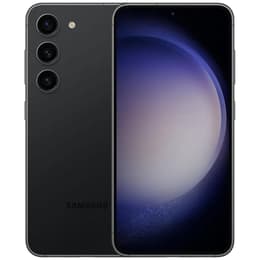
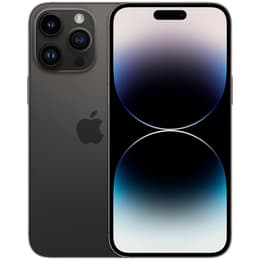
Galaxy S23 • Unlocked vs iPhone 14 Pro Max • Locked T-Mobile
- 1-year warranty
- Free standard shipping
- Free 30-day returns
Differences at a glance
The Samsung Galaxy S23, an Android smartphone released in February 2023, and the iPhone 14 Pro Max, an iOS smartphone launched in September 2022, represent high-end offerings from their respective manufacturers. While both devices deliver premium smartphone experiences, they differ significantly in their operating systems, overall design philosophy, and specific feature sets. This comparison will explore the practical distinctions between these two models, focusing on aspects that influence daily usage and user satisfaction.
Available Models
Color
Storage (GB)
Scores
Durability
When considering the long-term usability of a smartphone, software support and physical resilience are key factors. Both the Galaxy S23 and iPhone 14 Pro Max offer robust foundations for extended use.
- Software Longevity: The Galaxy S23 launched with Android 13 and is promised four years of operating system upgrades, extending to Android 17, along with five years of security updates, with support expected to continue until 2028. The iPhone 14 Pro Max, released with iOS 16, typically receives iOS updates for approximately five to six years from its launch, potentially offering a slightly longer period of major OS upgrades.
- Physical Durability: Both devices feature an IP68 rating for water and dust resistance, indicating protection against submersion. The Galaxy S23 utilizes Corning Gorilla Glass Victus 2 on its front and back for scratch and drop resistance. The iPhone 14 Pro Max incorporates a Ceramic Shield front cover, designed for enhanced toughness, and a stainless steel frame.
- Expected Lifespan: Given their respective update policies and build quality, both smartphones are designed to remain functional and secure for several years. Users can anticipate a practical lifespan of at least 4-5 years for either device, with the iPhone potentially offering an additional year of major software updates.
Release Year
2023
2022
Last OS Compatibility
Yes
Yes
OS
Android
iOS
Foldable
No
No
Performance
The performance of a smartphone is crucial for smooth daily operation, from launching applications to handling demanding tasks. Both the Galaxy S23 and iPhone 14 Pro Max are equipped with powerful internal components designed for high responsiveness.
- Processing Power: The Galaxy S23 is powered by a current-generation processor optimized specifically for its ecosystem, enabling it to handle demanding applications and multitasking efficiently. The iPhone 14 Pro Max features a powerful chip that provides exceptional speed and fluidity across the iOS platform, ensuring a highly responsive user experience.
- Multitasking and Storage: The Galaxy S23 typically comes with 8GB of RAM, facilitating smooth transitions between multiple open applications. Storage options for the S23 include 128GB and 256GB. The iPhone 14 Pro Max is equipped with 6GB of RAM, which, combined with iOS's memory management, allows for efficient multitasking. It offers a wider range of storage configurations, from 128GB up to 1TB.
- Real-World Responsiveness: Users generally report that both devices offer very fast app loading and smooth navigation. While the Galaxy S23 provides a consistently strong performance, some users have noted occasional minor stutters after certain software updates. The iPhone 14 Pro Max is frequently praised for its consistent and fluid performance, even under heavy usage.
Screen quality
The display is a primary interface for smartphone interaction, and both the Galaxy S23 and iPhone 14 Pro Max offer high-quality viewing experiences with distinct characteristics.
- Display Technology and Clarity: The Galaxy S23 features a 6.1-inch Dynamic AMOLED 2X display, providing vibrant colors and deep blacks with a resolution of 2340x1080 pixels, resulting in a pixel density of 422 pixels per inch. The iPhone 14 Pro Max boasts a larger 6.7-inch Super Retina XDR OLED display, offering a resolution of 2796x1290 pixels and a pixel density of 460 pixels per inch, contributing to sharp visuals.
- Brightness and Refresh Rate: The Galaxy S23 achieves a peak brightness of 1750 nits, ensuring good visibility even in bright outdoor conditions. Its adaptive refresh rate ranges from 48Hz to 120Hz for smooth scrolling and responsive visuals. The iPhone 14 Pro Max offers a higher peak outdoor brightness of 2000 nits and 1600 nits for HDR content. Its ProMotion technology allows for an adaptive refresh rate that can scale from 1Hz up to 120Hz, optimizing both smoothness and power efficiency.
- Unique Display Features: The iPhone 14 Pro Max includes an Always-On display and the Dynamic Island, a pill-shaped cutout that dynamically adapts to show alerts, notifications, and ongoing background activities.
Resolution
1080 x 2340
1290 x 2796
Screen type
Dynamic AMOLED 2X
LTPO Super Retina XDR OLED
Audiovisual
Both the Galaxy S23 and iPhone 14 Pro Max are equipped with advanced camera systems designed to capture high-quality photos and videos, though they approach imaging with slightly different strengths.
- Rear Camera Systems: The Galaxy S23 features a versatile triple-camera setup, including a 50-megapixel main sensor, a 12-megapixel ultrawide lens, and a 10-megapixel telephoto lens. It delivers good image quality in well-lit conditions. The iPhone 14 Pro Max comes with a Pro camera system comprising a 48-megapixel main sensor, a 12-megapixel ultrawide lens, and a 12-megapixel telephoto lens capable of 3x optical zoom.
- Low-Light and Video Capabilities: While the Galaxy S23 offers decent low-light performance, some users note it is not its strongest suit. Its video recording capabilities are generally good. The iPhone 14 Pro Max is widely recognized for its excellent low-light photography and advanced video features, including Cinematic mode for shallow depth-of-field effects in 4K HDR at 30 frames per second, and Action mode for stabilized video capture at 2.8K at 60 frames per second. It also supports ProRes video recording for professional workflows.
- User Experience: Users of the iPhone 14 Pro Max frequently praise its camera for its consistent quality and advanced video options, making it a strong choice for content creators. The Galaxy S23's camera is appreciated for its overall versatility in everyday scenarios.
Main camera
50 megapixels
48 megapixels
Front camera
12 megapixels
12 megapixels
Miscellaneous
Beyond core performance and display, several practical features contribute to the overall user experience and differentiate these two devices.
- Connectivity and Ports: Both smartphones support 5G cellular networks and Wi-Fi 6 (802.11ax) for fast wireless connectivity, along with Bluetooth 5.3 for accessories. The Galaxy S23 uses a USB-C port for charging and data transfer. The iPhone 14 Pro Max utilizes Apple's proprietary Lightning port.
- Biometric Security: The Galaxy S23 offers an ultrasonic in-screen fingerprint sensor for secure unlocking and authentication, alongside 2D face unlock. The iPhone 14 Pro Max relies on Face ID, an advanced facial recognition system, for secure unlocking and payments.
- Design and Handling: The Galaxy S23 is a more compact device, weighing 168 grams and measuring 146.3 x 70.9 x 7.6mm. It features an aluminum frame. The iPhone 14 Pro Max is larger and heavier, at 240 grams and dimensions of 160.7 x 77.6 x 7.85mm, with a stainless steel frame. The difference in size and weight impacts one-handed use and pocketability.
Weight
6 oz
8 oz
Screen size (inches)
6.1
6.7
Network
5G
5G
SIM card
Physical SIM + eSIM
eSIM
Carrier compatibility
Unlocked
T-Mobile
What the community thinks
The Samsung Galaxy S23 and iPhone 14 Pro Max cater to users with varying preferences and priorities. User feedback indicates that the Galaxy S23 is often praised for its compact form factor, bright display, and solid everyday performance. Some users have noted occasional software inconsistencies or that its low-light camera performance, while good, might not match the very best.
Conversely, the iPhone 14 Pro Max receives frequent acclaim for its exceptional battery life, powerful and consistently smooth performance, large and vibrant display, and its highly capable camera system, particularly for video recording. Some users coming from Android have expressed minor criticisms regarding iOS's notification management.
Users prioritizing a more compact Android device with a versatile camera and a bright screen for general use may find the Galaxy S23 well-suited to their needs. Those who value a larger display, industry-leading video capabilities, extended battery endurance, and the integrated experience of the iOS ecosystem will likely lean towards the iPhone 14 Pro Max. Both devices offer robust performance and durability, and considering a quality-assured refurbished option can be an eco-friendly alternative for either model.