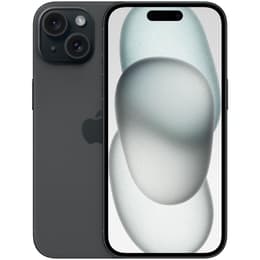

Galaxy S23 • Unlocked vs iPhone 15 • Locked AT&T

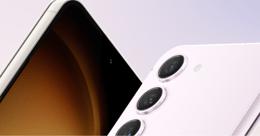
Galaxy S23 • Unlocked
Starting at

Refurbished price:$194.99

Versus $799.00 new

See options
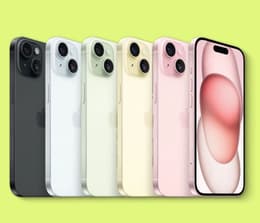
iPhone 15 • Locked AT&T
Starting at

Refurbished price:$349.43

Versus $729.00 new

See options

Ratings

The Samsung Galaxy S23, released in February 2023, and the Apple iPhone 15, launched in September 2023, represent flagship smartphones from their respective manufacturers. While both devices offer a premium smartphone experience, they differ significantly in their operating systems and hardware philosophies. The Galaxy S23 runs on Android, providing a customizable interface, whereas the iPhone 15 operates on Apple's iOS, known for its integrated ecosystem. Key distinctions emerge in areas such as display technology, camera capabilities, and long-term software support.

Scores

Durability

When considering the longevity of these devices, several factors come into play, including their release timelines, software support, and physical resilience.

  • Software Support: The Galaxy S23 typically receives four years of major Android operating system updates and five years of security updates from its release. The iPhone 15, being an Apple device, generally benefits from five to six years of iOS updates, potentially offering a longer period of access to the latest software features and security patches.
  • Physical Durability: Both smartphones feature robust designs with IP68 ratings for dust and water resistance, indicating protection against submersion in fresh water. The Galaxy S23 utilizes Gorilla Glass Victus 2 on its front and back, paired with an Armor Aluminum frame. The iPhone 15 incorporates Apple's Ceramic Shield front cover and a color-infused glass back, set within an aerospace-grade aluminum frame.
  • Repairability: While both devices are designed with modern construction, the repairability of the iPhone 15 has seen improvements compared to earlier models, though specialized tools are often required. The Galaxy S23 generally offers moderate repairability, with parts availability being a factor.

Release Year

2023

2023

Last OS Compatibility

Yes

Yes

OS

Android

iOS

Foldable

No

No

Performance

Both the Galaxy S23 and iPhone 15 deliver responsive performance for daily tasks and demanding applications, though their underlying architectures differ.

  • System Responsiveness: The Galaxy S23, powered by a customized current-generation processor, handles demanding apps, multitasking, and graphic-intensive games smoothly. The iPhone 15, featuring its own advanced chip, also provides a fluid user experience, ensuring quick app loading and efficient navigation.
  • Battery Behavior: Users of both devices generally report good all-day battery life under moderate usage conditions. The Galaxy S23 houses a 3900 mAh battery, while the iPhone 15 has a 3349 mAh battery. Both are optimized for power efficiency, allowing for extended use between charges.
  • Storage and Multitasking: The Galaxy S23 offers storage options up to 512GB and typically comes with 8GB of RAM, which supports efficient multitasking. The iPhone 15 also provides various storage configurations up to 512GB and includes 6GB of RAM, which is optimized by iOS for effective application management.

Memory (GB)

8 GB

6 GB

Screen quality

The visual experience on both the Galaxy S23 and iPhone 15 is characterized by vibrant colors and sharp details, though they employ different display technologies and refresh rates.

  • Display Technology and Clarity: The Galaxy S23 features a 6.1-inch Dynamic AMOLED 2X display, known for its deep blacks and rich color reproduction. The iPhone 15 sports a 6.1-inch Super Retina XDR OLED display, which also delivers excellent contrast and color accuracy. Both offer high resolutions, with the iPhone 15 having a slightly higher pixel density for marginally sharper text and images.
  • Brightness and Refresh Rate: The Galaxy S23 can reach a peak brightness of 1750 nits, ensuring good visibility in bright outdoor conditions. It also boasts an adaptive refresh rate of up to 120Hz, contributing to smoother scrolling and more fluid animations. The iPhone 15 offers a slightly higher peak brightness of 2000 nits, enhancing outdoor readability. However, its display operates at a standard 60Hz refresh rate.
  • Viewing Experience: Both devices provide an immersive viewing experience for media consumption and general use, with their respective display technologies offering distinct advantages. The higher refresh rate on the Galaxy S23 provides a noticeably smoother visual flow, while the iPhone 15's higher peak brightness can be beneficial in direct sunlight.

Resolution

1080 x 2340

1179 x 2556

Screen type

Dynamic AMOLED 2X

Super Retina XDR OLED

Audiovisual

Both the Galaxy S23 and iPhone 15 are equipped with advanced camera systems designed to capture high-quality photos and videos in various conditions.

  • Rear Camera Systems: The Galaxy S23 features a versatile triple-camera setup, including a 50 MP wide-angle lens, a 12 MP ultrawide lens, and a 10 MP telephoto lens with 3x optical zoom. This dedicated telephoto lens allows for clear zoomed-in shots. The iPhone 15 comes with a dual-camera system, comprising a 48 MP main sensor and a 12 MP ultrawide lens. It utilizes a sensor crop from the main camera to achieve 2x optical quality telephoto shots.
  • Photography Performance: Both phones excel in everyday photography, producing detailed images with accurate colors. The Galaxy S23's larger main sensor and dedicated telephoto lens can offer advantages in certain zoom scenarios and low-light conditions. The iPhone 15's computational photography strengths contribute to consistent image quality across various lighting environments.
  • Video and Audio: The Galaxy S23 supports video recording up to 8K resolution at 30 frames per second, offering high-detail video capture. The iPhone 15 records video up to 4K at 60 frames per second, known for its stability and cinematic quality. Both devices feature stereo speakers and good microphone quality for calls and video recording, providing a clear audio experience.

Main camera

50 megapixels

48 megapixels

Front camera

12 megapixels

12 megapixels

Miscellaneous

Beyond core features, several practical elements differentiate the Galaxy S23 and iPhone 15, impacting daily usability and connectivity.

  • Connectivity Standards: The Galaxy S23 supports Wi-Fi 6E, offering access to the less congested 6GHz band for potentially faster and more stable wireless connections. The iPhone 15 supports Wi-Fi 6. Both devices incorporate Bluetooth 5.3 for efficient wireless accessory connections.
  • Ports and Biometrics: The Galaxy S23 is equipped with a USB-C 3.2 port, enabling faster data transfer speeds and more versatile connectivity with external devices. It also features an under-display ultrasonic fingerprint sensor in addition to face recognition for secure unlocking. The iPhone 15 has transitioned to a USB-C 2.0 port, which offers standard data transfer speeds. It relies solely on Face ID for biometric authentication.
  • Design and Handling: The Galaxy S23 weighs 168g and measures 146.3 x 70.9 x 7.6 mm, providing a compact and manageable form factor. The iPhone 15 is slightly heavier at 171g and measures 147.6 x 71.6 x 7.8 mm. Both devices offer a comfortable in-hand feel, with the iPhone 15 introducing the Dynamic Island for interactive notifications and alerts.

Weight

6 oz

171 oz

Screen size (inches)

6.1

6.1

Network

5G

5G

SIM card

Physical SIM + eSIM

eSIM

Carrier compatibility

Unlocked

AT&T

User feedback for the Samsung Galaxy S23 often praises its vibrant display, versatile camera system with a dedicated telephoto lens, and the customization options offered by the Android operating system. Some users appreciate its compact size and the inclusion of an ultrasonic fingerprint sensor. Criticisms sometimes point to its battery life, though many find it sufficient for a full day's use, and the update policy compared to newer models.

The iPhone 15 is frequently lauded for its consistent camera performance, the seamless integration within the Apple ecosystem, and its strong long-term software support. Users also highlight the bright display and the introduction of the Dynamic Island as positive features. Some common observations include the 60Hz refresh rate, which is lower than many Android counterparts, and the standard USB 2.0 speeds of its new USB-C port.

Users prioritizing a highly customizable Android experience, a dedicated telephoto camera, and a high refresh rate display may find the Galaxy S23 well-suited to their needs. Conversely, individuals who value extended software support, a tightly integrated ecosystem, and consistent camera performance with a focus on computational photography may lean toward the iPhone 15. Both devices are capable smartphones, and for those seeking a more sustainable choice, quality-assured refurbished options are available for both models, offering an eco-friendly alternative.
See all articles

Our recent comparisons