

Compare models
Galaxy S24 FE • Unlocked vs Google Pixel 7a • Unlocked
- 1-year warranty
- Free standard shipping
- Free 30-day returns
Differences at a glance
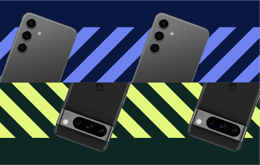
The Samsung Galaxy S24 FE, released in October 2024, and the Google Pixel 7a, launched in May 2023, are both Android smartphones designed to offer a balanced experience. While the Galaxy S24 FE emphasizes a larger display and a versatile camera system, the Pixel 7a focuses on Google's renowned computational photography and a compact form factor. Both devices operate on the Android platform, providing access to a wide ecosystem of applications and services.
Available Models
Color
Storage (GB)
Scores
Durability
When considering the longevity of these devices, several factors come into play, including their release timelines, software support, and physical durability.
- Release Timeline: The Google Pixel 7a was released in May 2023, making it an earlier model compared to the Samsung Galaxy S24 FE, which launched in October 2024. This difference in release dates directly impacts their expected software support windows.
- Software Support: The Galaxy S24 FE is projected to receive up to seven years of operating system and security updates, extending its software relevance significantly. The Pixel 7a, on the other hand, is expected to receive five years of major OS upgrades and security updates from its release.
- Durability Features: The Galaxy S24 FE features Corning Gorilla Glass Victus+ on the front and Gorilla Glass 5 on the back, coupled with an aluminum frame and an IP68 rating for dust and water resistance. The Pixel 7a uses Corning Gorilla Glass 3 for its display and has an IP67 rating for dust and water resistance, with a plastic back and an aluminum frame.
Release Year
2024
2023
Last OS Compatibility
Yes
Yes
OS
Android
Android
Foldable
No
No
Performance
The performance of a smartphone is crucial for daily tasks, from navigating applications to engaging in demanding activities like gaming or video editing. Both devices are equipped with custom-designed processors tailored for their respective ecosystems.
- Processing Power: The Galaxy S24 FE is powered by an Exynos 2400e processor, which is a variant of a current-generation chipset, designed to handle a wide range of tasks smoothly. The Pixel 7a features Google's Tensor G2 processor, which is optimized for AI and machine learning tasks, contributing to its overall responsiveness.
- Multitasking and Responsiveness: Both phones come with 8GB of RAM, allowing for efficient multitasking and smooth transitions between applications. Users of the Galaxy S24 FE generally report fast app opening times and a fluid user experience. The Pixel 7a also offers speedy everyday performance, though some users have noted slightly slower video export times compared to other devices.
- Storage Options: The Galaxy S24 FE offers multiple storage configurations, including 128GB, 256GB, and 512GB. The Pixel 7a is available with 128GB of internal storage. Neither device supports expandable storage.
Screen quality
The display is a primary interface for smartphone interaction, influencing everything from content consumption to daily navigation. Both the Galaxy S24 FE and the Pixel 7a offer vibrant displays with distinct characteristics.
- Display Technology and Size: The Galaxy S24 FE features a larger 6.7-inch Dynamic AMOLED 2X display, providing vibrant colors and deep blacks. The Pixel 7a comes with a more compact 6.1-inch OLED display, also known for its rich colors and contrast.
- Resolution and Refresh Rate: Both phones offer a Full HD+ resolution (1080x2340 pixels for S24 FE, 1080x2400 pixels for Pixel 7a), ensuring sharp visuals. The Galaxy S24 FE boasts a 120 Hz refresh rate for smoother scrolling and animations. The Pixel 7a provides a 90 Hz refresh rate, which also contributes to a fluid visual experience.
- Brightness and Outdoor Visibility: The Galaxy S24 FE has a peak brightness of 1900 nits, which can be beneficial for outdoor visibility, though typical usage might see lower brightness levels. While specific peak brightness for the Pixel 7a is not always highlighted, some users report needing to set the brightness to full for comfortable outdoor viewing.
Resolution
1080 x 2340
1080 x 2400
Screen type
Dynamic AMOLED 2X
OLED
Audiovisual
Both the Samsung Galaxy S24 FE and the Google Pixel 7a are designed with capable camera systems, each with its own strengths in capturing photos and videos.
- Rear Camera Systems: The Galaxy S24 FE features a triple-camera setup, including a 50MP main sensor with optical image stabilization (OIS), a 12MP ultrawide lens, and an 8MP telephoto lens with 3x optical zoom and OIS. The Pixel 7a has a dual-camera system with a 64MP main sensor with OIS and a 13MP ultrawide lens.
- Photography Performance: The Galaxy S24 FE generally produces good results in daylight, with sharp and well-balanced photos, and its video quality is often praised. However, it may struggle in low-light conditions. The Pixel 7a is widely recognized for its exceptional computational photography, delivering excellent photo quality and color accuracy, often performing well even in challenging lighting.
- Video Recording and Audio: The Galaxy S24 FE supports video recording up to 8K at 30 frames per second. The Pixel 7a can record 4K video at up to 60 frames per second. Both devices offer stereo speakers for media consumption, with the S24 FE's audio being clear and balanced, though some users desire louder output.
Main camera
50 megapixels
64 megapixels
Front camera
10 megapixels
13 megapixels
Miscellaneous
Beyond the core specifications, several practical features contribute to the overall user experience and daily convenience of these smartphones.
- Connectivity and Ports: Both the Galaxy S24 FE and the Pixel 7a support 5G connectivity, Wi-Fi 6E, and Bluetooth 5.3, ensuring fast and reliable wireless connections. Both devices utilize a USB-C port for charging and data transfer. Neither phone includes a traditional 3.5mm headphone jack.
- Biometric Security: The Galaxy S24 FE incorporates an optical in-screen fingerprint sensor for secure unlocking. The Pixel 7a also features an in-display fingerprint sensor, alongside face recognition capabilities.
- Physical Design and Handling: The Galaxy S24 FE is slightly larger and heavier, weighing 213g with dimensions of 77.3 x 162 x 8 mm. The Pixel 7a is more compact and lighter at 193.5g, with dimensions of 152 mm H x 72.9 mm W x 9 mm D, which may appeal to users preferring a smaller device.
Weight
7 oz
6 oz
Screen size (inches)
6.7
6.1
Network
5G
5G
SIM card
eSIM
Physical SIM + eSIM
Carrier compatibility
Unlocked
Unlocked
What the community thinks
The Samsung Galaxy S24 FE and the Google Pixel 7a cater to slightly different user preferences, each offering a compelling set of features. Users often praise the Galaxy S24 FE for its larger, vibrant display and its comprehensive camera system, particularly the inclusion of a dedicated telephoto lens and 8K video recording. Its extended software support also stands out as a significant advantage for long-term use. Some users, however, have noted that its camera performance in low-light conditions could be improved and that the device can experience heating during prolonged heavy use.
The Google Pixel 7a consistently receives acclaim for its exceptional camera capabilities, often delivering image quality comparable to more premium devices, especially in computational photography. Its compact size and clean Android experience are also frequently highlighted as positive aspects. Conversely, common criticisms include its battery life, which some heavy users find requires a mid-day charge, and a display that may require full brightness outdoors.
Users prioritizing a larger screen, a versatile camera with optical zoom, and a longer software support window may find the Samsung Galaxy S24 FE well-suited to their needs. Those who value a more compact device, Google's signature computational photography, and a streamlined software experience might lean towards the Google Pixel 7a. Both devices represent quality-assured options, and considering refurbished alternatives can be an eco-friendly choice for consumers.