
Galaxy S9 • Unlocked vs iPhone 7 Plus • Unlocked

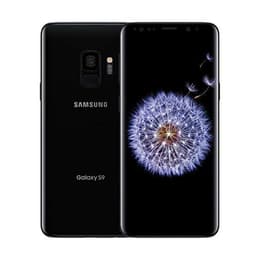
Galaxy S9 • Unlocked
Starting at

Refurbished price:$106.00

Versus $399.00 new

See options
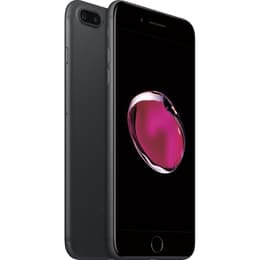
iPhone 7 Plus • Unlocked
Starting at

Refurbished price:$112.00

Versus $389.00 new

See options

Ratings

The Samsung Galaxy S9, released in March 2018, and the Apple iPhone 7 Plus, launched in September 2016, represent two distinct approaches to smartphone design and functionality from their respective eras. While both devices offered premium experiences at their release, they differ significantly in their operating systems, display technologies, and camera philosophies. The Galaxy S9 runs on Android, offering a customizable interface, while the iPhone 7 Plus operates on Apple's iOS, known for its integrated ecosystem. These differences cater to varying user preferences and usage patterns.

Scores

Durability

When considering the long-term usability of these devices, their release timelines and software support are key factors. The iPhone 7 Plus, being older, has naturally reached the end of its major iOS update cycle, with its last official update being iOS 15. The Galaxy S9, released later, received its last major Android update to Android 10 in late 2020, with security updates concluding around March 2022.

  • Software Longevity: The iPhone 7 Plus received support from iOS 10 up to iOS 15, which was released in 2021, and continued to receive security updates for some time after. The Galaxy S9 launched with Android 8.0 and was officially updated to Android 10, with security updates ending in early 2022.
  • Physical Durability: Both devices offer water and dust resistance, with the Galaxy S9 rated IP68 and the iPhone 7 Plus rated IP67. This means they can withstand immersion in water to a certain depth for a limited time. The Galaxy S9 features a glass front and back with an aluminum frame, while the iPhone 7 Plus has an aluminum unibody design.
  • Practical Lifespan: Given that both phones are past their major software update cycles, their practical lifespan for daily use depends more on hardware resilience and user tolerance for older software. Users of both devices might find app compatibility becoming an issue over time, though security updates for older iOS versions have been provided even into early 2026 for some older iPhones.

Release Year

2018

2016

Last OS Compatibility

No

No

OS

Android

iOS

Foldable

No

No

Performance

The performance of a smartphone is largely determined by its internal components, affecting everything from app loading times to multitasking efficiency and gaming. Both the Galaxy S9 and iPhone 7 Plus were equipped with capable processors for their respective release periods, designed to handle demanding applications and provide a smooth user experience.

  • Processing Power: The Galaxy S9 features a current-generation processor for its time, which allowed for smooth operation and efficient handling of applications and multitasking. The iPhone 7 Plus is powered by a capable processor that ensured responsive performance across iOS applications and system navigation.
  • Multitasking and Responsiveness: The Galaxy S9 typically came with 4GB of RAM, providing ample capacity for running multiple applications simultaneously without significant slowdowns. The iPhone 7 Plus, with 3GB of RAM, also offered efficient multitasking within the iOS environment, optimized to manage memory effectively.
  • Storage Options: The Galaxy S9 offered internal storage options starting from 64GB, with the added flexibility of expandable storage via a microSD card, allowing users to significantly increase their storage capacity. The iPhone 7 Plus was available with internal storage options starting from 32GB, up to 256GB, but without the option for expandable storage.

Memory (GB)

4 GB

3 GB

Screen quality

The display is a primary interface for smartphone interaction, and the quality of the screen significantly impacts the viewing experience. The Galaxy S9 and iPhone 7 Plus utilize different display technologies, each with distinct characteristics that cater to various visual preferences.

  • Display Technology: The Galaxy S9 features a 5.8-inch Super AMOLED display, known for its deep blacks, vibrant colors, and high contrast ratios. In contrast, the iPhone 7 Plus uses a 5.5-inch IPS LCD Retina display, which provides accurate color reproduction and wide viewing angles.
  • Resolution and Clarity: The Galaxy S9 offers a higher resolution of 2960 x 1440 pixels, resulting in a sharper image with a higher pixel density. The iPhone 7 Plus has a resolution of 1920 x 1080 pixels, delivering clear and detailed visuals for its screen size.
  • Brightness and Viewing Experience: Both displays offer sufficient brightness for outdoor visibility, though AMOLED technology on the S9 generally provides better contrast in direct sunlight. The S9's curved 'Infinity Display' design also contributes to a more immersive viewing experience with minimal bezels.

Resolution

1440 x 2960

1080 x 1920

Screen type

Super AMOLED

Retina IPS LCD

Audiovisual

Camera capabilities are often a decisive factor for smartphone users, and both the Galaxy S9 and iPhone 7 Plus introduced notable advancements in mobile photography for their time. They approached image capture with different hardware and software optimizations.

  • Rear Camera System: The Galaxy S9 features a single 12-megapixel rear camera with a variable aperture (f/1.5-f/2.4), allowing it to adjust to different lighting conditions for improved low-light performance and sharper images in bright light. The iPhone 7 Plus boasts a dual 12-megapixel camera system, comprising a wide-angle lens (f/1.8) and a telephoto lens (f/2.8), enabling 2x optical zoom and a portrait mode with depth effect.
  • Photography Performance: Users reported the Galaxy S9's variable aperture excelled in low-light scenarios, capturing more detail and reducing noise. The iPhone 7 Plus was praised for its optical zoom capabilities and the introduction of Portrait Mode, which allowed for professional-looking photos with blurred backgrounds.
  • Video Recording and Audio: Both phones are capable of recording high-quality video. The Galaxy S9 introduced super slow-motion video at 960 frames per second. The iPhone 7 Plus also offered optical image stabilization for smoother video capture. The Galaxy S9 also featured AKG-tuned stereo speakers, providing an enhanced audio experience for media consumption.

Main camera

12 megapixels

12 megapixels

Front camera

8 megapixels

7 megapixels

Miscellaneous

Beyond core performance and display, various practical elements contribute to the overall user experience, including connectivity, physical design, and additional features. These aspects often influence daily convenience and device compatibility.

  • Connectivity and Ports: The Galaxy S9 supports Wi-Fi 802.11 a/b/g/n/ac and Bluetooth 5.0, and notably includes a 3.5mm headphone jack and a USB-C port for charging and data transfer. The iPhone 7 Plus also supports Wi-Fi 802.11 a/b/g/n/ac and Bluetooth 4.2, but it removed the traditional headphone jack, relying solely on its Lightning port for charging, data, and audio output.
  • Biometric Security: The Galaxy S9 offered multiple biometric options, including a rear-mounted fingerprint sensor, iris scanning, and facial recognition. The iPhone 7 Plus featured a front-mounted fingerprint sensor integrated into its capacitive home button for secure unlocking and authentication.
  • Design and Handling: The Galaxy S9 is slightly more compact and lighter, weighing 163g with dimensions of 147.7 x 68.7 x 8.5 mm. The iPhone 7 Plus is larger and heavier at 188g, with dimensions of 158.2 x 77.9 x 7.3 mm, which can impact one-handed use. The S9's curved display also contributes to a different in-hand feel compared to the flatter design of the 7 Plus.

Weight

6 oz

7 oz

Width

5.81 in

3.07 in

Height

2.7 in

6.23 in

Depth

0.33 in

0.29 in

Screen size (inches)

5.8

5.5

Network

LTE

LTE

SIM card

Physical SIM

Physical SIM

Carrier compatibility

Unlocked

Unlocked

Connector

USB-C + Jack 3.5mm

Lightning

Users often praise the Samsung Galaxy S9 for its vibrant AMOLED display, versatile camera with variable aperture, and the inclusion of a headphone jack and expandable storage. Common criticisms sometimes pointed to its battery life, which some heavy users found to be just average, and the software experience could be overwhelming for some. Conversely, the iPhone 7 Plus was frequently lauded for its robust performance, reliable iOS ecosystem, and the introduction of its dual-camera system with optical zoom and Portrait Mode. Some users, however, expressed disappointment with the removal of the headphone jack and a design that was largely similar to its predecessors.

Users prioritizing a highly customizable Android experience, a vivid display, and the flexibility of expandable storage and a traditional headphone jack may find the Galaxy S9 well-suited to their needs. Those who value a streamlined user experience, consistent performance within the Apple ecosystem, and a camera system focused on optical zoom and portrait photography might lean toward the iPhone 7 Plus. Both devices, while older, still offer functional smartphone experiences. For those looking for a sustainable choice, considering a quality-assured refurbished option for either model can provide an eco-friendly alternative to purchasing new.

See all articles

Our recent comparisons