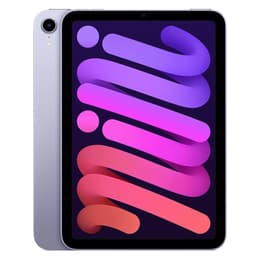

Galaxy Tab S9 (11.0", 2023) vs iPad mini 6 (2021, A15 series)

Galaxy Tab S9 (11.0", 2023)
Starting at

Refurbished price:$394.00

Versus $1,099.99 new

See options
iPad mini 6 (2021, A15 series)
Starting at

Refurbished price:$277.00

Versus $499.00 new

See options

Ratings

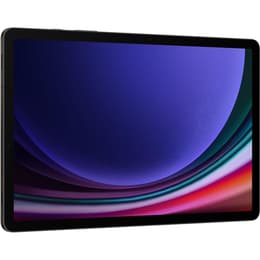
The Samsung Galaxy Tab S9, released in August 2023, and the Apple iPad Mini (6th generation), launched in September 2021, offer distinct tablet experiences. While both provide portable computing, they differ significantly in operating system, display technology, and overall design philosophy. The Galaxy Tab S9 runs on Android, offering a larger display and a more open ecosystem, whereas the iPad Mini operates on iPadOS, emphasizing a compact form factor and a highly integrated software experience.

Scores

Durability

When considering the long-term usability of these tablets, several factors come into play, including their release timelines, software support, and physical durability.

  • Release Timeline and Software Support: The Galaxy Tab S9, being a 2023 release, benefits from a more recent launch, ensuring a longer period of major Android OS updates and security patches. Samsung has committed to four major Android OS updates and five years of security updates for the Tab S9 series, starting from Android 13. The iPad Mini (6th generation), released in 2021, has already received several iPadOS updates and typically receives software support for five to seven years from its release.
  • Physical Durability: The Galaxy Tab S9 features an Armor Aluminum frame and boasts an IP68 rating for water and dust resistance, a notable inclusion for a tablet. The iPad Mini (6th generation) features an aluminum enclosure, which provides a solid build, though it does not carry an official IP rating for water and dust resistance.
  • Expected Practical Lifespan: Both devices are built to last, with their respective operating systems providing a robust app ecosystem. Users can expect several years of reliable performance from either tablet, with the Galaxy Tab S9 potentially offering a slightly longer period of official software updates due to its newer release date.

Release Year

2023

2021

Last OS Compatibility

Yes

Yes

OS

Android

iPadOS

Performance

The performance of a tablet is crucial for handling daily tasks, from browsing and media consumption to more demanding applications and multitasking.

  • Processing Power: The Galaxy Tab S9 is equipped with a current-generation processor, allowing it to handle demanding applications, complex multitasking, and graphic-intensive games smoothly. The iPad Mini (6th generation) features a powerful chip that delivers responsive performance for a wide range of tasks, from everyday use to more intensive applications and gaming.
  • Multitasking and Responsiveness: The Galaxy Tab S9 offers configurations with 8GB or 12GB of RAM, which contributes to efficient multitasking and smooth transitions between applications. The iPad Mini (6th generation) comes with 4GB of RAM, which is optimized by iPadOS to provide a fluid user experience even with multiple apps open.
  • Storage and Battery Behavior: The Galaxy Tab S9 offers 128GB or 256GB of internal storage, with the added flexibility of expandable storage via a microSD card. Its 8400 mAh battery generally provides good endurance for a day of mixed usage, though some users note that the vibrant AMOLED display can impact battery life during heavy use. The iPad Mini (6th generation) is available with 64GB or 256GB of storage, without expansion options. Its 19.3 Wh battery is reported by users to offer long battery life, often lasting through a full day of use.

Memory (GB)

8 GB

4 GB

Screen quality

The display is a primary interface for tablets, and both devices offer high-quality viewing experiences tailored to their respective sizes.

  • Display Technology and Clarity: The Galaxy Tab S9 features an 11-inch Dynamic AMOLED 2X display, providing deep blacks, vibrant colors, and excellent contrast. It has a resolution of 2560 x 1600 pixels, resulting in sharp images and text. The iPad Mini (6th generation) sports an 8.3-inch Liquid Retina IPS LCD display, known for its accurate color reproduction and wide viewing angles. Its 2266 x 1488 resolution translates to a high pixel density, making content appear crisp.
  • Brightness and Refresh Rate: The Galaxy Tab S9's display offers high brightness levels, making it suitable for use in various lighting conditions, including outdoors. It also boasts a 120Hz refresh rate, which contributes to smoother scrolling and a more fluid visual experience. The iPad Mini (6th generation) provides a brightness of 500 nits, which is sufficient for most indoor and outdoor environments. It has a standard 60Hz refresh rate.
  • Viewing Experience: The larger screen of the Galaxy Tab S9 is well-suited for immersive media consumption and productivity tasks that benefit from more screen real estate. The iPad Mini's compact size makes it highly portable and comfortable for one-handed reading or quick content consumption. Some users have noted a 'jelly scrolling' effect on the iPad Mini's display when scrolling in portrait orientation.

Resolution

1600 x 2560

2266 x 1488

Screen type

Dynamic AMOLED 2X

Liquid Retina display

Pixel density

280ppp

326ppp

Audiovisual

While tablets are not typically primary photography devices, their cameras are useful for video calls, document scanning, and casual photography.

  • Rear Camera System: The Galaxy Tab S9 features a 13-megapixel wide rear camera, capable of capturing clear images and scanning documents effectively. It can record video in 4K resolution at 30 frames per second. The iPad Mini (6th generation) is equipped with a 12-megapixel wide rear camera with an f/1.8 aperture, which performs well in various lighting conditions and can record 4K video at up to 60 frames per second.
  • Front Camera for Communication: For video calls and selfies, the Galaxy Tab S9 includes a 12-megapixel ultrawide front camera that supports 4K video recording and features similar to Center Stage, keeping the user in frame during calls. The iPad Mini (6th generation) also has a 12-megapixel ultrawide front camera with a 122-degree field of view and supports Apple's Center Stage feature, which automatically adjusts the camera to keep subjects centered during video calls.
  • Audio and Media Experience: The Galaxy Tab S9 offers a quad-speaker setup, providing a rich audio experience for media consumption. The iPad Mini (6th generation) features stereo speakers, delivering clear sound for videos and music. Both tablets offer good microphone quality for calls and recordings.

Miscellaneous

Beyond core performance and display, several practical features contribute to the overall user experience and versatility of these tablets.

  • Connectivity and Ports: The Galaxy Tab S9 supports Wi-Fi 6E and Bluetooth 5.3, offering fast and reliable wireless connections. It includes a USB-C 3.2 port for charging and data transfer. The iPad Mini (6th generation) supports Wi-Fi 6 and Bluetooth 5.0. It also features a versatile USB-C port, replacing the older Lightning connector.
  • Stylus and Biometrics: The Galaxy Tab S9 comes with an IP68-rated S Pen included in the box, providing a responsive tool for note-taking, drawing, and navigation. It incorporates an in-display fingerprint sensor for secure authentication. The iPad Mini (6th generation) supports the Apple Pencil 2nd generation, which attaches magnetically and charges wirelessly, though it is sold separately. It uses Touch ID, integrated into the power button, for biometric security.
  • Design and Portability: The Galaxy Tab S9 measures 254.3 x 165.8 x 5.9 mm and weighs 498 grams for the Wi-Fi model, offering a larger screen in a relatively thin and light package. The iPad Mini (6th generation) is significantly more compact and lighter, with dimensions of 195.4 x 134.8 x 6.3 mm and a weight of 293 grams for the Wi-Fi model, making it highly portable and easy to handle with one hand.

Weight

23 oz

16 oz

Screen size (inches)

11.0

8.3

Network

Wi-Fi

Wi-Fi

Carrier compatibility

Without SIM Port

Without SIM Port

User sentiment for both the Galaxy Tab S9 and the iPad Mini (6th generation) generally highlights their strengths in different areas. The Galaxy Tab S9 is often praised for its vibrant AMOLED display, included S Pen, and robust performance, making it a strong contender for users who prioritize a larger screen for media consumption, creative tasks, and productivity within the Android ecosystem. Some users have noted varying battery life depending on usage intensity, particularly with the high-refresh-rate AMOLED screen.

The iPad Mini (6th generation) receives acclaim for its exceptional portability, powerful performance in a small form factor, and the seamless integration of iPadOS. Its compact size makes it a favorite for reading, note-taking, and as a highly mobile companion. Criticisms sometimes point to the 'jelly scrolling' effect on its LCD display and the higher cost of accessories like the Apple Pencil.

Users prioritizing a larger, high-quality display for immersive entertainment and a versatile stylus experience, coupled with the flexibility of Android and expandable storage, may find the Galaxy Tab S9 well-suited to their needs. Conversely, users who value extreme portability, a highly optimized software experience, and a powerful chip in a compact design will likely lean towards the iPad Mini (6th generation). Both devices represent excellent choices within their respective categories, and considering a quality-assured refurbished option can be a sustainable choice for either model.


See all articles

Our recent comparisons