
Galaxy Z Flip4 • Unlocked vs Google Pixel 8 • Unlocked

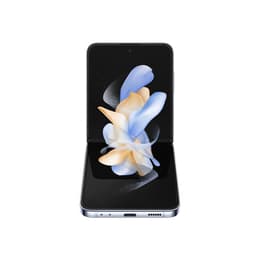
Galaxy Z Flip4 • Unlocked
Starting at

Refurbished price:$206.00

Versus $899.99 new

See options
Google Pixel 8 • Unlocked
Starting at

Refurbished price:$254.00

Versus $699.99 new

See options

Ratings

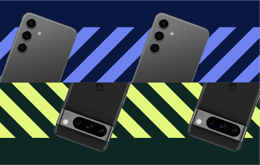
The Samsung Galaxy Z Flip4, released in August 2022, and the Google Pixel 8, launched in October 2023, represent distinct approaches to modern smartphone design. The Z Flip4 offers a unique foldable form factor, allowing it to compact into a smaller size, while the Pixel 8 provides a traditional slate design with a strong emphasis on software-driven features and camera capabilities. Both devices operate on the Android platform, but they offer different user experiences through their respective interfaces and hardware philosophies.

Scores

Durability

The expected lifespan of a smartphone is influenced by its physical resilience and the duration of software support it receives. These factors determine how long a device remains functional and secure for daily use.

  • Software Longevity: The Google Pixel 8 stands out with a commitment to seven years of software updates, including OS upgrades and security patches, extending its support well into the future. The Samsung Galaxy Z Flip4, while still offering substantial support, is promised four major Android OS updates and five years of security updates, with support expected until 2027.
  • Physical Durability: The Galaxy Z Flip4 features Armor Aluminum frames and Gorilla Glass Victus+ on its cover screen and rear glass, along with an IPX8 water resistance rating, indicating protection against submersion. The Pixel 8 is equipped with Gorilla Glass Victus on both the front and back, and boasts an IP68 rating for dust and water resistance, allowing for submersion in shallow water. The Z Flip4's foldable design introduces a crease on the main display, which is a characteristic of its form factor.
  • Repairability: The Pixel 8 has received repairability scores ranging from 5.5 to 7 out of 10, with some sources noting that Google provides service manuals and OEM replacement parts, which can aid in repairs. Information regarding the specific repairability score for the Galaxy Z Flip4 is less consistently available, though its complex foldable mechanism may present unique challenges for repair.

Release Year

2022

2023

Last OS Compatibility

Yes

Yes

OS

Android

Android

Foldable

Yes

No

Performance

Performance in smartphones is not solely about raw processing power but how smoothly the device handles everyday tasks, from launching applications to managing multiple processes simultaneously.

  • Processing Power: The Galaxy Z Flip4 is powered by a processor that handles demanding applications and multitasking efficiently, contributing to a responsive user experience. The Pixel 8 features a newer generation processor designed to enhance efficiency, overall performance, and artificial intelligence capabilities, which can result in smoother operation and advanced computational features.
  • Multitasking and Responsiveness: Both devices come with 8 GB of RAM, which is sufficient for handling multiple applications concurrently and ensuring a fluid transition between tasks. Users can expect a generally responsive system on both, with the Pixel 8 potentially offering an edge in tasks that leverage its advanced AI processing.
  • Storage Options: The Galaxy Z Flip4 offers storage configurations of 128 GB, 256 GB, and 512 GB. The Pixel 8 is available with 128 GB or 256 GB of internal storage. Neither device supports expandable storage via microSD cards.
  • Battery Behavior: The Galaxy Z Flip4 is equipped with a 3700 mAh battery, supporting fast charging up to 25W and wireless charging up to 10W. The Pixel 8 has a larger 4575 mAh battery, with support for 27W wired charging and 18W wireless charging. The Pixel 8's larger battery capacity generally translates to longer usage times for many users.

Memory (GB)

8 GB

8 GB

Screen quality

The display is a primary interface for smartphone interaction, and its quality significantly impacts the user experience, from casual browsing to media consumption.

  • Display Technology and Clarity: The Galaxy Z Flip4 features a 6.7-inch Foldable Dynamic AMOLED 2X main display with a resolution of 1080 x 2640 pixels, offering vibrant colors and deep blacks. It also includes a 1.9-inch Super AMOLED cover display for quick interactions when folded. The Pixel 8 sports a 6.2-inch OLED display with a 1080 x 2400 pixel resolution, also providing clear visuals and rich colors.
  • Brightness and Refresh Rate: Both devices offer a 120Hz refresh rate on their main displays, contributing to smoother scrolling and more fluid animations. The Galaxy Z Flip4 reaches a peak brightness of 1200 nits. The Pixel 8 can achieve an average brightness of 1400 nits and a peak brightness of 2000 nits, which can improve visibility in bright outdoor conditions.
  • Viewing Experience: The Z Flip4's foldable design offers a unique compact form factor when closed, while providing a full-sized display when open. Its taller and narrower aspect ratio can be well-suited for movie watching and split-screen multitasking. The Pixel 8's traditional flat screen provides a consistent viewing area, with its slightly smaller size making it comfortable for one-handed use.

Resolution

1080 x 2640

1080 x 2400

Screen type

Foldable Dynamic AMOLED 2X

OLED

Audiovisual

Camera performance is a key differentiator for many smartphone users, encompassing the ability to capture high-quality photos and videos in various conditions.

  • Rear Camera Systems: The Galaxy Z Flip4 features a dual-camera setup on the rear, consisting of a 12 MP wide-angle camera with optical image stabilization and a 12 MP ultra-wide camera. It is noted for producing good images in most lighting conditions, with improved low and mid-light performance compared to its predecessor. The Pixel 8 also has a dual-camera system, with a 50 MP wide camera (f/1.68, OIS) and a 12 MP ultra-wide camera (f/2.2, 125.8˚ FoV) that includes autofocus and a macro mode. The Pixel 8 is recognized for its strong low-light performance and computational photography capabilities. Neither device includes a dedicated telephoto lens.
  • Front-Facing Cameras: The Z Flip4 has a 10 MP front camera. A notable feature is the ability to use the higher-quality rear cameras for selfies, utilizing the cover screen as a viewfinder. The Pixel 8 is equipped with a 10.5 MP front camera. Both offer good results for selfies, with the Pixel 8 providing pleasing colors and background blur.
  • Video Recording and Audio: Both smartphones are capable of recording video at up to 4K resolution at 60 frames per second. The Pixel 8 is praised for its strong video stabilization and clean sound recording. The Z Flip4 also offers good video capture, with the ability to use its foldable form factor for unique shooting angles.

Main camera

12 megapixels

50 megapixels

Front camera

10 megapixels

10.5 megapixels

Miscellaneous

Beyond core performance, various practical elements contribute to the overall user experience and daily convenience of a smartphone.

  • Connectivity and Ports: Both the Galaxy Z Flip4 and the Pixel 8 support 5G connectivity, enabling faster mobile data speeds. The Z Flip4 supports Wi-Fi 6 (ax) and Bluetooth 5.2, featuring a USB-C 2.0 port. The Pixel 8 offers more advanced connectivity with Wi-Fi 7 (802.11be) and Bluetooth 5.3, alongside a USB-C 3.2 port with OTG support.
  • Biometric Security and Sensors: The Galaxy Z Flip4 includes a side-mounted fingerprint scanner, along with standard sensors like an accelerometer, gyroscope, proximity sensor, compass, and barometer. The Pixel 8 features an in-display optical fingerprint sensor and also offers secure Face Unlock capabilities. It includes a similar array of sensors, such as a light sensor, accelerometer, barometer, compass, and gyroscope.
  • Design and Handling: The Galaxy Z Flip4's defining characteristic is its foldable design, which allows it to be more compact when closed (84.9 x 71.9 x 15.9–17.1 mm) and expands to a full smartphone size when open (165.2 x 71.9 x 6.9 mm). It weighs 187 g. The Pixel 8 has a traditional slate form factor, measuring 150.5 x 70.8 x 8.9 mm and weighing 187 g, making it a compact and manageable device. The Z Flip4 uses an aluminum frame, while the Pixel 8 features recycled aluminum frames.

Weight

7 oz

7 oz

Screen size (inches)

6.7

6.2

Network

5G

5G

SIM card

Physical SIM + eSIM

Physical SIM + eSIM

Carrier compatibility

Unlocked

Unlocked

The Samsung Galaxy Z Flip4 and the Google Pixel 8 cater to different user preferences, each excelling in distinct areas. The Z Flip4 is frequently praised for its innovative foldable design, which offers a unique blend of portability and a full-sized screen experience. Users appreciate its ability to become more compact, making it easier to carry. Its main camera is generally well-regarded for producing good photos in various lighting conditions, and the option to use the main cameras for high-quality selfies via the cover screen is a notable advantage. However, some users note the persistent crease on the main display and the absence of a telephoto lens as areas for improvement.

The Google Pixel 8, on the other hand, garners significant acclaim for its exceptional camera performance, particularly in low-light scenarios, and its advanced computational photography features. Its long-term software support, promising seven years of updates, is a major draw for users prioritizing longevity and up-to-date security. The Pixel 8's display is also highly rated for its brightness and clarity, and its overall system responsiveness is a consistent positive. Criticisms sometimes point to the lack of a telephoto lens, similar to the Z Flip4, and some users might find its design less distinctive compared to the foldable form factor.

Users prioritizing a compact, stylish device with a unique folding mechanism and solid everyday camera performance may find the Galaxy Z Flip4 well-suited to their needs. Its distinct form factor offers a different interaction experience. Conversely, individuals who value a traditional smartphone design with a focus on cutting-edge camera technology, extended software support, and a highly optimized Android experience will likely lean towards the Google Pixel 8. Both devices offer compelling features, and for those considering a quality-assured refurbished option, both models are available, providing an eco-friendly alternative for informed purchasing decisions.
See all articles

Our recent comparisons