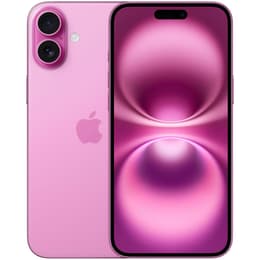

Galaxy Z Flip5 • Unlocked vs iPhone 16 Plus • Unlocked

Galaxy Z Flip5 • Unlocked
Starting at

Refurbished price:$234.99

Versus $1,147.99 new

See options
iPhone 16 Plus • Unlocked
Starting at

Refurbished price:$575.98

Versus $829.00 new

See options

Ratings

The Samsung Galaxy Z Flip5, released in August 2023, and the Apple iPhone 16 Plus, launched in September 2024, represent distinct approaches to modern smartphone design and functionality. While the Z Flip5 offers a unique foldable form factor that prioritizes portability, the iPhone 16 Plus maintains a traditional, larger slab design focused on a expansive display and robust performance. Both devices operate on their respective mature ecosystems, Android for the Z Flip5 and iOS for the iPhone 16 Plus, catering to different user preferences.

Scores

Durability

When considering the long-term usability of a smartphone, factors like software support and physical resilience are key. Both the Galaxy Z Flip5 and the iPhone 16 Plus are designed for extended use, though their inherent designs present different considerations for longevity.

  • Software Support: The Galaxy Z Flip5 typically receives four years of major Android operating system updates and five years of security patches from its release. The iPhone 16 Plus, running on iOS, generally benefits from a longer period of software updates, often extending to five or six years from its launch.
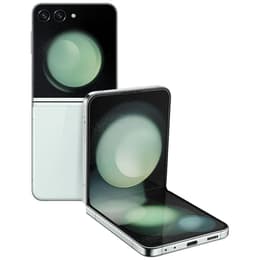
  • Physical Durability: The Z Flip5 features an Armor Aluminum frame and Gorilla Glass Victus 2 on its exterior, along with an IPX8 water resistance rating, meaning it can withstand submersion in fresh water. Its foldable design, while offering a compact form, introduces a hinge mechanism and a flexible inner display, which some users report can show signs of wear over time, such as screen protector bubbling or minor scratches on the inner screen. The iPhone 16 Plus, with its traditional unibody construction, offers a solid build that is generally perceived as highly durable against drops and impacts, also featuring an IP68 rating for dust and water resistance.
  • Practical Lifespan: Users of the Z Flip5 often highlight its compact nature as a benefit for daily handling, which can contribute to its perceived longevity by reducing accidental damage when stored. The iPhone 16 Plus, while larger, is built to withstand typical daily use, with its robust design contributing to a long practical lifespan for users who prefer a non-folding device.

Release Year

2023

2024

Last OS Compatibility

Yes

Yes

Foldable

Yes

No

Performance

Both smartphones deliver capable performance for everyday tasks and demanding applications, though they achieve this through different hardware and software optimizations.

  • Processing Power: The Galaxy Z Flip5 is equipped with a current-generation processor optimized for its ecosystem, providing smooth operation for applications, multitasking, and mobile gaming. The iPhone 16 Plus features Apple's A18 chip, which is designed to handle intensive tasks, complex graphics, and the demands of advanced features like Apple Intelligence with efficiency.
  • Multitasking and Responsiveness: With 8GB of RAM, the Z Flip5 manages multiple applications running simultaneously without significant slowdowns, ensuring a fluid user experience. The iPhone 16 Plus also comes with 8GB of RAM, an increase over its predecessor, contributing to enhanced multitasking capabilities and overall system responsiveness, particularly with demanding apps.
  • Storage Options: Both devices offer ample storage configurations to suit various user needs. The Galaxy Z Flip5 is available with 256GB or 512GB of internal storage. The iPhone 16 Plus provides options for 128GB, 256GB, or 512GB of storage.
  • Battery Behavior: The Z Flip5 houses a 3700mAh battery, which, for many users, provides sufficient power for a full day of moderate use, though heavy users may find themselves needing to recharge before the day ends. The iPhone 16 Plus is equipped with a 4674mAh battery, building on its predecessor's reputation for excellent battery longevity, often lasting well over a full day even with heavy usage.

Memory (GB)

8 GB

8 GB

Screen quality

The visual experience on both devices is a key aspect of their design, with each offering distinct display technologies and characteristics.

  • Display Technology: The Galaxy Z Flip5 features a 6.7-inch Foldable Dynamic AMOLED 2X main display, known for its deep blacks, vibrant colors, and high contrast. It also includes a larger 3.4-inch Super AMOLED cover screen, which is highly functional for quick interactions and notifications. The iPhone 16 Plus utilizes a 6.7-inch Super Retina XDR OLED display, which also delivers excellent color accuracy, contrast, and brightness.
  • Resolution and Clarity: The Z Flip5's main display has a resolution of 1080 x 2640 pixels, providing sharp and clear visuals for media consumption and daily tasks. The iPhone 16 Plus offers a resolution of 2796 x 1290 pixels, resulting in a high pixel density that ensures crisp text and detailed images.
  • Brightness and Refresh Rate: The Z Flip5's main screen boasts an adaptive refresh rate of up to 120Hz, contributing to smoother scrolling and more fluid animations, and can reach a peak brightness of 1750 nits for good outdoor visibility. The iPhone 16 Plus maintains a 60Hz refresh rate, which provides a consistent visual experience, and its OLED panel offers strong brightness for various lighting conditions.
  • Viewing Experience: The Z Flip5's foldable nature allows for unique viewing angles in Flex Mode, useful for hands-free media consumption or video calls. The larger cover screen also enhances quick interactions without needing to open the device. The iPhone 16 Plus provides an expansive, uninterrupted viewing area, ideal for immersive video playback and productivity tasks.

Resolution

1080 x 2640

1290 x 2796

Screen type

Foldable Dynamic AMOLED 2X

Super Retina XDR OLED

Audiovisual

Both smartphones offer capable camera systems designed to capture high-quality photos and videos, though they approach imaging with different hardware configurations and software enhancements.

  • Camera System Capabilities: The Galaxy Z Flip5 features a dual-camera setup on the rear, consisting of a 12-megapixel main sensor with optical image stabilization (OIS) and a 12-megapixel ultrawide sensor. It does not include a dedicated telephoto lens. The iPhone 16 Plus also has a dual-camera system, with a 48-megapixel main camera and a 12-megapixel ultrawide camera, arranged vertically.
  • Photography Performance: In good lighting conditions, the Z Flip5's main camera produces detailed images with vibrant colors. Its ultrawide camera also performs well, though low-light performance can be less consistent. A notable feature is the ability to use the main rear cameras for high-quality selfies, utilizing the cover screen as a viewfinder. The iPhone 16 Plus's 48-megapixel main camera is expected to deliver excellent detail and color accuracy across various lighting scenarios. The improved ultrawide lens is designed to capture more light, enhancing low-light shots. The iPhone 16 Plus also introduces macro photography capabilities for the first time on a non-Pro model.
  • Video Recording Quality: The Z Flip5 supports video recording up to 4K resolution at 60 frames per second, with good stabilization for smooth footage. The iPhone 16 Plus also offers advanced video recording features, including the ability to capture spatial video, which is designed for immersive viewing experiences.
  • Audio Experience: Both devices provide clear microphone quality for calls and recordings. For media consumption, they offer stereo speaker setups, delivering a balanced audio experience.

Main camera

12 megapixels

48 megapixels

Front camera

10 megapixels

12 megapixels

Miscellaneous

Beyond core performance and display, several practical features and design elements differentiate these two smartphones.

  • Connectivity Standards: The Galaxy Z Flip5 supports 5G cellular connectivity, Wi-Fi 6, and Bluetooth 5.3, ensuring fast and reliable wireless connections. The iPhone 16 Plus also offers 5G connectivity, and features Wi-Fi 7 and Bluetooth 5.3, providing access to the latest wireless technologies for enhanced speed and efficiency.
  • Physical Ports: The Z Flip5 includes a USB-C 2.0 port for charging and data transfer. The iPhone 16 Plus also utilizes a USB-C 2.0 port, aligning with a more universal charging and accessory standard. Neither device features a traditional 3.5mm headphone jack.
  • Biometric Security: The Z Flip5 incorporates a side-mounted fingerprint sensor for secure unlocking and authentication. The iPhone 16 Plus relies on Face ID, Apple's facial recognition system, for secure access.
  • Design and Handling: When folded, the Z Flip5 is notably compact, making it easy to carry in smaller pockets or bags. Its unfolded dimensions are 165.1 x 71.9 x 6.9 mm, and it weighs 187g. The iPhone 16 Plus, with dimensions of 160.9 x 77.8 x 7.8 mm and a weight of 199g, offers a larger screen experience in a traditional form factor. The iPhone 16 Plus also introduces a new Action button and a dedicated Camera Control button for quick access to specific functions.

Weight

7 oz

7030 oz

Screen size (inches)

6.7

6.7

Network

5G

5G

SIM card

Physical SIM + eSIM

eSIM

Carrier compatibility

Unlocked

Unlocked

Connector

USB-C

USB-C (USB 2)

User feedback for the Galaxy Z Flip5 frequently highlights its unique foldable design as a major draw, praising its portability and the utility of the larger cover screen for quick interactions. The ability to use the main cameras for high-quality selfies via the cover screen is also a commonly appreciated feature. However, common criticisms often revolve around its battery life, which some users find to be less than ideal for heavy usage, and the camera system, while capable, is sometimes noted for lacking a telephoto lens or not matching the performance of traditional flagship slab phones in all scenarios. Durability concerns related to the inner screen protector and hinge, though often mitigated with careful use and protective cases, are also mentioned by some long-term users.

For the iPhone 16 Plus, building on the reputation of its predecessors, users generally commend its exceptional battery life, smooth and reliable performance, and the consistent quality of its camera system. The intuitive iOS ecosystem and long-term software support are also significant advantages for many. Criticisms, however, often point to the display's 60Hz refresh rate, which some users accustomed to higher refresh rates on other devices find less fluid. The incremental nature of some upgrades compared to previous generations is also a point of discussion among users.

Users prioritizing a compact and innovative form factor that easily fits into smaller spaces, along with the flexibility of a foldable display for unique usage modes, may find the Galaxy Z Flip5 well-suited to their needs. Conversely, individuals who value a large, traditional display, extended battery longevity, and a highly consistent camera experience, coupled with a long software support cycle, might lean towards the iPhone 16 Plus. Both devices offer compelling features for different user profiles, and for those considering a quality-assured refurbished option, both models are available as sustainable choices.


See all articles

Our recent comparisons