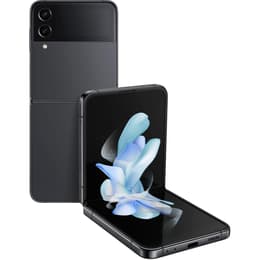
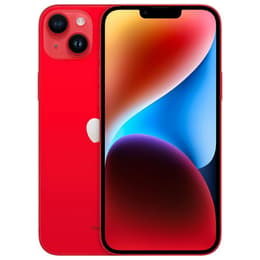
Galaxy Z Flip4 • Unlocked vs iPhone 14 Plus • Locked T-Mobile

Galaxy Z Flip4 • Unlocked
Starting at

Refurbished price:$206.00

Versus $899.99 new

See options
iPhone 14 Plus • Locked T-Mobile
Starting at

Refurbished price:$344.23

Versus $699.00 new

See options

Ratings

The Samsung Galaxy Z Flip4 (2022) and the iPhone 14 Plus (2022) offer distinct smartphone experiences, catering to different user preferences. The Galaxy Z Flip4 stands out with its unique foldable design, allowing for a compact form factor when closed, while the iPhone 14 Plus provides a large, traditional smartphone display. Both devices run on their respective advanced operating systems, Android and iOS, and feature capable camera systems and robust performance for daily tasks.

Scores

Durability

When considering the long-term usability of these devices, both the Galaxy Z Flip4 and the iPhone 14 Plus offer substantial software support and a design built for durability, though with different approaches.

  • Software Longevity: The Galaxy Z Flip4 launched with Android 12 and is eligible for four major Android OS updates, extending support up to Android 16, along with five years of security updates until 2027. The iPhone 14 Plus, released with iOS 16, typically receives iOS updates for approximately 5-6 years from its launch, potentially offering a similar or slightly longer period of major OS updates.
  • Physical Durability: The iPhone 14 Plus features a Ceramic Shield front cover and an aluminum design, offering IP68 water and dust resistance, allowing submersion up to 6 meters for 30 minutes. The Galaxy Z Flip4, while also having an Armor Aluminum frame and IPX8 water resistance (1.5 meters for 30 minutes), introduces the unique aspect of a foldable screen. Its inner foldable display uses Ultra-Thin Glass, which is covered by a plastic protective film that can be susceptible to scratches from fingernails. The hinge mechanism has shown resilience against dust, but some durability tests have noted internal sounds when bent backward, though the device remained functional.
  • Practical Lifespan: Users can expect both devices to remain functional and receive critical updates for several years. The iPhone 14 Plus, with its traditional slab design, may offer a more conventional long-term durability experience. The Galaxy Z Flip4's foldable nature, while innovative, requires careful handling of its inner screen.

Release Year

2022

2022

Last OS Compatibility

Yes

Yes

OS

Android

iOS

Foldable

Yes

No

Performance

Both smartphones deliver strong performance for everyday use, handling applications and multitasking efficiently, though they utilize different internal architectures.

  • Processing Power: The Galaxy Z Flip4 is equipped with a current-generation processor, enabling it to manage demanding applications and gaming smoothly. The iPhone 14 Plus incorporates a previous-generation, yet still highly capable, chip that provides swift responsiveness for a wide range of tasks, from browsing to graphic-intensive games.
  • System Responsiveness: Users of both devices can expect quick app loading times and fluid navigation through interfaces. The iPhone 14 Plus benefits from tight integration between its hardware and software, contributing to its consistent performance. The Galaxy Z Flip4's processor ensures a responsive experience, even with its adaptive refresh rate display.
  • Multitasking and Storage: Both phones offer various storage configurations, typically ranging from 128GB to 512GB, without expandable storage options. The iPhone 14 Plus comes with 6GB of RAM, while the Galaxy Z Flip4 features 8GB of RAM, which can contribute to efficient multitasking and app management.

Memory (GB)

8 GB

6 GB

Screen quality

The display technologies in the Galaxy Z Flip4 and iPhone 14 Plus offer distinct visual experiences, primarily differing in form factor and refresh rate.

  • Display Technology and Clarity: The Galaxy Z Flip4 features a 6.7-inch foldable AMOLED main display with a 120Hz adaptive refresh rate, providing smooth scrolling and responsive visuals. It also has a 1.9-inch Super AMOLED cover screen for quick interactions when folded. The iPhone 14 Plus sports a 6.7-inch Super Retina XDR OLED display with a resolution of 2778 x 1284 pixels, resulting in a sharp image with deep blacks and vibrant colors.
  • Brightness and Viewing Experience: Both devices offer excellent brightness levels. The iPhone 14 Plus reaches 800 nits typical brightness and 1200 nits peak brightness for HDR content, ensuring good visibility in various lighting conditions. The Galaxy Z Flip4's main screen also provides ample brightness, making it usable outdoors. The iPhone 14 Plus maintains a standard 60Hz refresh rate, while the Galaxy Z Flip4's adaptive 120Hz refresh rate offers a noticeably smoother visual experience, particularly during scrolling or gaming.
  • Form Factor Impact: The Galaxy Z Flip4's foldable design allows for a large screen experience that can be folded into a compact size, enhancing portability. The iPhone 14 Plus provides a consistently large, flat display, which is beneficial for media consumption and productivity without the presence of a crease.

Resolution

1080 x 2640

1284 x 2778

Screen type

Foldable Dynamic AMOLED 2X

Super Retina XDR OLED

Audiovisual

Both the Galaxy Z Flip4 and the iPhone 14 Plus are equipped with capable camera systems designed to capture quality photos and videos, though with some differences in their configurations and features.

  • Rear Camera Systems: The Galaxy Z Flip4 features a dual 12-megapixel rear camera setup, including a main lens with optical image stabilization and an ultra-wide lens. The main sensor has larger pixels compared to its predecessor, which helps in gathering more light for improved low-light performance. The iPhone 14 Plus also has a dual-camera system on the rear, consisting of a 12-megapixel main camera with sensor-shift optical image stabilization and a 12-megapixel ultra-wide camera. Its main camera also features a larger sensor and wider aperture for better low-light capture.
  • Photography Performance: Both devices are capable of producing good images in various lighting conditions. The Galaxy Z Flip4's cameras offer good color, contrast, and sharpness, with an effective night mode. A notable feature of the Flip4 is the ability to use its main cameras for high-quality selfies via the cover screen. The iPhone 14 Plus delivers sharp focus and accurate colors in typical daytime photos, and its Photonic Engine enhances image processing. Neither phone includes a dedicated telephoto lens, meaning digital zoom is used for magnified shots.
  • Video Recording and Audio: Both phones support 4K video recording at various frame rates. The iPhone 14 Plus includes Cinematic mode for shallow depth-of-field video and Action mode for stabilized footage. While specific microphone and speaker details vary, both are designed to provide clear audio for calls and media consumption.

Main camera

12 megapixels

12 megapixels

Front camera

10 megapixels

12 megapixels

Miscellaneous

Beyond core features, several practical elements differentiate the user experience of the Galaxy Z Flip4 and the iPhone 14 Plus.

  • Connectivity and Ports: Both devices support 5G, Wi-Fi 6, and Bluetooth 5.2, ensuring fast and reliable wireless connections. The Galaxy Z Flip4 uses a USB-C port for charging and data transfer, while the iPhone 14 Plus utilizes Apple's Lightning port. Neither phone features a traditional headphone jack.
  • Biometrics and Security: The Galaxy Z Flip4 incorporates a side-mounted fingerprint sensor for secure unlocking. The iPhone 14 Plus relies on Face ID, Apple's facial recognition system, for biometric authentication.
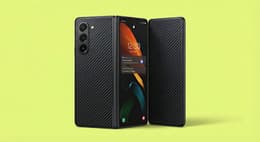
  • Design and Handling: The Galaxy Z Flip4's defining characteristic is its foldable form factor, allowing it to be compact when closed (84.9 x 71.9 x 15.9-17.1 mm) and expand to a full smartphone size when open (165.2 x 71.9 x 6.9 mm). It weighs 187 grams. The iPhone 14 Plus has a larger, traditional slab design, measuring 160.8 x 78.1 x 7.8 mm and weighing 203 grams, offering a substantial screen size without folding. The build materials for the iPhone 14 Plus include a Ceramic Shield front and an aluminum frame, while the Z Flip4 uses Armor Aluminum.

Weight

7 oz

7 oz

Screen size (inches)

6.7

6.7

Network

5G

5G

SIM card

Physical SIM + eSIM

eSIM

Carrier compatibility

Unlocked

T-Mobile

The Samsung Galaxy Z Flip4 and the iPhone 14 Plus offer distinct propositions for smartphone users. User feedback often highlights the Galaxy Z Flip4's unique foldable design as a major draw, providing a compact device that unfolds into a full-sized screen. Its enhanced battery life over its predecessor and improved camera performance are frequently praised. Some users, however, express concerns about the long-term durability of the foldable screen and the hinge mechanism, as well as the lack of a telephoto camera.

The iPhone 14 Plus is consistently lauded for its exceptional battery life, often cited as one of the best in Apple's lineup, and its large, vibrant OLED display. Users appreciate the consistent performance and the reliable camera system, particularly the improvements in low-light photography and the addition of autofocus to the front camera. Criticisms sometimes point to the 60Hz refresh rate, which is lower than many Android competitors, and the absence of a telephoto lens.

Users prioritizing a compact, pocketable device with a unique form factor and a smooth, high refresh rate display may find the Galaxy Z Flip4 well-suited to their needs. Its ability to stand independently for hands-free photography and video calls also appeals to a specific user base. Conversely, individuals who value extended battery life, a consistently large and flat display for media consumption, and a robust, traditional smartphone build might lean towards the iPhone 14 Plus. Both devices represent solid choices in their respective categories, and for those considering a quality-assured refurbished option, both models are available as a sustainable choice.

See all articles

Our recent comparisons