
Galaxy Z Flip6 • Unlocked vs iPhone 13 Pro • Unlocked

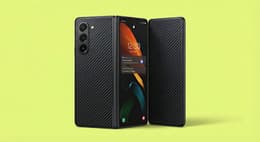
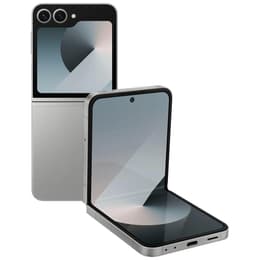
Galaxy Z Flip6 • Unlocked
Starting at

Refurbished price:$339.99

Versus $1,099.00 new

See options
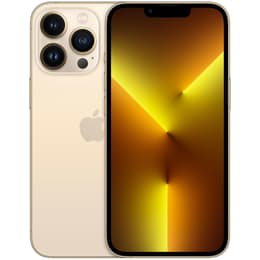
iPhone 13 Pro • Unlocked
Starting at

Refurbished price:$299.99

Versus $899.00 new

See options

Ratings

The Samsung Galaxy Z Flip6, released in July 2024, and the iPhone 13 Pro, launched in September 2021, represent distinct approaches to smartphone design and functionality. While the Galaxy Z Flip6 offers a unique foldable form factor with a modern Android experience, the iPhone 13 Pro provides a traditional, high-performance iOS ecosystem. The primary differentiators lie in their physical design, operating system, and the specific capabilities each device prioritizes for its users.

Scores

Durability

When considering the long-term usability of these devices, their release timelines and software support play a significant role. The Galaxy Z Flip6, being a more recent release, benefits from a longer guaranteed software update period, while the iPhone 13 Pro, though older, still receives consistent updates from Apple.

  • Release Timeline: The Galaxy Z Flip6 was released in July 2024, making it a current-generation device, whereas the iPhone 13 Pro was launched in September 2021 and was discontinued in September 2022. [1, 2, 4, 6, 8, 14]
  • Software Longevity: Samsung has committed to providing seven years of software support for the Galaxy Z Flip6, ensuring extended access to new features and security updates. [5, 16] The iPhone 13 Pro, typical for Apple devices, receives iOS updates for approximately five to six years from its release date. [1]
  • Physical Durability: The Galaxy Z Flip6 features Corning Gorilla Glass Victus 2 on its cover screen and back panel, along with an improved hinge design. [2, 25] The iPhone 13 Pro incorporates a Ceramic Shield front cover, which offers enhanced drop performance, and stainless steel sides. [6, 31, 41] Both devices carry an IP rating for water resistance, with the iPhone 13 Pro rated IP68 for submersion up to 6 meters for 30 minutes. [3, 31, 41] The folding mechanism of the Z Flip6 introduces a different set of considerations for screen protection compared to the rigid display of the iPhone 13 Pro.

Release Year

2024

2021

Last OS Compatibility

Yes

Yes

OS

Android

iOS

Foldable

Yes

No

Performance

The performance of a smartphone is crucial for daily tasks, from launching applications to handling demanding games. Both devices offer robust performance, though they achieve it with different underlying hardware and optimizations.

  • Processing Power: The Galaxy Z Flip6 is equipped with a current-generation processor, which allows it to handle demanding applications and multitasking smoothly. [2, 5, 9, 27] The iPhone 13 Pro features a powerful processor that, at its release, was noted for its ability to run all applications with ease and provide a smooth gaming experience. [4, 38]
  • Multitasking and Responsiveness: The Galaxy Z Flip6 comes with 12 GB of RAM, which contributes to seamless multitasking and efficient handling of AI features. [5, 9, 27] The iPhone 13 Pro includes 6 GB of RAM, which, combined with its optimized operating system, ensures a responsive user experience across various applications. [4, 10, 11, 19]
  • Thermal Management: The Galaxy Z Flip6 is the first in its series to include a vapor chamber cooling system, which is designed to improve thermal management during intensive use, such as gaming. [25, 36] While the iPhone 13 Pro also manages heat effectively, its traditional form factor inherently offers different thermal dissipation characteristics.

Memory (GB)

12 GB

6 GB

Screen quality

The display is a primary interface for any smartphone, and both the Galaxy Z Flip6 and iPhone 13 Pro offer high-quality viewing experiences, albeit with distinct designs and features.

  • Display Technology and Size: The Galaxy Z Flip6 features a 6.7-inch foldable Dynamic AMOLED 2X main display and a 3.4-inch Super AMOLED cover display. [2, 9, 17, 20] The iPhone 13 Pro has a 6.1-inch Super Retina XDR OLED display. [1, 3, 11, 19]
  • Refresh Rate and Smoothness: Both devices offer adaptive refresh rates for smooth scrolling and responsive interactions. The Galaxy Z Flip6's main display has a 1-120 Hz adaptive refresh rate, while the iPhone 13 Pro's ProMotion display also adapts between 10-120 Hz. [2, 6, 9, 18, 28]
  • Brightness and Clarity: The Galaxy Z Flip6's main display can reach a peak brightness of 2600 nits, offering excellent visibility in various lighting conditions. [20] The iPhone 13 Pro's display provides up to 1000 nits of typical brightness and 1200 nits for HDR content, ensuring vibrant and clear visuals. [1, 3, 6, 23] The iPhone 13 Pro's display resolution is 2532 x 1170 pixels at 460 ppi, providing sharp visuals. [1, 3, 19]

Resolution

1080 x 2640

1170 x 2532

Screen type

Foldable Dynamic LTPO AMOLED 2X

Super Retina XDR OLED

Audiovisual

Camera capabilities are a significant factor for many users, and both smartphones offer advanced systems designed to capture high-quality photos and videos, each with its own strengths.

  • Rear Camera Systems: The Galaxy Z Flip6 features a dual-camera setup with a 50 MP wide-angle main sensor and a 12 MP ultra-wide lens. [2, 12, 13, 16] The iPhone 13 Pro boasts a triple 12 MP camera system, including wide, ultra-wide, and telephoto lenses. [1, 3, 11, 14]
  • Photography Performance: The Galaxy Z Flip6's 50 MP main sensor offers improved low-light performance and dynamic range, and it leverages AI for enhanced image quality and digital zoom. [12, 15, 25] The iPhone 13 Pro's wide camera has a larger sensor and wider aperture for better light gathering, and its ultra-wide camera includes autofocus for macro photography. [1, 24, 32] The iPhone 13 Pro also features a dedicated telephoto lens for optical zoom. [1, 3, 32]
  • Video and Special Features: Both devices offer advanced video recording capabilities. The Galaxy Z Flip6 supports 4K video at up to 60fps and utilizes its foldable design for unique shooting angles with FlexCam. [15, 16] The iPhone 13 Pro includes Cinematic Mode for shallow depth-of-field video, ProRes video recording, and Night mode across all cameras, enhanced by a LiDAR Scanner for improved low-light performance. [1, 3, 6, 24, 37]

Main camera

50 megapixels

12 megapixels

Front camera

10 megapixels

12 megapixels

Miscellaneous

Beyond core features, several practical elements contribute to the overall user experience, including connectivity, physical design, and security features.

  • Connectivity and Ports: The Galaxy Z Flip6 supports 5G, Wi-Fi 6 (ax), and Bluetooth 5.3, and it uses a USB-C 3.2 port for charging and data transfer. [17] The iPhone 13 Pro also supports 5G and Wi-Fi 6 (ax), but it features Bluetooth 5.0 and utilizes Apple's proprietary Lightning port. [19, 41]
  • Design and Handling: The Galaxy Z Flip6's foldable design allows it to be more compact when closed, offering a different portability experience. [2] The iPhone 13 Pro has a traditional slab design with a stainless steel frame and a weight of 204 grams. [4, 14, 41]
  • Security and Sensors: The Galaxy Z Flip6 typically includes a side-mounted fingerprint sensor for biometric authentication. The iPhone 13 Pro relies on Face ID for secure facial recognition. Both devices offer a range of sensors for navigation and user interaction.

Weight

7 oz

6 oz

Screen size (inches)

6.7

6.1

Network

5G

5G

SIM card

Physical SIM + eSIM

Physical SIM + eSIM

Carrier compatibility

Unlocked

Unlocked

Connector

USB-C

Lightning

Choosing between the Samsung Galaxy Z Flip6 and the iPhone 13 Pro involves weighing the benefits of a modern foldable design against the established performance and ecosystem of a traditional flagship. The Galaxy Z Flip6, released in 2024, appeals to users seeking the latest in smartphone innovation, particularly its compact form factor when folded and its versatile dual-screen experience. Users praise its updated camera system with AI enhancements and the extended software support, making it a compelling choice for those who value cutting-edge features and long-term usability. Some users, however, may note that the folding screen introduces a different set of durability considerations compared to a rigid display.

The iPhone 13 Pro, from 2021, continues to be a strong performer, lauded for its robust processor, consistent iOS updates, and a highly capable camera system that includes a dedicated telephoto lens and advanced video features like Cinematic Mode. Users often highlight its reliable performance and the seamless integration within the Apple ecosystem. Criticisms sometimes point to its older design compared to newer models and the use of the Lightning port rather than the more universal USB-C. Ultimately, users prioritizing a compact, innovative design with extensive software support and AI-driven camera features may find the Galaxy Z Flip6 well-suited to their needs. Conversely, those who value a proven, high-performance traditional smartphone with a comprehensive camera system and a familiar operating system may lean toward the iPhone 13 Pro. Both devices, whether new or as a quality-assured refurbished option, offer distinct advantages for different user profiles.


See all articles

Our recent comparisons