Galaxy Z Flip6 • Unlocked vs iPhone 14 • Locked AT&T

Galaxy Z Flip6 • Unlocked
Starting at

Refurbished price:$339.99

Versus $1,099.00 new

See options
iPhone 14 • Locked AT&T
Starting at

Refurbished price:$225.72

Versus $629.00 new

See options

Ratings

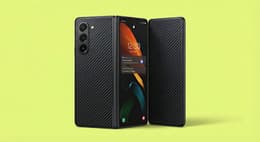
The Samsung Galaxy Z Flip6, released in July 2024, and the Apple iPhone 14, launched in September 2022, represent distinct approaches to smartphone design and user experience. The primary difference lies in their form factor: the Z Flip6 offers a unique foldable design, while the iPhone 14 maintains a traditional slate form. Beyond this, they operate on different ecosystems, Android for the Z Flip6 and iOS for the iPhone 14, influencing software experience and integration with other devices.

Scores

Durability

When considering the practical lifespan of these devices, their respective release timelines and software support policies play a significant role.

  • Release Timeline: The Galaxy Z Flip6, having been released in July 2024, is a newer device compared to the iPhone 14, which launched in September 2022. This age difference means the Z Flip6 benefits from a more recent hardware generation and a longer potential period of software updates.
  • Software Longevity: Samsung typically provides extensive software support for its flagship devices, often extending to seven years of security updates and several major Android OS upgrades for models released around the Z Flip6's timeframe. The iPhone 14, running on iOS, generally receives major OS updates for approximately five to six years from its release. Consequently, the Z Flip6 is expected to receive software support for a longer duration into the future.
  • Physical Durability: The iPhone 14 features a Ceramic Shield front cover and an aluminum design, contributing to its overall robustness and IP68 water and dust resistance. The Galaxy Z Flip6, with its foldable display, incorporates an improved hinge design and uses Corning Gorilla Glass Victus 2 on its cover screen and back panel, alongside an ultra-thin glass for the inner display, offering IP48 water and dust resistance.

Release Year

2024

2022

Last OS Compatibility

Yes

Yes

OS

Android

iOS

Foldable

Yes

No

Performance

The performance capabilities of both smartphones are tailored to deliver smooth user experiences, though they achieve this with different underlying hardware generations.

  • Processing Power: The Galaxy Z Flip6 is equipped with a more recent generation processor, which provides a notable boost in overall speed and efficiency. This allows it to handle demanding applications, intensive multitasking, and graphic-heavy games with fluidity. The iPhone 14, powered by a previous-generation processor, still offers a highly responsive experience for everyday tasks, app loading, and general multitasking.
  • Multitasking and Responsiveness: The Z Flip6 typically includes 12 GB of RAM, facilitating seamless transitions between numerous open applications and supporting advanced AI features. The iPhone 14 comes with 6 GB of RAM, which is optimized by its operating system to maintain smooth performance even with multiple apps running simultaneously.
  • Battery Behavior: The Galaxy Z Flip6 features a 4000 mAh battery, which, combined with its efficient processor, generally provides a full day of use for most users, with some tests indicating over 16 hours of web browsing. The iPhone 14, with a 3279 mAh battery, also offers a full day of power for average use, achieving around 9.5 hours in web browsing tests. Heavy users of either device might find themselves needing to recharge before the end of a very long day.

Memory (GB)

12 GB

6 GB

Screen quality

The display experience on these two devices offers distinct characteristics, primarily due to their form factors and display technologies.

  • Display Technology and Form Factor: The Galaxy Z Flip6 features a 6.7-inch Dynamic AMOLED 2X main foldable display, offering vibrant colors and deep blacks, complemented by a 3.4-inch Super AMOLED cover screen for quick interactions when folded. The iPhone 14 utilizes a 6.1-inch Super Retina XDR OLED display, known for its rich contrast and color accuracy in a traditional flat panel.
  • Resolution and Refresh Rate: The Z Flip6's main display has a resolution of 1080 x 2640 pixels with an adaptive refresh rate ranging from 1 to 120 Hz, providing smooth scrolling and responsive visuals. Its cover screen operates at a 60 Hz refresh rate. The iPhone 14 offers a resolution of 2532 x 1170 pixels at 460 ppi, but maintains a standard 60 Hz refresh rate, which is consistent for all content.
  • Brightness and Viewing Experience: Both devices offer excellent brightness levels for outdoor visibility. The Z Flip6's main display can reach up to 2600 nits peak brightness, while the iPhone 14 achieves 800 nits typical and 1200 nits peak brightness for HDR content. The Z Flip6's foldable nature allows for unique viewing angles and hands-free media consumption, whereas the iPhone 14 provides a consistent, high-quality viewing experience on its flat, durable screen.

Resolution

1080 x 2640

1170 x 2532

Screen type

Foldable Dynamic LTPO AMOLED 2X

Super Retina XDR OLED

Audiovisual

Both smartphones offer capable camera systems designed to capture high-quality images and videos, though with different sensor configurations and computational photography approaches.

  • Rear Camera System: The Galaxy Z Flip6 features a dual-camera setup with a 50 MP wide-angle main sensor (f/1.8) and a 12 MP ultra-wide-angle lens (f/2.2). The higher megapixel count on the main sensor allows for greater detail capture. The iPhone 14 also has a dual-camera system, consisting of a 12 MP wide-angle main sensor (f/1.5) with sensor-shift optical image stabilization and a 12 MP ultra-wide-angle lens (f/2.4).
  • Low-Light and Video Performance: The Z Flip6's main camera, with its larger sensor, shows improved low-light performance and produces sharp 4K videos up to 60fps. The iPhone 14 leverages its Photonic Engine for enhanced low-light photography across its cameras and offers 4K Dolby Vision video recording up to 60 fps, along with Cinematic mode and Action mode for advanced video capabilities. Both devices provide strong video stabilization.
  • Front Camera and Audio: For selfies and video calls, the Z Flip6 includes a 10 MP front camera, while the iPhone 14 features a 12 MP front camera with autofocus. Both devices offer clear microphone quality for calls and recordings, and their speaker outputs provide a good experience for media consumption.

Main camera

50 megapixels

12 megapixels

Front camera

10 megapixels

12 megapixels

Miscellaneous

Beyond core features, several practical elements differentiate the user experience between these two devices.

  • Connectivity and Ports: The Galaxy Z Flip6 supports 5G, Wi-Fi 6E, and Bluetooth 5.3, and features a USB-C 3.2 port for charging and data transfer. The iPhone 14 also supports 5G and Bluetooth 5.3, but uses Wi-Fi 6 and retains the Lightning port.
  • Biometric Security and Navigation: The Z Flip6 typically incorporates a side-mounted fingerprint sensor for secure unlocking. The iPhone 14 relies on Face ID, Apple's facial recognition system, for biometric security. Both devices offer comprehensive location services with support for multiple global navigation satellite systems.
  • Design and Handling: The Z Flip6's foldable design allows it to be more compact when closed, making it highly portable. When unfolded, its dimensions are 165.1 x 71.9 x 6.9 mm and it weighs 187 grams. The iPhone 14 has a traditional slate design, measuring 146.7 x 71.5 x 7.80 mm and weighing 172 grams, offering a familiar and comfortable in-hand feel.

Weight

7 oz

6 oz

Screen size (inches)

6.7

6.1

Network

5G

5G

SIM card

Physical SIM + eSIM

eSIM

Carrier compatibility

Unlocked

AT&T

Connector

USB-C

Lightning

The Samsung Galaxy Z Flip6 and iPhone 14 cater to different user preferences, with each device excelling in specific areas. Users frequently praise the Z Flip6 for its innovative foldable form factor, which offers a unique blend of portability and a large screen experience. Its newer processor and improved battery life are also commonly highlighted as significant advantages. Some users, however, note that while the camera has improved, it might not always match the computational photography prowess of some traditional flagships. The iPhone 14 is often lauded for its consistent performance, robust software ecosystem, and reliable camera system, particularly its video capabilities. Some common feedback points for the iPhone 14 include its 60 Hz display, which some users find less fluid compared to higher refresh rate screens on newer devices, and its continued use of the Lightning port.

Users prioritizing a cutting-edge design, a compact form factor when closed, and a longer runway for software updates may find the Galaxy Z Flip6 well-suited to their needs. Its larger, adaptive refresh rate display and enhanced battery life make it a strong contender for those who value modern features and a distinct user experience. Conversely, users who prefer a traditional, highly refined smartphone experience with a strong emphasis on a mature software ecosystem, consistent performance, and a proven camera system will likely lean towards the iPhone 14. Its durability features and long-term reliability are also key considerations for this group. Both devices are available as quality-assured refurbished options, providing an eco-friendly alternative for consumers.


See all articles

Our recent comparisons